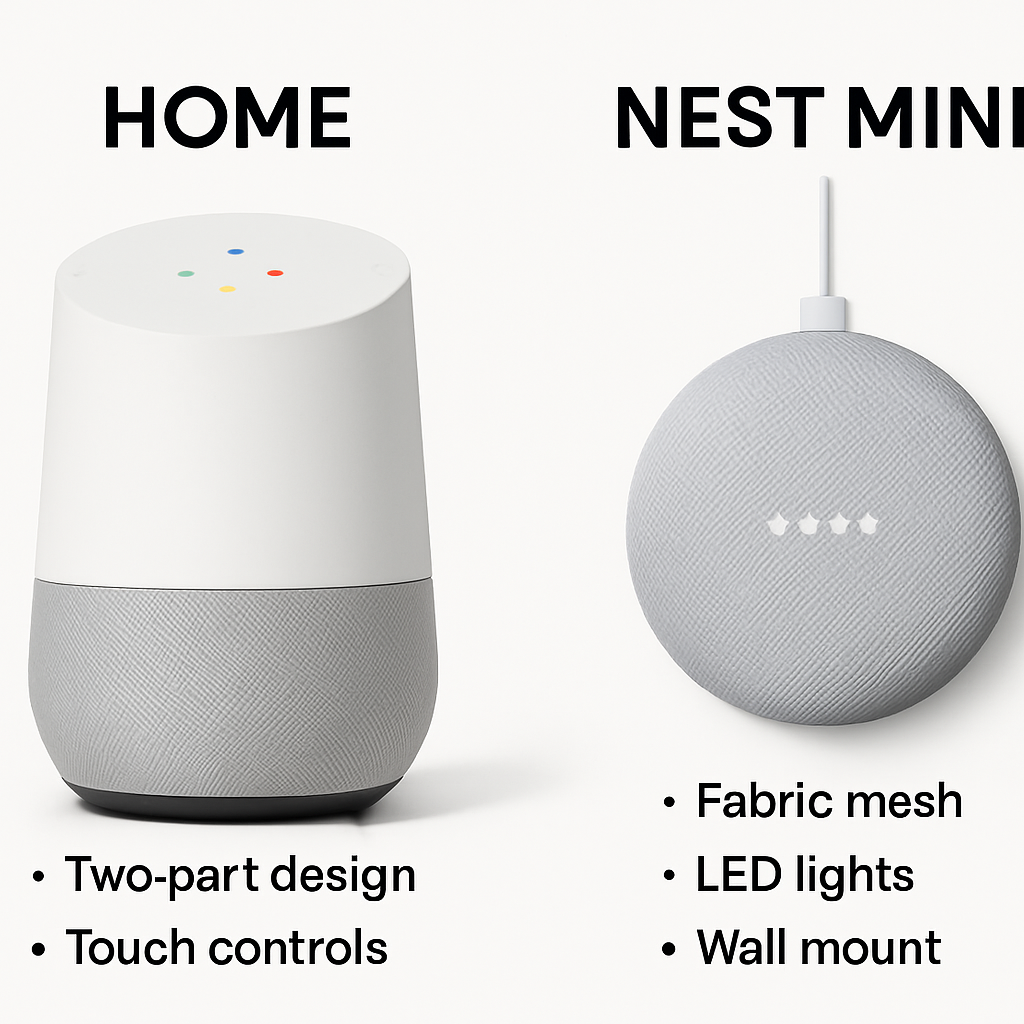
Google’s introduction of the Google Home Speaker marks a significant evolution in its smart home lineup, aiming to replace the longstanding Nest Mini. This new device integrates the advanced Gemini AI model, offering users a more dynamic and responsive assistant experience. While the Nest Mini is compatible with Gemini, it doesn’t fully support features like Gemini Live, which enables more fluid conversations.
Design-wise, the Google Home Speaker maintains the familiar fabric aesthetic but stands several inches taller than the Nest Mini. This increased size suggests a shift towards making the speaker a more prominent element of home decor. Unlike the Nest Mini, which could be wall-mounted, the Home Speaker’s dimensions and weight necessitate placement on a shelf or countertop.
One notable design enhancement is the addition of a reactive LED ring at the base, which illuminates in Google’s signature colors during interactions, providing visual feedback. However, some design choices have raised concerns. The integration of the USB-C cable directly into the speaker’s base means users cannot replace it with a longer cable if needed. Additionally, the absence of cable management clips, a feature present in previous Nest speakers, may lead to less tidy setups.
Color options have also evolved. The Nest Mini offered a range of muted shades to seamlessly blend into various room decors. In contrast, the Google Home Speaker primarily features neutral tones, with a bold Berry option available exclusively in the U.S. market.
Enhanced Smart Home Capabilities
Under the hood, the Google Home Speaker is designed to be more than just a conduit for Gemini; it’s positioned as an entertainment hub. Users can utilize Google Cast to stream music, similar to the Nest Mini, and easily group the device with other speakers in the home. However, the Home Speaker’s processing capabilities surpass those of the Nest Mini, resulting in faster response times and a smoother user experience.
The device boasts upgraded onboard machine learning chips that process common commands locally, reducing reliance on cloud processing and minimizing lag. This local processing ensures quicker responses to complex queries, a notable improvement over the Nest Mini’s occasional delays.
Connectivity has also been enhanced. The Google Home Speaker functions as a fully-fledged Matter and Thread border router, facilitating seamless communication between smart home devices without the need for additional hubs. While the Nest Mini can participate in these networks, it doesn’t offer the same robust networking capabilities as the Home Speaker.
Audio Performance: A Mixed Bag
Audio quality is a critical factor for many users, and the Google Home Speaker presents a mixed performance in this area. While it features a larger driver and promises stronger bass compared to the Nest Mini, some users have reported audio quirks. Adjusting the equalizer settings can help, but there are instances of muddy low-end amplification and unintended distortion in higher frequencies. The 360-degree audio design, intended to provide uniform sound distribution, doesn’t significantly outperform the Nest Mini’s up-firing design in side-by-side comparisons.
It’s important to note that the Google Home Speaker isn’t marketed as an audiophile-grade device. Its primary function is to serve as a vessel for Gemini, offering smart assistant capabilities alongside music playback. For those seeking superior sound quality, other options may be more suitable, even though the Home Speaker does offer improvements over the Nest Mini.
Priced at $99, the Google Home Speaker is available for pre-order, with shipping commencing in July. This price point positions it as a mid-range option in Google’s smart speaker lineup, offering enhanced features and performance over the Nest Mini.
The transition from the Nest Mini to the Google Home Speaker signifies Google’s commitment to advancing its smart home ecosystem. While the Home Speaker introduces several improvements, it also brings changes that may not align with all users’ preferences. The absence of a direct replacement for the Nest Mini’s compact and wall-mountable design leaves a gap in the market for those seeking a more discreet smart speaker solution. As Google continues to innovate, it will be interesting to see how they address the diverse needs of their user base in future product iterations.