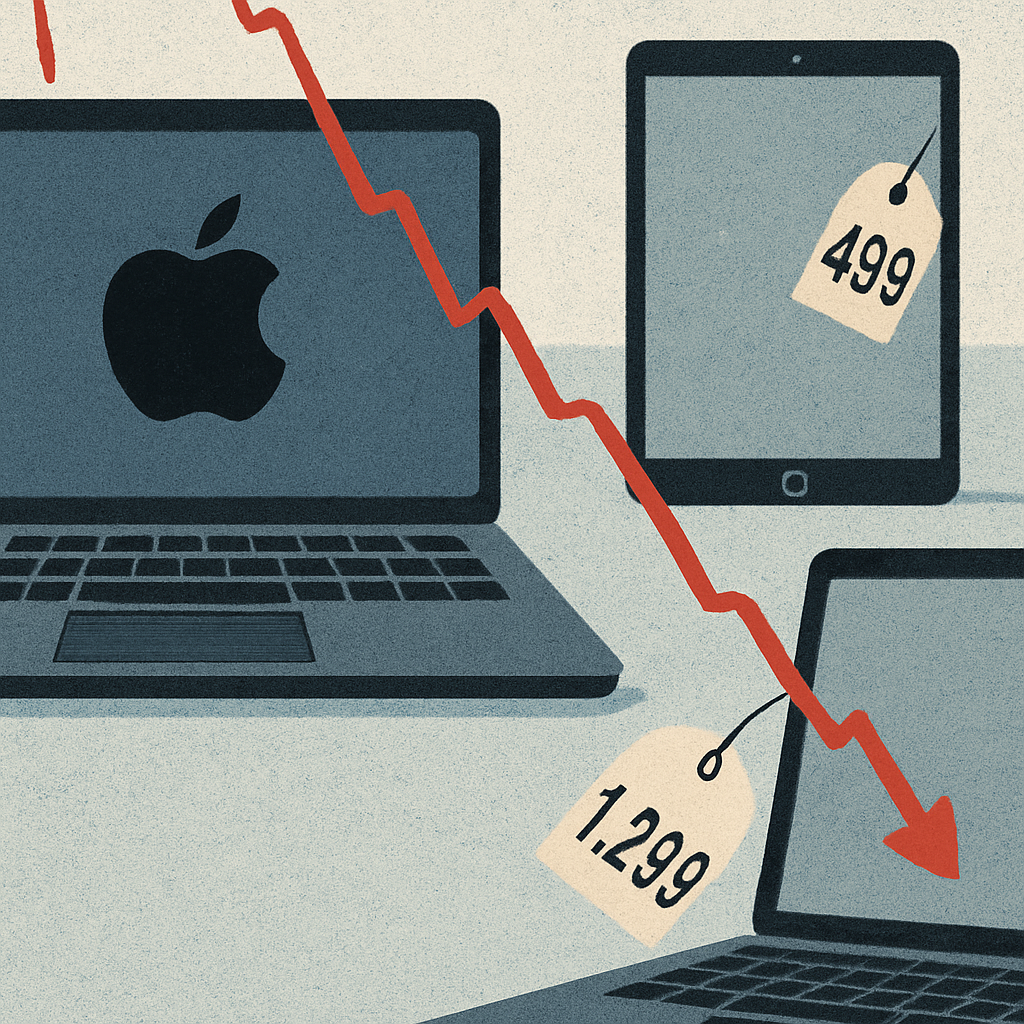
Apple has recently implemented significant price increases across several product lines, including MacBooks, iPads, and other devices. This move comes in response to escalating costs for memory and storage components, which have been driven up by heightened demand from AI data centers. CEO Tim Cook had previously indicated that such price adjustments were inevitable due to these rising component costs.
Following the announcement, Apple’s stock experienced a notable decline, dropping 5% in a single day. This downturn reflects investor concerns about the potential impact of higher product prices on consumer demand and overall sales performance.
In a strategic move, Apple has chosen to implement these price increases ahead of the transition to new leadership. With John Ternus set to assume the role of CEO in September, the decision to adjust prices now may be aimed at mitigating future challenges related to component shortages and associated costs.
While the immediate market reaction has been negative, it’s important to consider the broader context. The tech industry is currently grappling with supply chain disruptions and increased costs for essential components. Apple’s proactive approach to adjusting prices may position the company to better navigate these challenges in the long term. However, the effectiveness of this strategy will depend on consumer response to the higher prices and the company’s ability to maintain its competitive edge in the market.