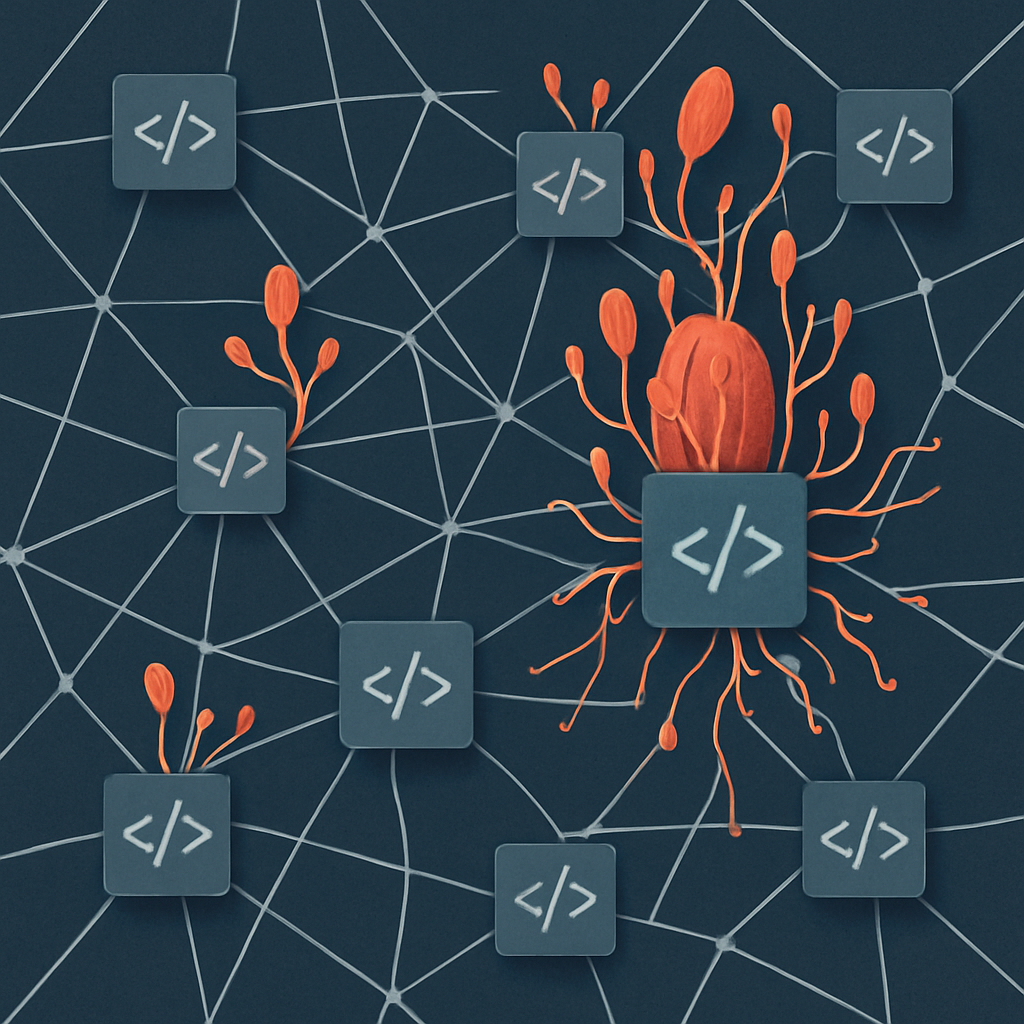
A critical supply chain vulnerability, dubbed ‘Cordyceps,’ has been identified, posing significant risks to thousands of organizations by potentially granting attackers full control over code repositories. This flaw exploits weaknesses in Continuous Integration and Continuous Deployment (CI/CD) workflows, which are essential for automating software development processes.
CI/CD pipelines are integral to modern software development, automating tasks such as building, testing, and deploying code. These workflows often execute shell commands, manage signing keys, authenticate with cloud services, and handle software releases. Despite their critical functions, they are frequently treated as mere configuration files rather than as security-sensitive code, making them attractive targets for exploitation.
Security researchers at Novee have uncovered a systemic class of vulnerabilities within the open-source supply chain, characterized by command injection, flawed authentication mechanisms, artifact poisoning, and privilege escalation within GitHub Actions workflows. After analyzing approximately 30,000 high-impact repositories, they confirmed hundreds of fully exploitable attack chains.
Alarmingly, exploiting Cordyceps requires minimal effort. An individual with a free GitHub account can initiate an attack without special privileges or organizational ties. Actions as simple as submitting a pull request or commenting on one can trigger the exploit, potentially granting unauthorized control over a project’s build pipeline.
The potential impact is vast. A compromised repository supplying software to numerous organizations can lead to widespread security breaches, affecting sectors such as banking, cloud services, artificial intelligence, and end-user applications. Notably, major organizations including Microsoft, Google, Apache, Cloudflare, and the Python Software Foundation have confirmed and addressed vulnerabilities within their repositories.
The insidious nature of Cordyceps lies in its subtlety. The exploit involves multi-step chains where each individual component appears benign. For instance, an untrusted pull request might activate a low-privilege workflow, which then feeds into a high-privilege workflow, ultimately authenticating with a cloud environment possessing elevated permissions. While each step seems innocuous, their combination creates a pathway to full control, making detection by traditional security scanners challenging.
Standard security tools typically analyze individual files for known threat patterns. However, Cordyceps exploits arise from the interactions between multiple workflows, which may not be flagged by conventional scanners. This complexity underscores the need for more sophisticated detection mechanisms that can assess the interplay between various components within CI/CD pipelines.
In response to this threat, organizations are urged to reassess their CI/CD workflows, treating them as critical code requiring rigorous security scrutiny. Implementing stricter access controls, conducting comprehensive code reviews, and employing advanced security tools capable of detecting complex exploit chains are essential steps in mitigating the risks associated with Cordyceps.
The discovery of Cordyceps highlights the evolving nature of supply chain attacks and the importance of securing every aspect of the software development lifecycle. As attackers continue to find novel ways to exploit system interdependencies, organizations must remain vigilant and proactive in identifying and addressing potential vulnerabilities within their development processes.