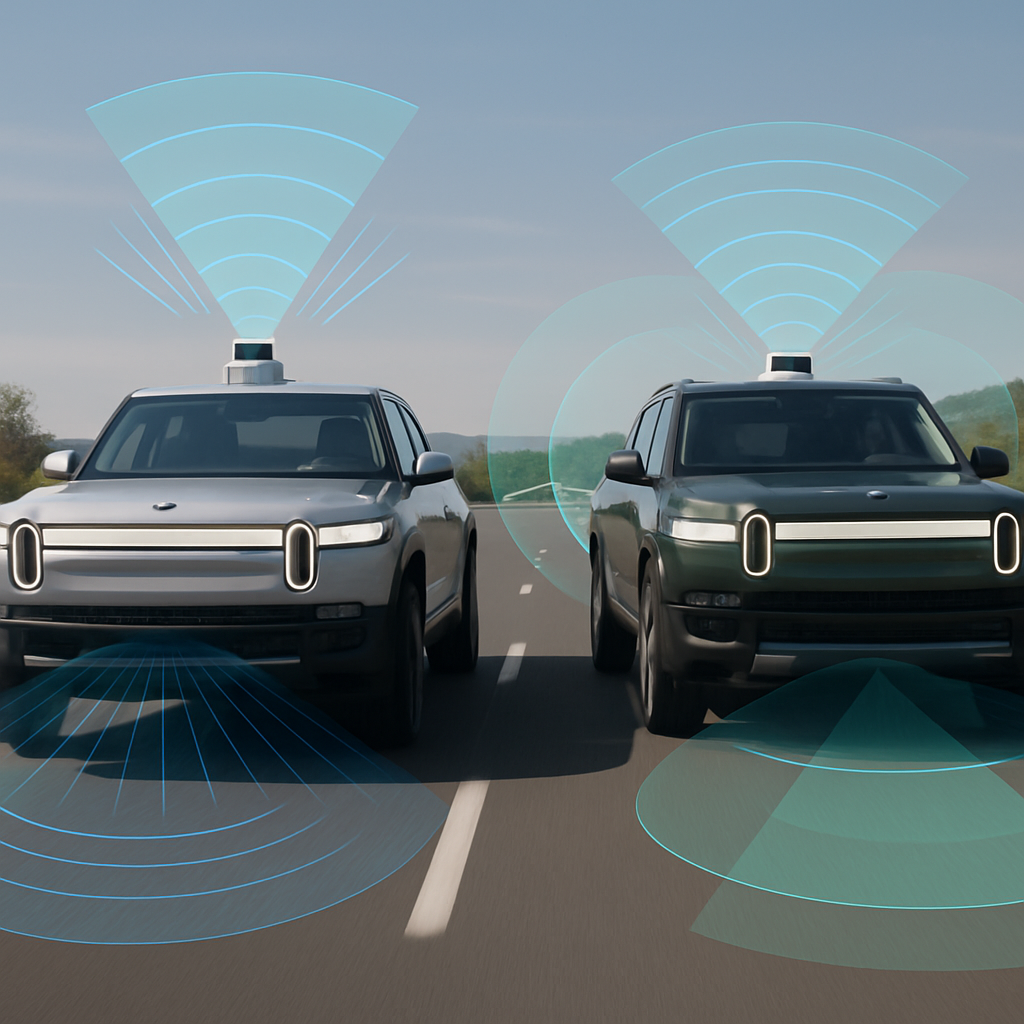
Rivian, the electric vehicle manufacturer, is currently facing a class-action lawsuit alleging that the company misrepresented the autonomous driving capabilities of its first-generation R1T trucks and R1S SUVs. The lawsuit, filed in the U.S. District Court for the Central District of California, claims that Rivian’s marketing suggested these vehicles would support hands-free, eyes-off driving, commonly referred to as Level 3 autonomy.
Level 3 autonomy, as defined by the Society of Automotive Engineers (SAE), allows a vehicle to manage steering, acceleration, and braking without driver intervention under specific conditions, such as on highways or at low speeds. However, the driver must remain attentive and ready to take control when necessary. The plaintiffs argue that Rivian’s promotional materials and statements from CEO RJ Scaringe, including his appearance at TechCrunch Disrupt 2022, led consumers to believe that the first-generation R1 models would be equipped with such capabilities.
The lawsuit asserts that Rivian knowingly misled consumers over a five-year period, claiming that its Driver+ system would enable true hands-free driving. The complaint states, “No software update—no matter how sophisticated—will enable its Gen 1 Vehicles to perform as advertised.” This suggests that the hardware limitations of the first-generation models prevent them from achieving the promised Level 3 autonomy.
Rivian has declined to comment on the pending litigation. The plaintiffs, represented by Coleman Law and Tycko & Zavareei, are seeking a jury trial and have filed claims for fraud, negligent misrepresentation, and unjust enrichment.
This legal challenge is not the first for Rivian. In 2025, the company agreed to a $250 million settlement in a class-action shareholder lawsuit following an unexpected price increase for its R1 vehicles in 2022.
It’s important to note that Rivian’s first-generation R1T and R1S vehicles do not offer hands-free driving capabilities. In contrast, the second-generation models, introduced in 2024, feature significant internal upgrades, including the “Rivian Autonomy Platform.” This platform comprises 11 cameras, five radar sensors, and a computing system ten times more powerful than its predecessor. These enhancements have enabled features like adaptive cruise control and highway assist, with the “Universal Hands-Free” driving feature rolled out via a software update in 2025.
This lawsuit underscores the critical importance of transparency in the rapidly evolving autonomous vehicle industry. As manufacturers push the boundaries of technology, clear and accurate communication about vehicle capabilities is essential to maintain consumer trust and avoid legal repercussions. Potential buyers should remain vigilant, seeking detailed information about the features and limitations of autonomous systems before making purchasing decisions.