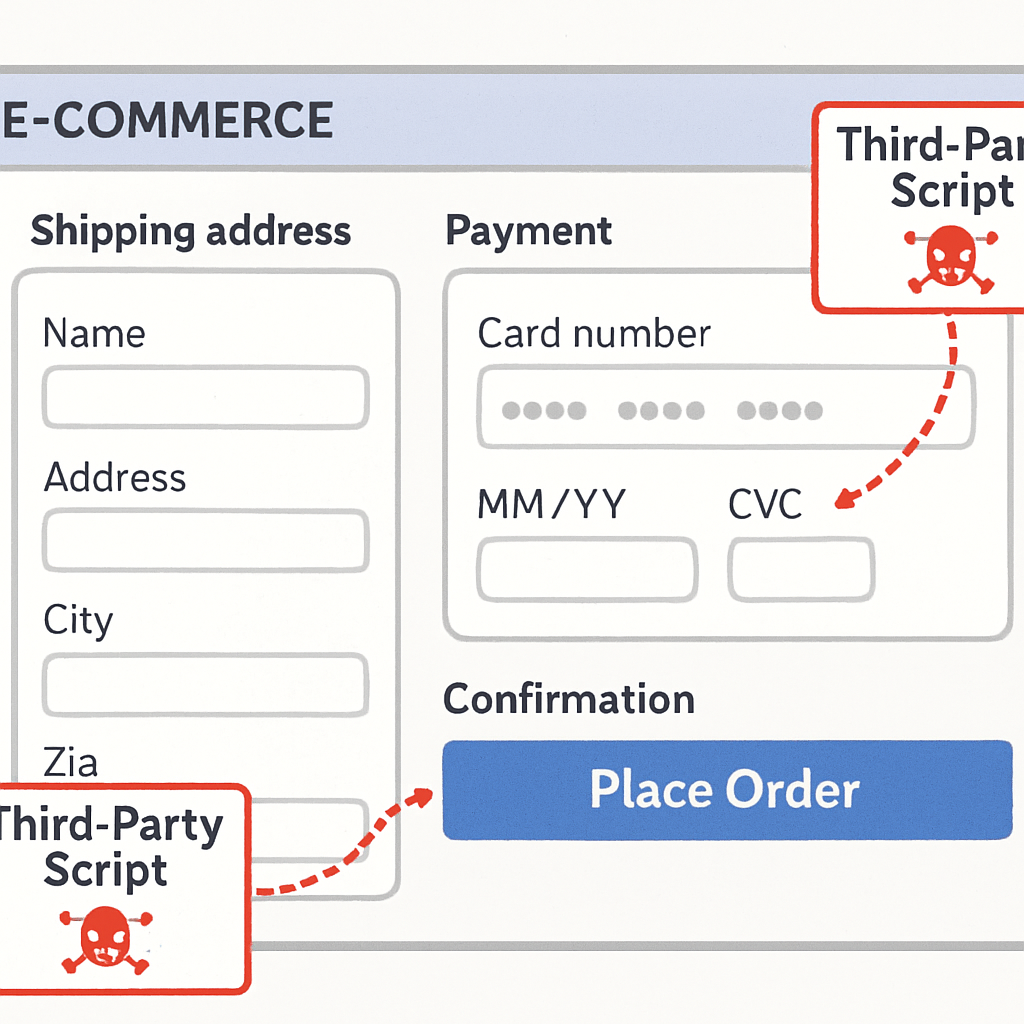
Modern e-commerce checkout pages often incorporate numerous third-party scripts, including analytics tools, tag managers, support widgets, and payment iframes. While these integrations enhance functionality, they also introduce significant security vulnerabilities. Malicious actors can exploit these scripts to inject harmful code, leading to data breaches and financial losses.
A notable example is the 2018 British Airways breach, where attackers compromised a third-party script, exposing 380,000 transactions and resulting in substantial fines. Such incidents underscore the risks associated with unmonitored third-party scripts on payment pages.
PCI DSS v4.0.1: Strengthening Security Measures
To address these vulnerabilities, the Payment Card Industry Data Security Standard (PCI DSS) version 4.0.1 introduces stringent requirements:
- Requirement 6.4.3: Organizations must maintain an inventory of all scripts on payment pages, ensure each script is authorized, and verify its integrity.
- Requirement 11.6.1: Organizations are required to detect and prevent tampering with payment page content and HTTP headers as they are received by the browser.
Implementing these requirements manually can be challenging, especially given the dynamic nature of web environments where scripts frequently change. For instance, data indicates that approximately 30% of payment-page scripts undergo changes within any two-week period.
Automated Solutions for Compliance
To effectively meet these new standards, automated solutions are essential. Tools like Reflectiz offer comprehensive monitoring by analyzing script behavior rather than relying solely on file hashes. This approach allows for the detection of unauthorized changes in real-time, even if the script’s source remains unchanged. Additionally, such solutions are agentless, requiring no code modifications, and can be deployed swiftly, ensuring continuous compliance without disrupting existing workflows.
Implications for SAQ A Merchants
For merchants utilizing Self-Assessment Questionnaire (SAQ) A, the new PCI DSS requirements have specific implications. Since January 2025, merchants can exclude requirements 6.4.3 and 11.6.1 from SAQ A only if they can demonstrate that their site is not susceptible to script attacks. This exemption is typically applicable to merchants who fully redirect customers to a third-party payment processor. However, if a merchant embeds a payment iframe, they must prove that scripts on the parent page cannot compromise the checkout process. Failure to provide such proof necessitates adherence to the new requirements.
In summary, the introduction of PCI DSS v4.0.1 emphasizes the critical need for vigilant monitoring and management of scripts on e-commerce checkout pages. Organizations must adopt robust solutions to ensure compliance and protect sensitive customer data from emerging threats.
As cyber threats continue to evolve, the emphasis on securing client-side scripts highlights a broader trend towards comprehensive security measures. Organizations should not only focus on compliance but also proactively implement technologies and practices that safeguard customer data, thereby maintaining trust and integrity in the digital marketplace.