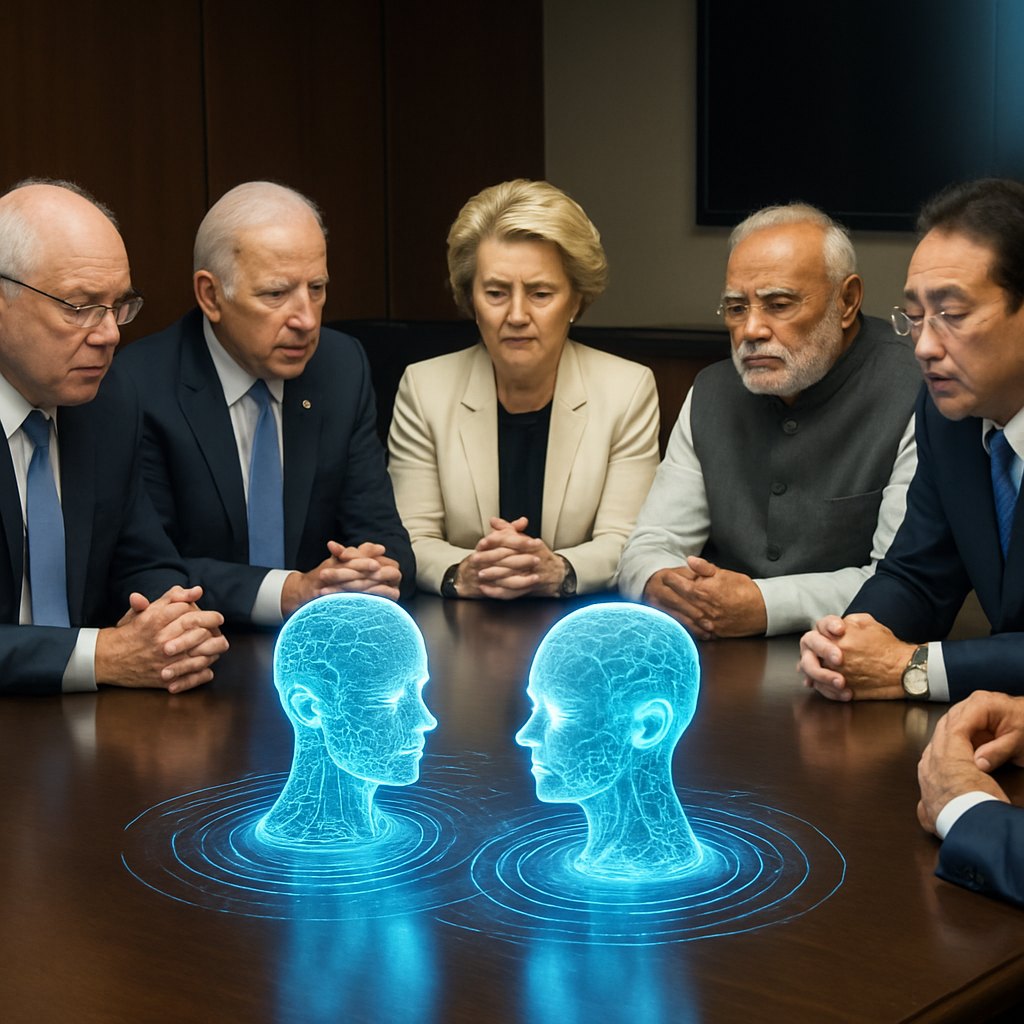
At the recent G7 Summit, international leaders, including French President Emmanuel Macron and Indian Prime Minister Narendra Modi, expressed concerns over the United States’ potential to unilaterally restrict access to its advanced artificial intelligence (AI) technologies. Macron highlighted the risk that sudden U.S. decisions to disable AI services could not only disrupt European economies but also harm the AI companies themselves.
This apprehension follows the Trump administration’s recent move to block Anthropic from exporting its latest AI models, Mythos 5 and Fable 5, citing national security concerns. The decision was influenced by reports from Amazon indicating that certain safety measures in these models could be circumvented. However, cybersecurity experts have pointed out that similar vulnerabilities exist in other widely available models, including those from OpenAI. Despite this, Anthropic’s models remain restricted.
The situation underscores a growing dilemma for international entities relying on U.S.-based AI infrastructure: the possibility of abrupt access termination without clear justification. Prime Minister Modi emphasized the necessity for democratic nations to have uninterrupted access to leading AI models to safeguard critical infrastructure.
Aidan Gomez, CEO of Canadian AI firm Cohere, echoed these sentiments, stating that dependence on a few major tech companies poses risks to economic security and national sovereignty. He stressed the importance of digital sovereignty beyond market competition, focusing on control over foundational technologies.
In response to these concerns, G7 leaders discussed establishing a “trusted partners” framework. This initiative aims to grant non-U.S. nations access to advanced AI models from companies like Anthropic and OpenAI, fostering an open trade network that circumvents U.S. restrictions. The framework would include both countries and companies committed to using these models to enhance defenses against competitors like China.
However, the scope and implementation details of the trusted partners scheme remain uncertain. Questions persist about its applicability to startups in regions like Paris or Bangalore that may face sudden service disruptions. Macron suggested that it would be in Washington’s interest to support such a scheme and ensure broader access to models like Mythos, as the prospect of unpredictable service termination could deter international clients from relying on U.S. AI technologies.
This development highlights the delicate balance between national security measures and the global demand for reliable access to cutting-edge AI technologies. As nations strive for digital sovereignty, the challenge lies in establishing frameworks that ensure both security and accessibility, fostering international collaboration without compromising individual nations’ control over critical technologies.