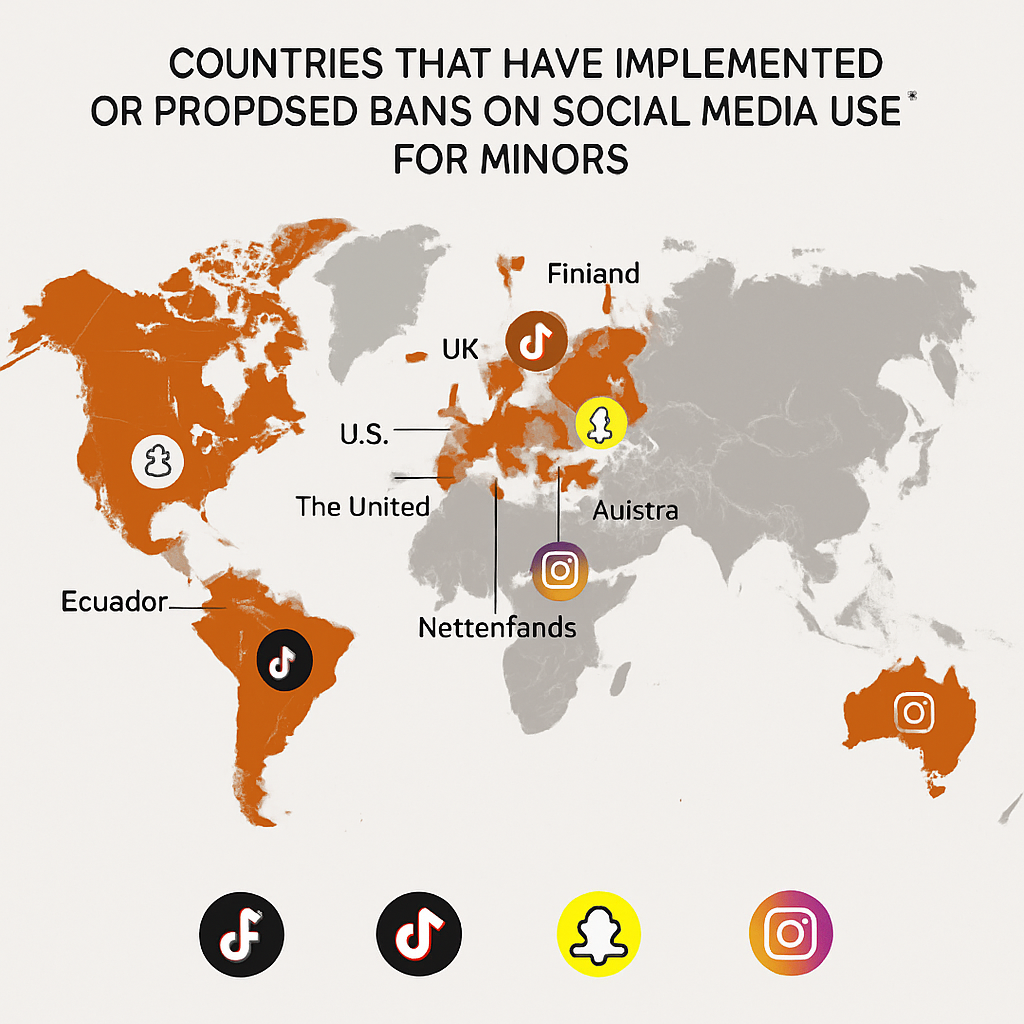
In recent months, a growing number of countries have initiated or proposed legislation to restrict social media access for minors, aiming to shield them from potential online harms such as cyberbullying, addiction, and exposure to inappropriate content.
United Kingdom
The United Kingdom has announced plans to prohibit individuals under 16 from using major social media platforms, including TikTok, YouTube, Snapchat, Instagram, Facebook, and X. This measure is designed to protect young users from harmful content and excessive screen time. The ban, expected to take effect next year, will impose penalties on tech companies that fail to comply, rather than targeting the children themselves. Prime Minister Keir Starmer emphasized the importance of child safety while acknowledging the challenges in enforcement. Exceptions will be made for platforms like YouTube Kids and messaging services such as WhatsApp and Signal. Additional measures under consideration include age limits for AI chatbots and usage curfews. The plan has received mixed reactions, with supporters praising the protective efforts and critics expressing concerns over enforcement, data privacy, and the potential ineffectiveness of blanket bans. Some fear that such bans could drive teens toward less regulated platforms. The move may also strain UK-U.S. relations, as the U.S. warns against overbroad regulations impacting free speech and American tech firms. Starmer plans to address the issue at the upcoming G7 summit.
Australia
Australia set a precedent in December 2025 by becoming the first country to ban social media for children under 16. The ban encompasses platforms such as Facebook, Instagram, Snapchat, Threads, TikTok, X, YouTube, Reddit, Twitch, and Kick, with exceptions for WhatsApp and YouTube Kids. Social media companies are required to implement multiple verification methods to ensure users are over 16, as self-reported ages are deemed insufficient. Non-compliant companies may face penalties up to $49.5 million AUD ($34.4 million USD).
Canada
Canada has introduced the Safe Social Media Act (Bill C-34), aiming to ban individuals under 16 from accessing social media platforms. The legislation responds to growing concerns over the harmful effects of social media on youth, including mental health deterioration, cyberbullying, and sexual abuse. The Act proposes a watchdog commission to enforce the ban, though enforcement mechanisms and age verification processes remain unclear and controversial due to potential privacy violations. Exemptions may be allowed for platforms that demonstrate adequate youth protections. While AI chatbots are excluded from the ban, they are expected to implement safeguards against harmful content. Canada’s move aligns with similar efforts in Australia and ongoing debates in the UK, amid a broader global reckoning with tech companies’ responsibilities regarding child safety online.
Other Countries
Several other nations are considering or have implemented similar restrictions:
- Austria: Plans to ban social media for children up to the age of 14, with draft legislation expected by June.
- Denmark: Set to ban social media platforms for children under 15, with potential implementation by mid-2026. The government is also launching a “digital evidence” app with age verification tools.
- France: Lawmakers passed a bill to ban social media for children under 15, supported by President Emmanuel Macron. The bill awaits approval from the country’s Senate.
- Indonesia: Announced a ban on children under 16 from using social media and other popular online platforms, starting with platforms such as YouTube, TikTok, Facebook, Instagram, Threads, X, Bigo Live, and Roblox.
- Malaysia: Plans to ban social media for children under 16, with implementation expected this year.
- Spain: Plans to ban social media for children under 16, pending parliamentary approval. The government also seeks to hold social media executives accountable for hate speech on their platforms.
These initiatives reflect a global trend toward stricter online safety regulations for minors. While the intent is to protect young users, the effectiveness and enforceability of such bans remain subjects of debate. Critics argue that these measures may drive children toward less regulated platforms and raise concerns about privacy and freedom of expression. As more countries consider similar actions, the balance between safeguarding youth and preserving digital rights continues to be a complex and evolving challenge.