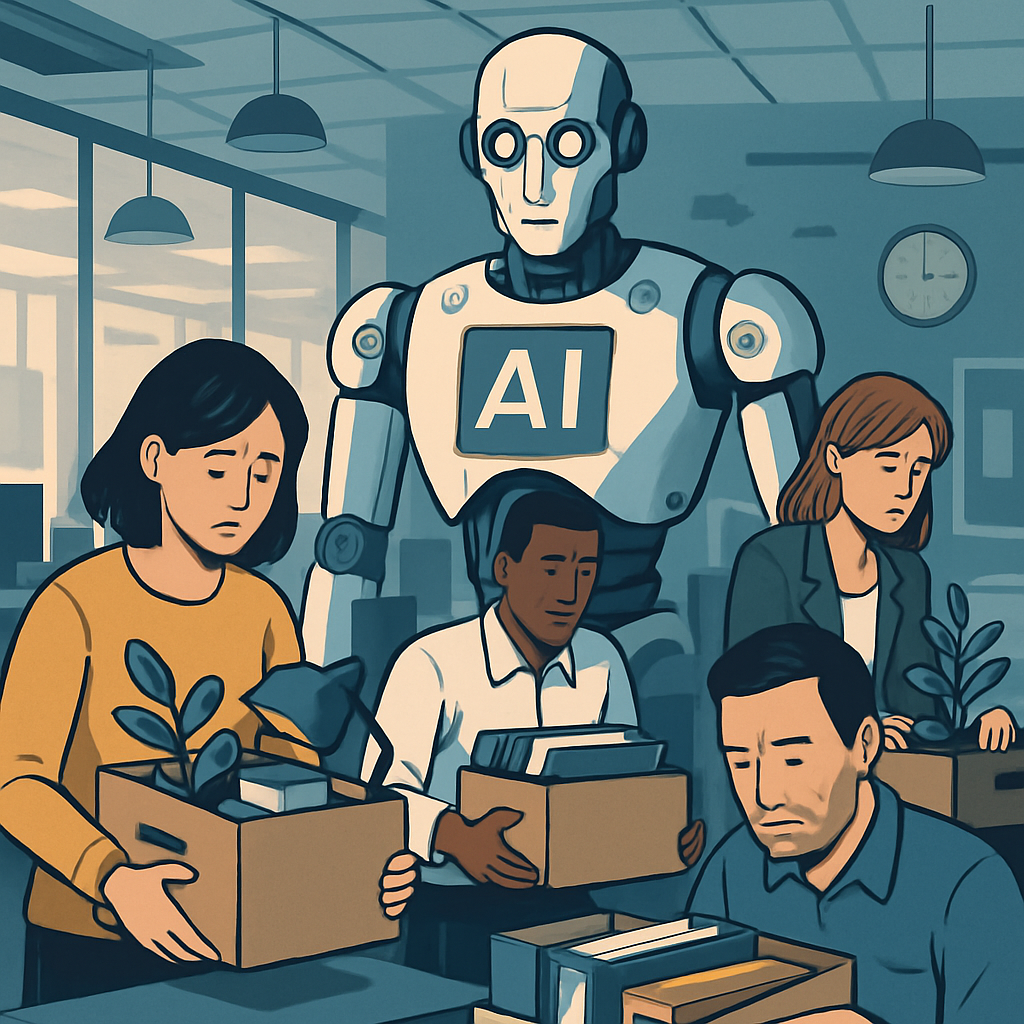
The tech industry is experiencing a paradoxical trend: companies are reporting record profits while simultaneously implementing significant layoffs, often attributing these cuts to advancements in artificial intelligence (AI). According to data from TrueUp, a tech job board and recruiting platform, there have been approximately 363 layoffs in tech companies this year, affecting nearly 150,000 employees. This equates to about 974 job losses per day, a 44% increase compared to the previous year.
In May 2026, tech layoffs reached their highest monthly total in two years, with nearly 40,000 positions eliminated. For the third consecutive month, AI was cited as the primary reason for these job cuts across various industries. However, skepticism is growing regarding the validity of AI as the main driver behind these layoffs. Critics suggest that AI is being used as a convenient scapegoat to mask other underlying issues.
For instance, earlier this year, the payments company Block faced backlash after laying off nearly half of its workforce. CEO Jack Dorsey initially attributed the reductions to the transformative impact of AI on business operations. However, under scrutiny, Dorsey conceded that the company had over-hired during the pandemic, indicating that the layoffs were more about correcting previous staffing excesses than about AI-driven efficiencies.
Venture capitalist Marc Andreessen has also weighed in on the issue, describing AI as a “silver bullet excuse” for layoffs that are actually due to overstaffing during the pandemic. He argued that many large companies are significantly overstaffed and are now using AI as a justification for necessary reductions.
Uber provides another example of this trend. The company recently cut about 23% of its human resources and recruiting division, affecting less than 1% of its 34,000 employees. While Uber stated that these cuts were unrelated to AI, the timing raised questions. Just a month prior, Uber’s Chief Technology Officer revealed that the company had exhausted its entire 2026 AI coding budget in four months, leading to spending caps on AI tools for engineers. This sequence of events suggests a more complex relationship between AI investments and workforce reductions.
Adding to the complexity, while many workers are facing job losses, a select group of AI industry leaders are amassing substantial wealth. For example, AI chipmaker Cerebras Systems recently went public, achieving a market capitalization of approximately $67 billion. This IPO created significant wealth for its co-founders, highlighting the stark contrast between the fortunes of AI executives and the broader workforce.
In summary, the current wave of tech layoffs, often attributed to AI, appears to be a multifaceted issue. While AI is undoubtedly transforming industries and influencing employment patterns, it is also being used as a convenient rationale for workforce reductions that may be driven by other factors, such as previous over-hiring or strategic restructuring. This situation underscores the need for a more nuanced understanding of the interplay between technological advancements and employment trends.