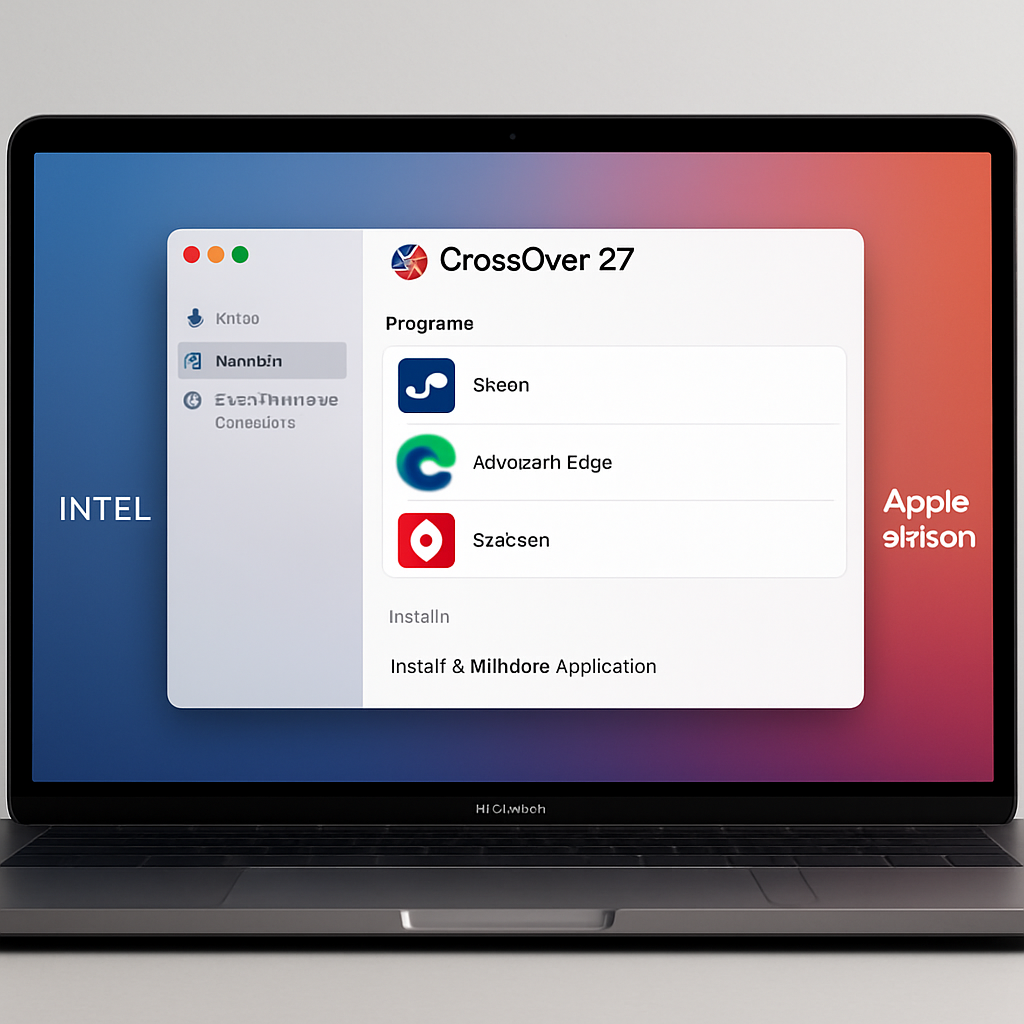
CrossOver, the software that enables Mac users to run Windows applications, has announced that its upcoming version 27 will exclusively support Apple Silicon Macs, discontinuing compatibility with Intel-based systems. This strategic shift aligns with Apple’s ongoing transition to its proprietary ARM-based processors.
Historically, CrossOver has served as a vital tool for Mac users seeking to run Windows applications without the need for a full Windows installation. By leveraging Wine, an open-source compatibility layer, CrossOver has facilitated the operation of numerous Windows programs on macOS. However, with the release of version 27, the software will require macOS Sonoma or later and will be compatible solely with Apple Silicon Macs.
In addition to dropping support for Intel-based Macs, CrossOver 27 will also phase out 32-bit gaming bottles. Users are encouraged to migrate their 32-bit games to 64-bit bottles to ensure continued functionality. The developers note that this change is expected to impact a minimal percentage of users, as approximately 97% of CrossOver users are already operating on macOS Sonoma or newer.
By focusing exclusively on Apple Silicon, the development team aims to streamline their efforts, enhancing the user interface and optimizing performance for a unified hardware architecture. This move reflects a broader industry trend of software developers aligning with Apple’s hardware evolution.
For users remaining on Intel-based Macs or older macOS versions, CrossOver 26 will continue to function as usual. However, it’s important to be aware that future game updates or operating system changes may lead to compatibility issues. Therefore, users may need to consider upgrading to Apple Silicon hardware to maintain optimal performance and access to the latest software features.
This transition underscores the rapid adoption of Apple Silicon within the Mac ecosystem. As developers increasingly tailor their applications to this architecture, users can anticipate improved performance and a more cohesive software experience. However, it also signals the gradual obsolescence of Intel-based Macs, prompting users to evaluate their hardware choices in light of evolving software support.