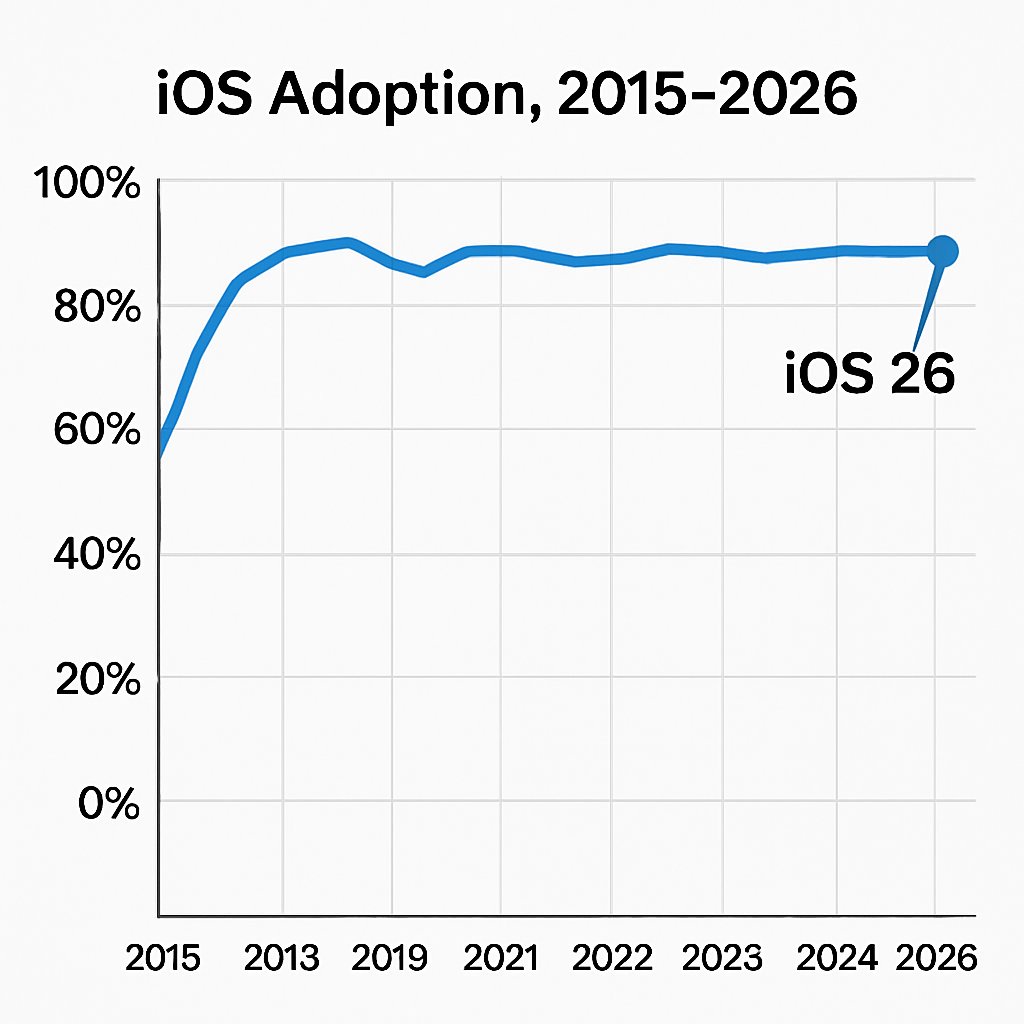
Apple’s latest operating system, iOS 26, has experienced slower adoption rates compared to its predecessors. As of June 2026, 79% of all iPhones are running iOS 26, a decrease from the 82% adoption rate observed for iOS 18 in June 2025. This places iOS 26 as the second-lowest adoption rate among iOS releases since 2015, with only iOS 17 having a lower rate.
Breaking down the adoption rates over the past decade, the figures are as follows:
- 2015 iOS 8: 84%
- 2016 iOS 9: 84%
- 2017 iOS 10: 86%
- 2018 iOS 11: 81%
- 2019 iOS 12: 88%
- 2020 iOS 13: 81%
- 2021 iOS 14: 85%
- 2022 iOS 15: 82%
- 2023 iOS 16: 81%
- 2024 iOS 17: 77%
- 2025 iOS 18: 82%
- 2026 iOS 26: 79%
These statistics indicate that iOS 26’s adoption rate is below the average of 82.3% for iOS releases from 2015 through 2026. However, there has been a notable increase since February 2026, when only 66% of iPhones were running iOS 26, suggesting a gradual uptake over recent months.
Despite this upward trend, a significant portion of users have yet to upgrade. Apple’s June 2026 App Store data reveals that 14% of devices remain on iOS 18, while 7% continue to operate on even older versions.
Focusing on newer devices, Apple reports that 86% of iPhones introduced in the last four years are running iOS 26. This figure matches the adoption rate of iOS 17 in 2024 but falls short of iOS 18’s 88% in 2025. When considering data from 2019 through 2026, the average adoption rate for devices released in the last four years stands at 87.6%, indicating that iOS 26’s adoption is slightly below this benchmark.
Several factors may contribute to the slower adoption of iOS 26. The update introduced significant changes, including a major redesign with the new Liquid Glass visual language and a shift towards on-device AI capabilities. Such substantial alterations can lead some users, particularly those with older devices, to delay updating due to concerns about adjusting to new interfaces or potential performance issues.
In conclusion, while iOS 26’s adoption rate is gradually increasing, it remains lower than previous versions. This trend underscores the challenges associated with encouraging users to transition to new operating systems, especially when significant changes are involved. As Apple continues to innovate, understanding user hesitancy and addressing concerns will be crucial in facilitating smoother adoption of future updates.