GM’s Bold Leap: Pioneering Affordable EVs with Advanced Battery Technology
Nestled within the expansive Warren Tech Center near Detroit, General Motors (GM) has unveiled a pivotal component of its ambitious $900 million investment in electric vehicles (EVs): the Battery Cell Development Center (BCDC). This unassuming 500,000-square-foot facility is poised to revolutionize GM’s EV strategy by significantly reducing production costs and accelerating the deployment of innovative battery technologies.
A Strategic Shift Amidst Industry Challenges
The U.S. EV market has experienced fluctuations, with GM facing its share of obstacles. In the previous year, the company incurred a $1.6 billion charge as it restructured its EV production capabilities, resulting in substantial workforce reductions. Additionally, GM temporarily postponed updates to its full-size EV trucks and SUVs. In response to these challenges, GM is undergoing a strategic transformation, with the BCDC playing a central role in this evolution.
Introducing Lithium-Manganese-Rich (LMR) Batteries
At the forefront of GM’s renewed focus is the development of lithium-manganese-rich (LMR) battery chemistry. Kurt Kelty, GM’s Vice President of Battery and Sustainability and a former leader in battery technology at Tesla, has championed LMR as the cornerstone of GM’s future EV lineup. Kelty emphasizes, That is really going to be our bread and butter. That is going to be our main product line.
The Evolution of Battery Technology at GM
Historically, GM’s EVs have been powered by nickel-manganese-cobalt (NMC) batteries, known for their high energy density but also for their elevated costs and reliance on materials predominantly sourced from China. The escalating prices of these critical minerals have contributed to higher EV costs, prompting GM to seek alternative solutions.
LMR batteries emerge as a promising alternative, offering energy densities comparable to NMC batteries while being more cost-effective. This advancement is particularly significant for models like the Chevrolet Silverado EV, where LMR batteries are projected to maintain the vehicle’s impressive range of over 400 miles and reduce costs by approximately $6,000. Such cost reductions could make EVs more accessible to a broader consumer base, narrowing the price gap between electric and traditional gasoline-powered vehicles.
The Role of the Battery Cell Development Center
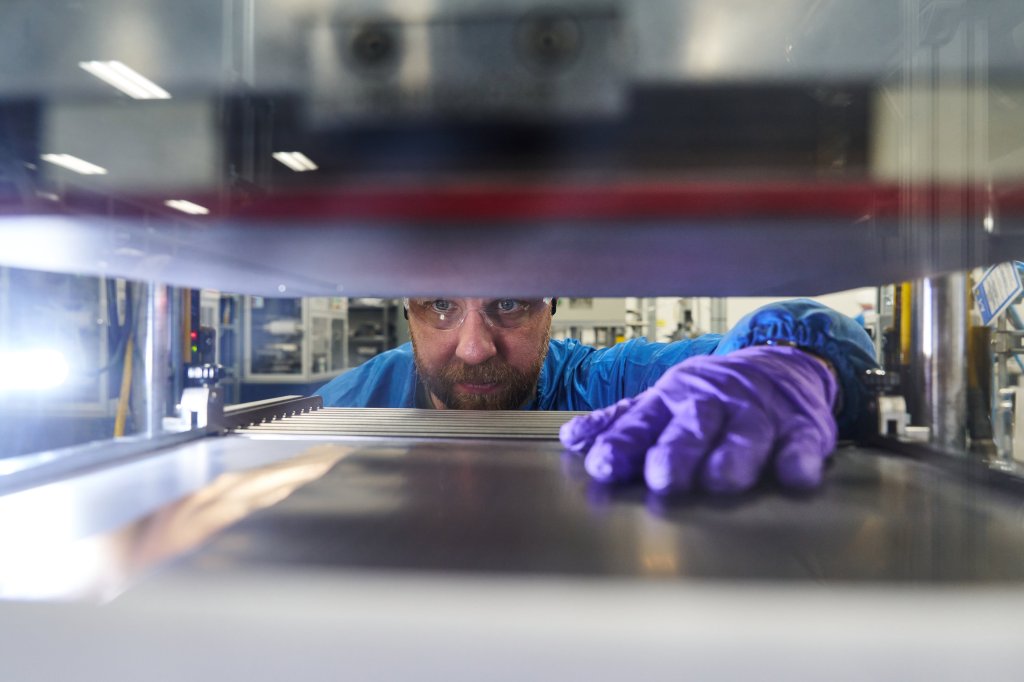
The BCDC is instrumental in GM’s strategy to expedite the transition from battery innovation to mass production. Functioning as an advanced pilot line, the facility is designed to produce around 2,500 battery cells daily, equating to approximately half a gigawatt-hour annually. This capacity enables GM to bridge the gap between research breakthroughs and large-scale manufacturing, ensuring that new battery technologies can be efficiently integrated into production lines.
Adjacent to the BCDC is the Wallace Battery Cell Innovation Center, where initial battery prototypes are developed. The BCDC’s role is to assess these prototypes’ readiness for mass production, facilitating a seamless transition from development to deployment. This integrated approach is expected to shorten the time required to bring new battery technologies to market by up to a year, providing GM with a competitive edge in the rapidly evolving EV landscape.
Navigating the Competitive EV Market
The global EV market is characterized by rapid advancements and intense competition, particularly from Chinese manufacturers who have made significant strides in battery technology and production efficiency. To remain competitive, GM recognizes the necessity of continuous innovation and agility in its operations.
The development and implementation of LMR batteries are central to GM’s strategy to offer high-performance EVs at more affordable prices. By reducing reliance on expensive and geopolitically sensitive materials like cobalt and nickel, GM aims to stabilize production costs and mitigate supply chain risks.
Future Prospects and Industry Implications
GM’s commitment to LMR battery technology and the establishment of the BCDC signal a proactive approach to addressing the challenges and opportunities within the EV market. By focusing on cost reduction, energy efficiency, and streamlined production processes, GM is positioning itself to meet the growing consumer demand for affordable and reliable electric vehicles.
The success of this initiative could have broader implications for the automotive industry, potentially setting new standards for battery performance and cost-effectiveness. As GM continues to refine its battery technologies and production capabilities, the company is poised to play a pivotal role in shaping the future of electric mobility.
Conclusion
General Motors’ strategic investments in battery technology, exemplified by the development of LMR batteries and the establishment of the Battery Cell Development Center, underscore the company’s commitment to leading the EV revolution. By prioritizing innovation and cost reduction, GM aims to make electric vehicles more accessible to consumers, thereby accelerating the transition to sustainable transportation.