WindBorne Systems’ AI Weather Forecasting Surpasses Government Agencies
In a significant advancement for meteorology, WindBorne Systems has unveiled WeatherMesh-6, an AI-driven weather forecasting model that delivers more frequent and precise predictions than traditional government-operated systems. This innovation marks a pivotal shift in weather prediction methodologies, leveraging deep learning to enhance accuracy and timeliness.
Origins and Evolution of WindBorne Systems
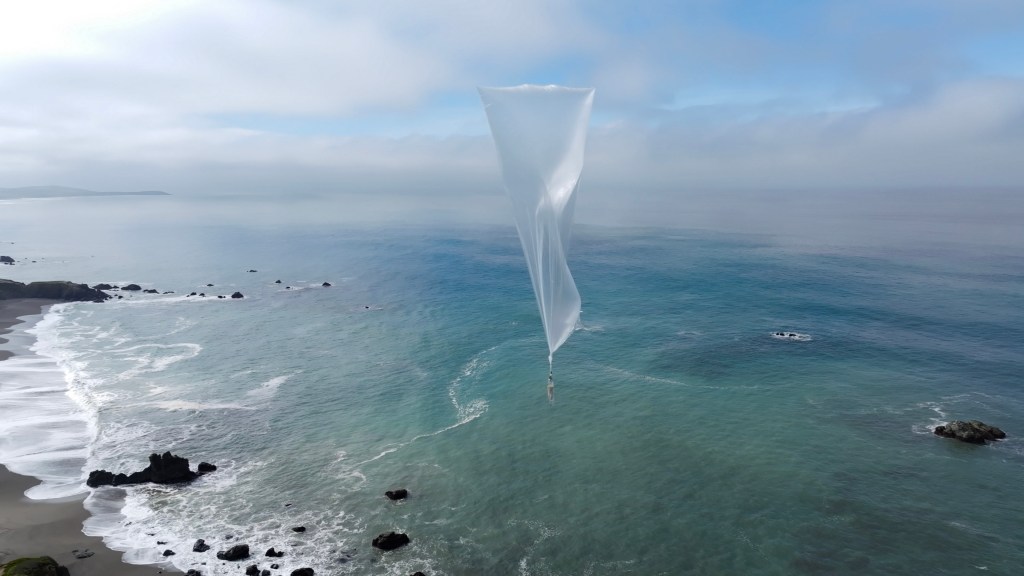
Established in 2019 by a team of Stanford University students, WindBorne Systems initially focused on developing advanced weather balloons to collect atmospheric data. The primary objective was to sell this data to various stakeholders. However, the emergence of deep learning models in weather forecasting by 2022 prompted the company to integrate their data collection capabilities with AI, leading to the creation of their proprietary forecasting model, WeatherMesh.
Introduction of WeatherMesh-6
The latest iteration, WeatherMesh-6, sets a new benchmark in forecasting accuracy. According to Kai Marshland, WindBorne’s Chief Product Officer, WeatherMesh-6 is as accurate five days out as a traditional forecast is the day before, particularly concerning surface temperature measurements. This level of precision represents a substantial improvement over existing models.
Unlike conventional models that generate forecasts every six hours, WeatherMesh-6 provides updates hourly. It offers a resolution of 3 kilometers in regions with high-quality data, such as Europe and the continental United States. This granularity allows for more localized and timely weather predictions.
Traditional Forecasting vs. AI Models
Traditional weather forecasting relies on complex physics-based models that necessitate significant computational resources and time. These models, while robust, often lack the agility required for rapid updates. In contrast, AI models like WeatherMesh-6 can process vast datasets more efficiently, enabling quicker and potentially more accurate forecasts.
The European Centre for Medium-Range Weather Forecasts (ECMWF) has long been regarded as a leader in accurate weather prediction. However, the advent of AI-driven models is challenging this dominance. Major research institutions and tech companies, including Google DeepMind, are actively developing AI-based forecasting systems, indicating a broader industry shift towards machine learning methodologies.
WindBorne’s Unique Approach
A key differentiator for WindBorne Systems is its dual focus on data collection and model development. The company operates approximately 400 weather balloons globally, launched from 15 sites, continuously gathering atmospheric data. This extensive network ensures a steady stream of high-quality data, which is directly integrated into their AI models.
John Dean, CEO of WindBorne, emphasizes the importance of proprietary data, stating, I don’t understand, personally, the business model of being [an] AI-based weather company without a dataset advantage. This strategy underscores the company’s commitment to maintaining a competitive edge through exclusive data acquisition.
Data Assimilation and Model Integration
The ECMWF’s success is largely attributed to its expertise in data assimilation—the process of converting diverse sensor readings into a cohesive, machine-readable format. Currently, many AI weather models depend on datasets from organizations like ECMWF and the U.S. National Oceanic and Atmospheric Administration (NOAA).
WindBorne is actively working to reduce this dependency by feeding data directly from their balloons into their models. Joan Creus-Costa, Head of AI at WindBorne, notes that this direct data ingestion is a primary factor in the enhanced performance of WeatherMesh-6. The company has dedicated a year to refining their transformer-based model to ensure stability and accuracy in forecasts.
Dean further elaborates, When we started doing [data assimilation], we were still very heavily reliant on ECMWF. I predict today, if we removed ECMWF’s initial conditions, we would actually still do pretty good. This statement reflects the company’s confidence in its evolving capabilities.
Safety Measures and Operational Challenges
In 2025, WindBorne faced a significant challenge when a United Airlines jetliner collided with one of its balloons. Although the aircraft sustained minor damage and no injuries occurred, the incident highlighted the need for enhanced safety protocols. In response, WindBorne now utilizes the global aviation surveillance system ADS-B to monitor air traffic and maneuver their balloons accordingly, minimizing the risk of future incidents.
Financial Growth and Market Position
WindBorne has secured $25 million in venture funding, achieving a valuation of $85 million by 2024. The company supplies balloon-derived data to NOAA, contributing to American weather forecasting efforts, and collaborates with the U.S. Air Force and Navy. Additionally, WindBorne offers its forecasts to investors and commodity traders.
Despite these commercial ventures, Dean emphasizes the company’s focus on enhancing their model and data infrastructure over developing consumer products. He remarks, I’m not trying to invest a massive team into building a SaaS product, if the way people want consumer information two years from now is through an agent, right? This approach reflects a strategic emphasis on foundational capabilities over immediate consumer applications.
Conclusion
WindBorne Systems’ introduction of WeatherMesh-6 signifies a transformative moment in weather forecasting. By integrating proprietary data collection with advanced AI modeling, the company is setting new standards for accuracy and frequency in weather predictions. As AI continues to reshape various industries, WindBorne’s innovations exemplify the potential for machine learning to revolutionize our understanding and anticipation of natural phenomena.