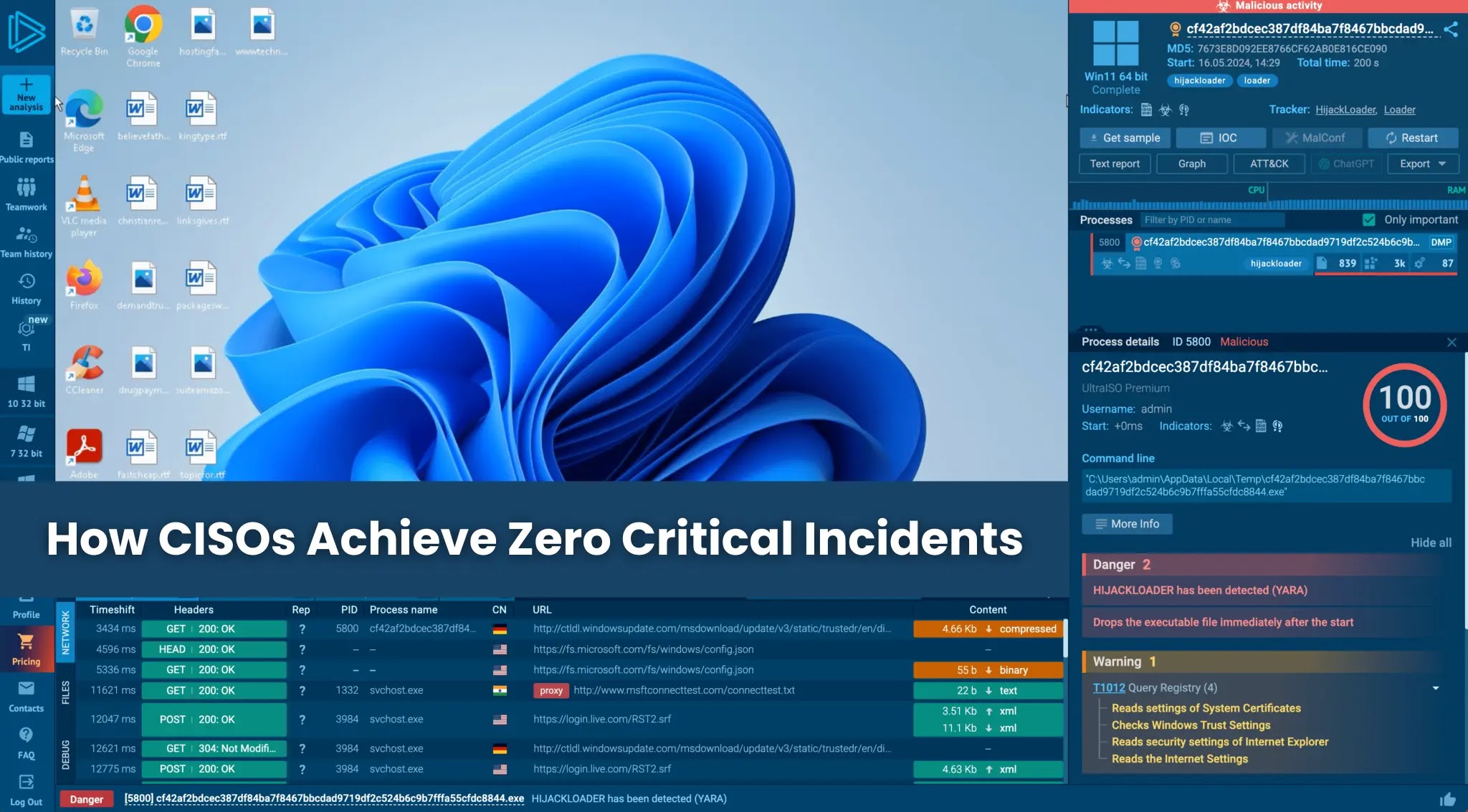
Enhancing Risk Visibility: Strategies for CISOs to Achieve Zero Critical Incidents
In the ever-evolving landscape of cybersecurity, Chief Information Security Officers (CISOs) are continually challenged to distinguish between genuine threats and false alarms. The inundation of alerts can lead to critical incidents being overlooked, while time is squandered on non-essential signals. To address this, leading CISOs are prioritizing enhanced risk visibility, aiming not merely to detect threats but to comprehend them swiftly, connect disparate signals, and empower Security Operations Centers (SOCs) to preemptively neutralize potential incidents.
Understanding the Visibility Gaps in SOCs
A primary obstacle for many SOCs is the fragmentation of threat information across various tools and signals, resulting in several key issues:
– Overlooking Subtle Threats: Minor indicators may appear innocuous until they are linked to a broader phishing or malware campaign.
– Inefficient Tool Integration: Analysts often lose valuable time toggling between different tools instead of rapidly assessing risks.
– Isolated Threat Analysis: Examining files, URLs, domains, and network activities separately can obscure the overall threat behavior.
– Analyst Overload: Senior analysts may become overwhelmed as junior staff lack the context to resolve cases confidently.
– Prolonged Exposure to Risks: Delays in understanding the scope and impact of threats can leave the organization vulnerable for extended periods.
Bridging the Visibility Gaps
To mitigate these challenges, it is crucial to integrate all facets of threat investigation—combining known indicators, real-time threat behavior, historical context, and actionable evidence. This holistic approach enables teams to validate risks promptly and respond effectively before minor alerts escalate into significant incidents.
1. Rapid Identification of Attack Chains
Understanding the complete behavior of a threat is essential. A file or link that seems benign may, upon execution, reveal malicious activities such as redirects, payload deliveries, network connections, and attempts at persistence. Utilizing interactive sandbox environments allows teams to observe these behaviors in real-time, providing a comprehensive view of the attack chain without piecing together fragmented alerts.
2. Streamlining Investigation Processes
By consolidating investigation stages, SOCs can reduce the time spent reconstructing threat narratives. This integration facilitates quicker validation of alerts, enabling teams to discern between false positives and genuine threats efficiently.
3. Empowering Analysts with Contextual Information
Providing analysts with detailed, context-rich reports enhances their ability to make informed decisions. Summarized findings, including identified indicators and their significance, equip both junior and senior staff with the necessary information to act decisively.
4. Leveraging Advanced Threat Intelligence
Incorporating advanced threat intelligence platforms that aggregate data from various sources, including dark web monitoring and geopolitical analysis, can enhance predictive capabilities. These platforms utilize machine learning algorithms to correlate seemingly unrelated events, such as spikes in phishing attempts and unusual network traffic, to identify potential reconnaissance activities. ([cybersecuritynews.com](https://cybersecuritynews.com/securing-critical-infrastructure-ciso/?utm_source=openai))
5. Implementing Zero Trust Architecture
Adopting a Zero Trust model, which operates on the principle of never trust, always verify, ensures continuous validation of every user, device, and transaction, regardless of location. This approach minimizes the risk of lateral movement within the network by requiring strict identity verification and access controls. ([cybersecuritynews.com](https://cybersecuritynews.com/zero-trust-architecture/?utm_source=openai))
6. Conducting Regular Penetration Testing
Regular penetration testing allows organizations to proactively identify and address vulnerabilities before they can be exploited by attackers. This practice provides a real-world assessment of the organization’s security posture and helps in fortifying defenses against potential breaches. ([cybersecuritynews.com](https://cybersecuritynews.com/penetration-testing/?utm_source=openai))
7. Automating Incident Response
Implementing automation in incident response processes can significantly reduce the mean time to resolution (MTTR). Automation enables rapid detection, analysis, and mitigation of threats, allowing security teams to focus on strategic initiatives rather than repetitive tasks. ([cybersecuritynews.com](https://cybersecuritynews.com/automating-incident-response/?utm_source=openai))
8. Managing Third-Party Vendor Risks
As organizations increasingly rely on third-party vendors, it’s essential to implement comprehensive third-party risk management strategies. This includes continuous monitoring, risk assessments, and establishing clear security requirements to mitigate potential vulnerabilities introduced by external partners. ([cybersecuritynews.com](https://cybersecuritynews.com/third-party-risk-management-for-cisos/?utm_source=openai))
Conclusion
Achieving zero critical incidents requires a multifaceted approach that enhances risk visibility and empowers SOCs to act proactively. By integrating comprehensive threat intelligence, adopting Zero Trust principles, conducting regular penetration testing, automating incident response, and managing third-party risks, CISOs can fortify their organizations against the ever-evolving cyber threat landscape.