Nuclear startup Deep Fission has announced plans to go public, aiming to raise $157 million through a Nasdaq IPO priced between $24 and $26 per share. This move follows a previous attempt in September 2025, when the company pursued a reverse merger with Surfside Acquisition, a Delaware shell company, raising $30 million at $3 per share. However, that transaction did not result in the company’s stock being publicly traded, as reported by TechCrunch.
Despite the earlier merger, Deep Fission’s shares never commenced trading on the OTCQB marketplace, and the company has confirmed that its stock has not been publicly traded to date. In response to inquiries, Deep Fission declined to comment, citing the quiet period preceding its IPO.
The company’s financial health has deteriorated over recent months. As of March, its deficit had increased to $88.1 million from $56.2 million, with cash and cash equivalents decreasing by $6.4 million, or about 7%, in the last month and a half. The latest S-1 filing includes a “going concern” warning, indicating that without the IPO proceeds, Deep Fission may exhaust its funds within the next 12 months.
On the technical front, Deep Fission has shifted its focus to drilling operations. The company began drilling the first of three test wells in March, aiming to collect data up to 6,000 feet deep. These test wells, at eight inches in diameter, are significantly smaller than the 30 to 50-inch diameter boreholes planned for commercial reactors. The company has yet to finalize the exact dimensions for these commercial-scale boreholes.
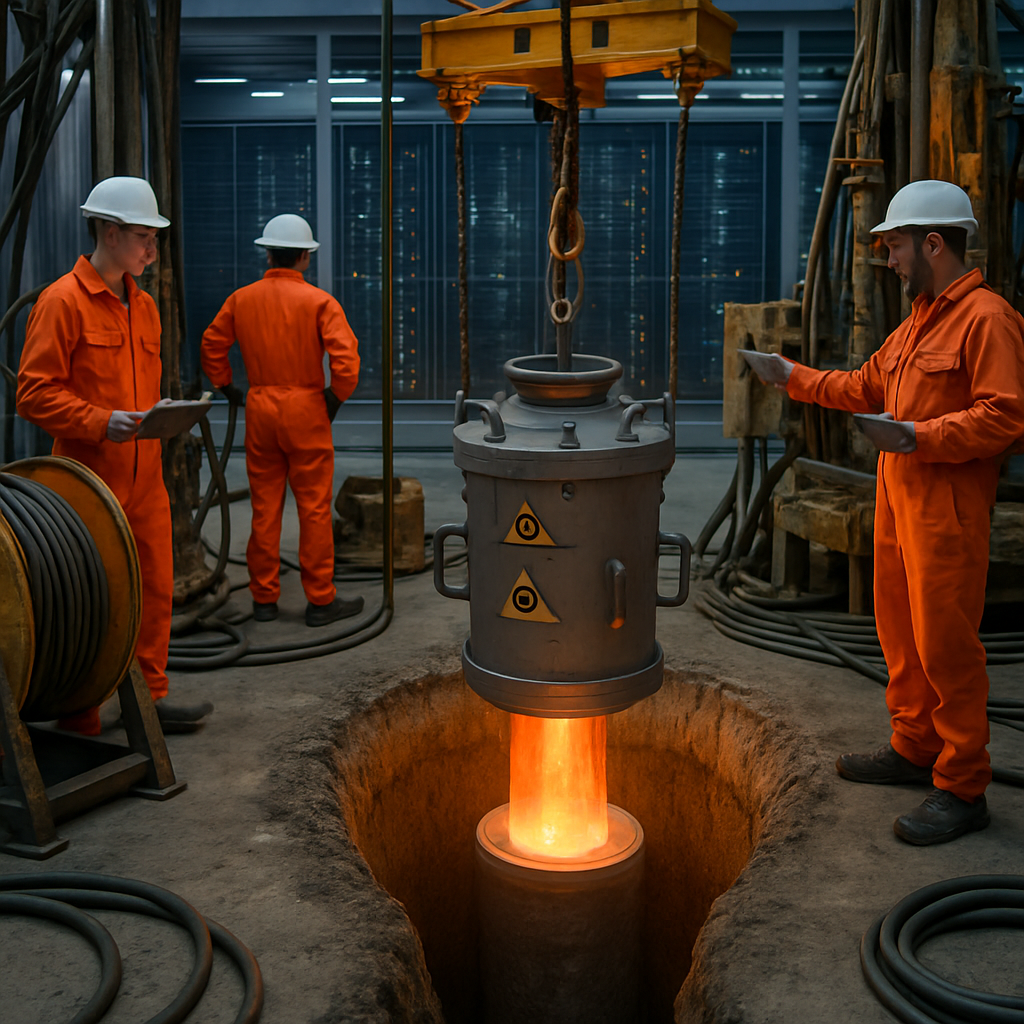
Deep Fission’s strategy involves deploying small, cylindrical nuclear reactors into deep underground boreholes to power AI data centers. This approach is intended to address safety concerns associated with traditional reactors by leveraging the Earth’s depth as a protective barrier.
Given the company’s financial challenges and the technical complexities of its proposed reactor deployment, investors should approach Deep Fission’s IPO with caution. The success of this venture hinges on the company’s ability to secure sufficient funding and overcome the substantial engineering hurdles associated with its innovative reactor design.
Source: TechCrunch