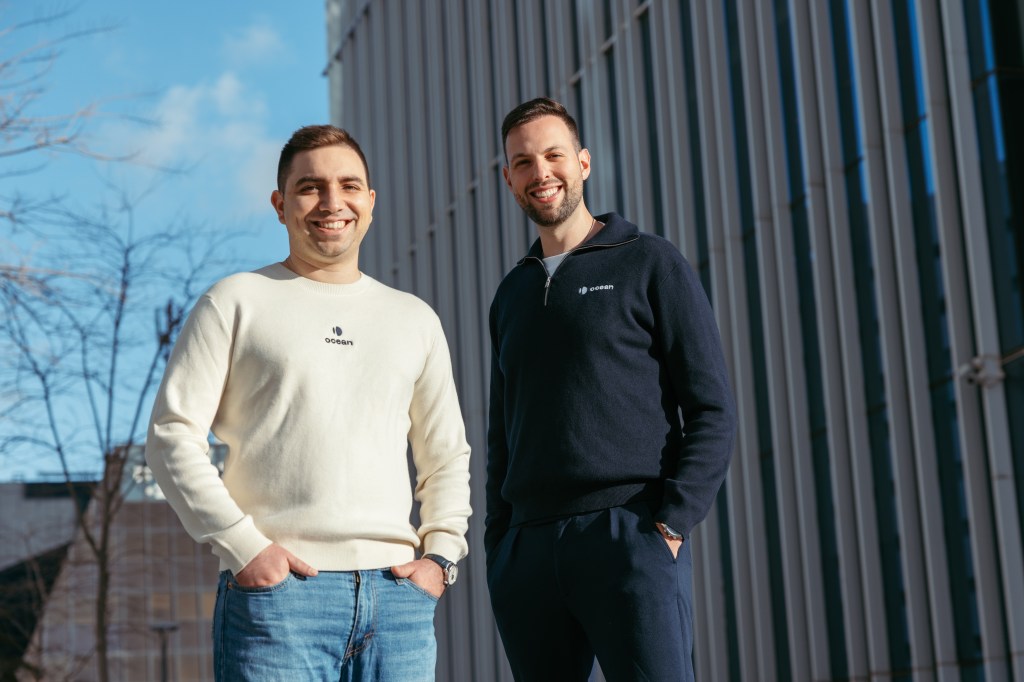
From Teen Hacker to Cybersecurity Innovator: Ocean’s $28M Mission to Combat AI-Driven Phishing
Shay Shwartz’s journey from a teenage hacker to a leading figure in cybersecurity is both compelling and instructive. At 16, Shwartz engaged in hacking activities for financial gain. However, after being apprehended, he redirected his talents toward defending against cyber threats. This pivotal moment set him on a path that would lead to significant contributions in the field of cybersecurity.
Over the next decade, Shwartz held prominent roles within Israel’s elite defense and intelligence units. Notably, he contributed to the Iron Dome project, Israel’s renowned missile defense system. His expertise was further recognized when he joined Axis, a cybersecurity startup that was subsequently acquired by Hewlett Packard Enterprise (HPE).
Despite these achievements, Shwartz harbored aspirations of founding his own company. Two years ago, he realized this ambition by launching Ocean, a startup dedicated to combating AI-powered phishing attacks. Ocean recently emerged from stealth mode, announcing a total funding of $28 million. The funding round was led by Lightspeed Venture Partners, with participation from Picture Capital and Cerca Partners. Additionally, prominent angel investors such as Assaf Rappaport, co-founder and CEO of Wiz, and Yevgeny Dibrov and Nadir Izrael, co-founders of Armis, contributed to the round.
Phishing attacks have long been a significant cybersecurity concern. Traditional methods often involve mass-distributed emails designed to deceive recipients into divulging sensitive information. However, the advent of artificial intelligence has transformed the landscape of these attacks. AI enables cybercriminals to automate and personalize phishing attempts, making them more convincing and challenging to detect.
In the past, executing a spear-phishing attack—a highly targeted form of phishing—required extensive research and manual effort. Only sophisticated hackers could afford the time and resources needed to craft such attacks. Shwartz explains, AI just made the entire process automatic, so the scale is much, much bigger now. I can instruct [a large language model] to go and understand exactly who you are, harvest large amounts of public information, and create those phishing attacks very targeted against you.
Ocean’s platform addresses this evolving threat by employing a small language model specifically designed to analyze incoming emails rapidly. This model assesses the sender’s intent and evaluates it against the recipient’s organizational context to detect fraud and impersonation attempts. Shwartz likens this approach to having a guard at every door, ensuring that inboxes remain secure and free from malicious content.
The effectiveness of Ocean’s solution is evidenced by its adoption among notable clients, including Kayak, Kingston Technology, and Headspace. The platform processes billions of emails monthly, providing robust protection against AI-driven phishing attacks.
The cybersecurity industry has witnessed a surge in startups focusing on AI-driven threats. For instance, Protect AI raised $35 million to develop tools that secure AI systems, while Reality Defender secured $15 million to detect deepfakes across various media formats. Similarly, Bolster, known for its CheckPhish phishing tracker, raised $14 million to enhance its capabilities. These developments underscore the growing recognition of AI’s dual role as both a tool for innovation and a vector for sophisticated cyber threats.
Ocean’s emergence and successful funding round highlight the critical need for advanced solutions to counteract the increasing prevalence of AI-powered phishing attacks. By leveraging AI to combat AI-driven threats, Ocean exemplifies a proactive approach to cybersecurity, ensuring that organizations can safeguard their communications in an era where cyber threats are becoming more sophisticated and pervasive.