Enhancing SOC Efficiency: Three Proven Tactics to Operationalize Threat Intelligence
In today’s rapidly evolving cyber threat landscape, Security Operations Centers (SOCs) are under immense pressure to detect and respond to incidents swiftly. A data breach can make headlines for a day, but the damage it inflicts can last for years. The real business risk isn’t just a catastrophic event; it’s the prolonged exposure that allows threats to escalate. Reactive security measures address incidents as they occur, but only proactive strategies build resilience against the cumulative impact of cyber threats. The key to this proactive approach lies in effectively operationalizing threat intelligence. Here are three tactics that elite SOCs employ to integrate threat intelligence seamlessly into their operations.
Tactic 1: Shrink the Window of Exposure with Real-Time Intelligence
Attackers operate with speed and precision. Every minute between an initial compromise and its detection increases the potential for damage—more systems can be infiltrated, more data can be exfiltrated, and the risk of regulatory penalties escalates. Mean Time to Respond (MTTR) isn’t merely a technical metric; it represents the duration of business risk.
Traditional enrichment workflows often introduce delays. Analysts may find themselves toggling between multiple platforms, manually validating indicators, and determining the relevance of alerts—a process that consumes valuable time. Mature SOCs eliminate these bottlenecks by implementing continuous intelligence delivery systems.
For instance, platforms like ANY.RUN’s Threat Intelligence Feeds provide real-time, validated indicators sourced from live malware and phishing investigations. These indicators integrate directly into SIEM, SOAR, and EDR environments, eliminating the need for manual searches. Built on millions of analysis sessions contributed by over 15,000 organizations worldwide, this approach enables earlier threat detection, faster correlation, and a measurable reduction in dwell time.
Tactic 2: Transform Indicators into Actionable Triage Decisions
Many SOCs are inundated with disconnected indicators—hashes, domains, IPs, URLs—that, in isolation, provide little context about risk, intent, or operational relevance. This lack of context results in noise, false positives, and inconsistent decision-making.
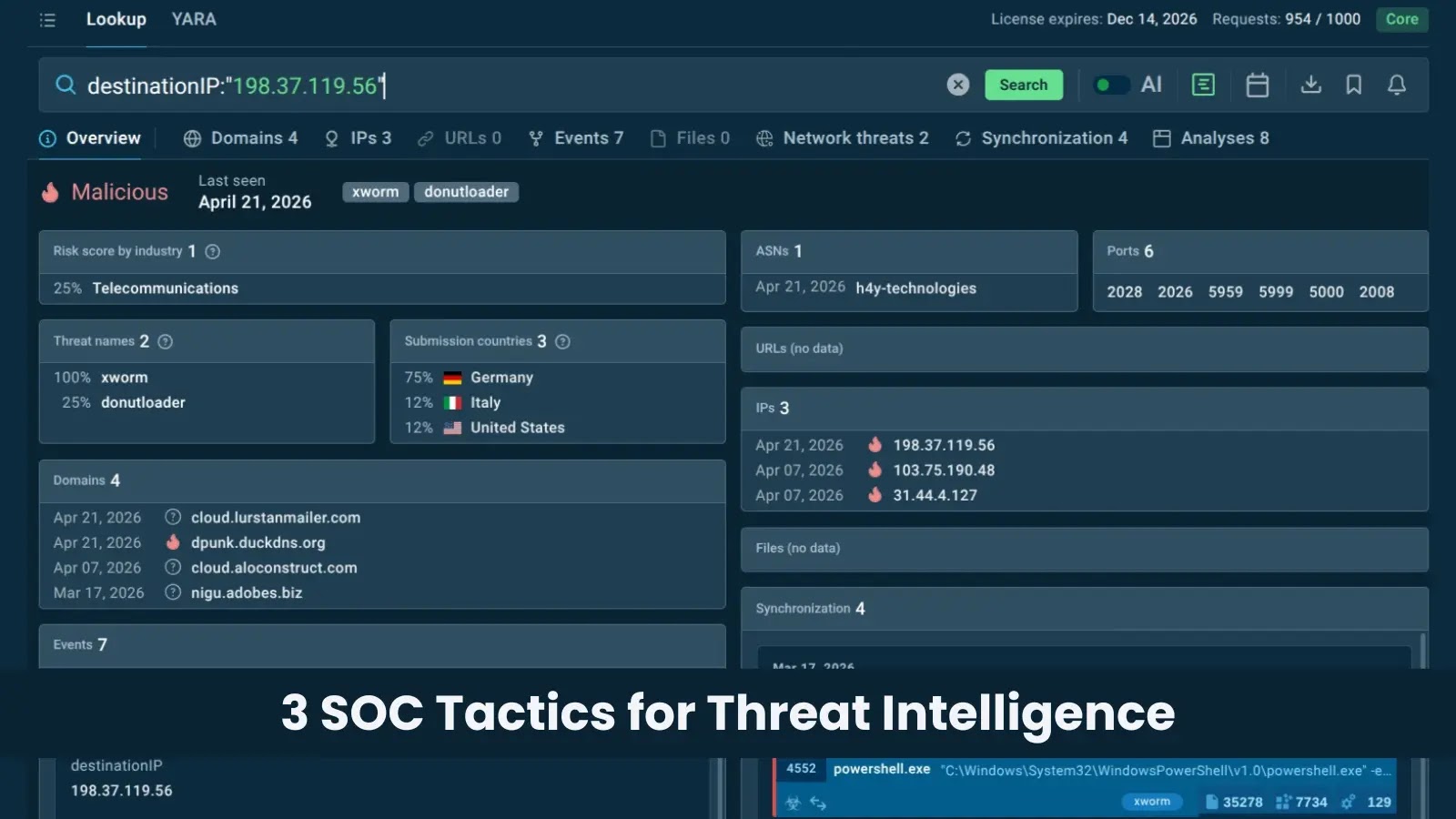
High-performing SOCs enrich every indicator with behavioral insights, infrastructure relationships, Tactics, Techniques, and Procedures (TTPs), and connections to real-world attack executions. Tools like ANY.RUN’s Threat Intelligence Lookup allow analysts to query across over 40 indicator types—including file hashes, IPs, domains, registry keys, YARA rules, and MITRE ATT&CK techniques—and receive comprehensive results. These results include not just a verdict but a full pivot surface connecting related infrastructure, malware families, and live sandbox sessions.
By transforming isolated indicators into connected threat narratives, SOCs can make more informed triage decisions. For example, querying a specific IP address can reveal its association with a malware family actively targeting enterprises in a particular region, along with additional Indicators of Compromise (IOCs) for detection tuning—all within seconds.
Tactic 3: Manage Cognitive Load to Prevent Analyst Burnout
Alert fatigue is a significant threat to SOC performance. Organizations face an average of 960 security alerts daily. According to the Tines Voice of the SOC Analyst report, 71% of SOC analysts report burnout, with some teams experiencing turnover cycles under 18 months. When experienced analysts leave, organizations lose valuable tacit knowledge that is difficult to replace.
To manage cognitive load effectively, SOCs must implement strategies that prioritize alerts and streamline workflows. This involves:
– Automating Routine Tasks: Implementing automation for repetitive tasks allows analysts to focus on more complex investigations.
– Prioritizing Alerts: Developing a risk-based prioritization model that weighs threat severity against asset criticality helps in focusing on the most significant threats.
– Providing Contextual Information: Enriching alerts with contextual information reduces the time analysts spend on manual research, enabling quicker decision-making.
By adopting these strategies, SOCs can reduce analyst burnout, improve response times, and enhance overall security posture.
Conclusion
Operationalizing threat intelligence is not just about integrating new tools into the SOC; it’s about transforming the approach to threat detection and response. By shrinking the window of exposure with real-time intelligence, transforming indicators into actionable triage decisions, and managing cognitive load to prevent analyst burnout, SOCs can move from a reactive to a proactive stance. This shift not only enhances the efficiency of security operations but also builds a resilient defense against the ever-evolving cyber threat landscape.