Tesla’s Robotaxi Service Expands to Dallas and Houston, Ushering in a New Era of Autonomous Transportation
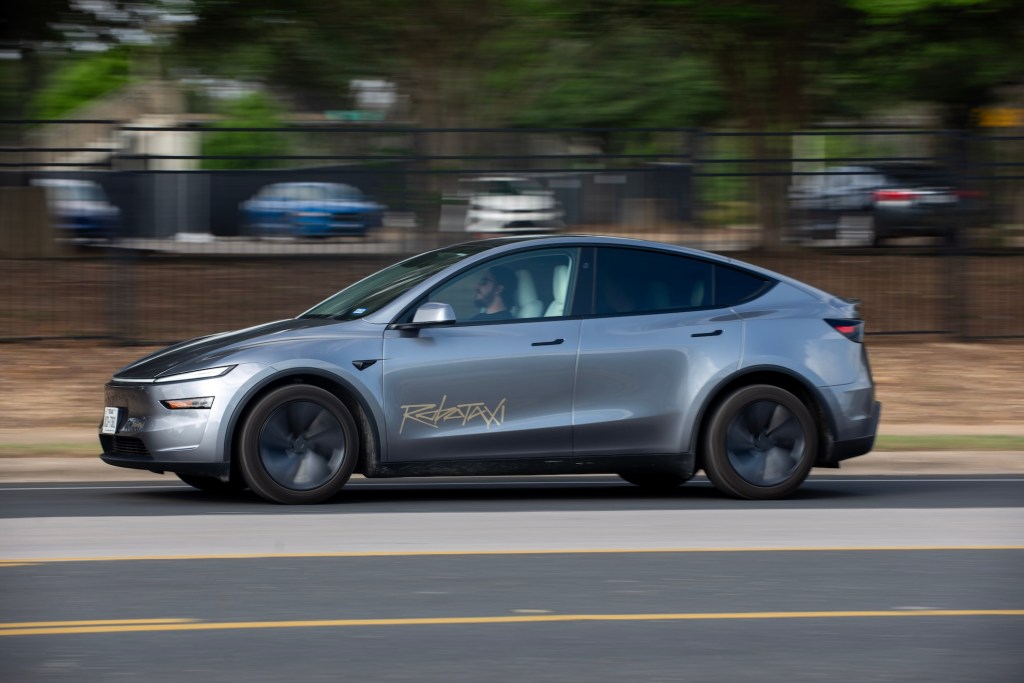
Tesla has officially expanded its autonomous ride-hailing service, Robotaxi, to the bustling cities of Dallas and Houston. This significant development was announced on April 18, 2026, through Tesla’s official Robotaxi social media account, which stated, Robotaxi is now rolling out in Dallas & Houston, accompanied by a brief video showcasing Tesla vehicles operating without human drivers or monitors in the front seats.
This expansion marks a pivotal moment in Tesla’s journey toward widespread autonomous transportation. Previously, the Robotaxi service was available exclusively in Austin, Texas, where it launched in June 2025. The Austin rollout began with human safety monitors present in the vehicles, but by January 2026, Tesla had transitioned to offering rides without these monitors, signaling increased confidence in their Full Self-Driving (FSD) technology.
The decision to extend the Robotaxi service to Dallas and Houston aligns with Tesla’s broader strategy to establish a robust presence in Texas, a state known for its supportive regulatory environment and rapidly growing urban centers. By choosing these cities, Tesla taps into substantial metropolitan populations, providing a fertile ground for testing and refining its autonomous ride-hailing capabilities.
Operational Details and Service Areas
While Tesla has not disclosed specific details regarding fleet size or pricing for the new markets, the initial service areas have been outlined. In Houston, the Robotaxi service will operate within a geofenced area encompassing the Jersey Village and Willowbrook neighborhoods, covering approximately 12 to 15 square miles. Dallas will see a more extensive initial coverage, including neighborhoods such as University Park, Highland Park, SMU, Uptown Dallas, Downtown Dallas, Victory Park, Lower Greenville, and Knox-Henderson, spanning roughly 30 to 35 square miles.
These geofenced zones mirror Tesla’s approach in Austin, where the service initially covered a 20-square-mile area before expanding. This phased rollout strategy allows Tesla to monitor performance, gather data, and make necessary adjustments to ensure safety and reliability before broader deployment.
Safety and Performance Metrics
Tesla’s foray into autonomous ride-hailing has not been without challenges. In a February 2026 filing, the company reported that its Austin-based Robotaxis had been involved in 14 crashes since the service’s inception. While specific details of these incidents were not disclosed, Tesla emphasized its commitment to safety and continuous improvement of its FSD technology.
The expansion into Dallas and Houston will undoubtedly be closely monitored by both regulatory bodies and the public. Tesla’s ability to demonstrate the safety and reliability of its Robotaxi service in these new markets will be crucial for gaining public trust and achieving broader acceptance of autonomous vehicles.
Competitive Landscape
Tesla’s move into Dallas and Houston comes at a time when the autonomous ride-hailing industry is experiencing significant momentum. Competitors such as Alphabet’s Waymo and Amazon’s Zoox have been accelerating their own autonomous vehicle programs, aiming to capture market share in this burgeoning sector.
Waymo, for instance, has established itself as a leader in the robotaxi field, operating in 11 cities and completing over 500,000 paid trips weekly. The company has logged 200 million driverless miles, showcasing the viability of its technology. However, Waymo functions primarily as a technology supplier rather than a fleet operator, differentiating its business model from Tesla’s integrated approach.
Uber, another major player in the ride-hailing industry, leverages its established platform to match riders with vehicles efficiently. However, Uber relies on external partners for vehicle supply and maintenance, which presents challenges in scaling an autonomous fleet.
Tesla’s advantage lies in its vast amount of real-world driving data collected from nearly 3.2 million vehicles, including 1.1 million equipped with its FSD system. This data is instrumental in refining Tesla’s autonomous driving algorithms. Notably, Tesla’s FSD approach differs from competitors by relying solely on camera-based vision systems, eschewing lidar and radar sensors.
Regulatory and Public Perception
The expansion of Tesla’s Robotaxi service into new markets will inevitably attract scrutiny from regulatory agencies and the public. Ensuring compliance with local regulations and addressing safety concerns will be paramount for Tesla’s success. Transparent communication regarding safety measures, incident reporting, and continuous improvements will be essential in building public trust.
Moreover, Tesla’s ability to navigate the complex regulatory landscape will set a precedent for future deployments in other cities and states. Collaborating with local authorities and engaging with communities will be crucial in facilitating a smooth rollout and fostering acceptance of autonomous ride-hailing services.
Future Outlook
Tesla’s expansion of its Robotaxi service to Dallas and Houston represents a significant step toward the company’s vision of a fully autonomous ride-hailing network. As Tesla continues to refine its FSD technology and expand its service areas, the company positions itself at the forefront of the autonomous transportation revolution.
The success of this expansion will depend on several factors, including technological advancements, regulatory approvals, public acceptance, and the ability to scale operations efficiently. Tesla’s integrated approach, leveraging its manufacturing capabilities, vast data resources, and direct-to-consumer model, provides a unique advantage in this competitive landscape.
As the autonomous vehicle industry evolves, Tesla’s Robotaxi service will serve as a critical case study in understanding the challenges and opportunities associated with deploying driverless ride-hailing services in complex urban environments.