Chef Robotics’ Strategic Pivot: From Startup Graveyard to Industry Leader
In the competitive landscape of food automation, many startups have struggled to find sustainable success. Companies like Chowbotics, known for its salad-making robot Sally, and Zume, which aimed to revolutionize pizza delivery, have faced significant challenges, leading to closures and industry skepticism. Amidst this backdrop, Chef Robotics has emerged as a beacon of resilience and innovation.
The Genesis of Chef Robotics
Founded in 2019 by Rajat Bhageria, Chef Robotics embarked on a mission to integrate artificial intelligence (AI) and robotics into the food industry. The initial focus was on automating processes within fast-casual restaurants—a sector plagued by labor shortages and high turnover rates. The vision was to deploy AI-powered robotic arms capable of assembling diverse meals, thereby enhancing efficiency and consistency.
Confronting the Grasping Challenge
A significant hurdle in food automation is the grasping problem. This refers to the difficulty robots face in handling various food items without damaging them. For instance, picking up a delicate blueberry without squishing it or handling cheese without causing it to clump requires nuanced dexterity. The lack of comprehensive datasets on how to manage such tasks compounded the challenge. Despite securing multimillion-dollar contracts with fast-casual chains, Chef Robotics found that the technology was not yet capable of meeting these complex demands.
A Strategic Pivot to High-Mix Manufacturing
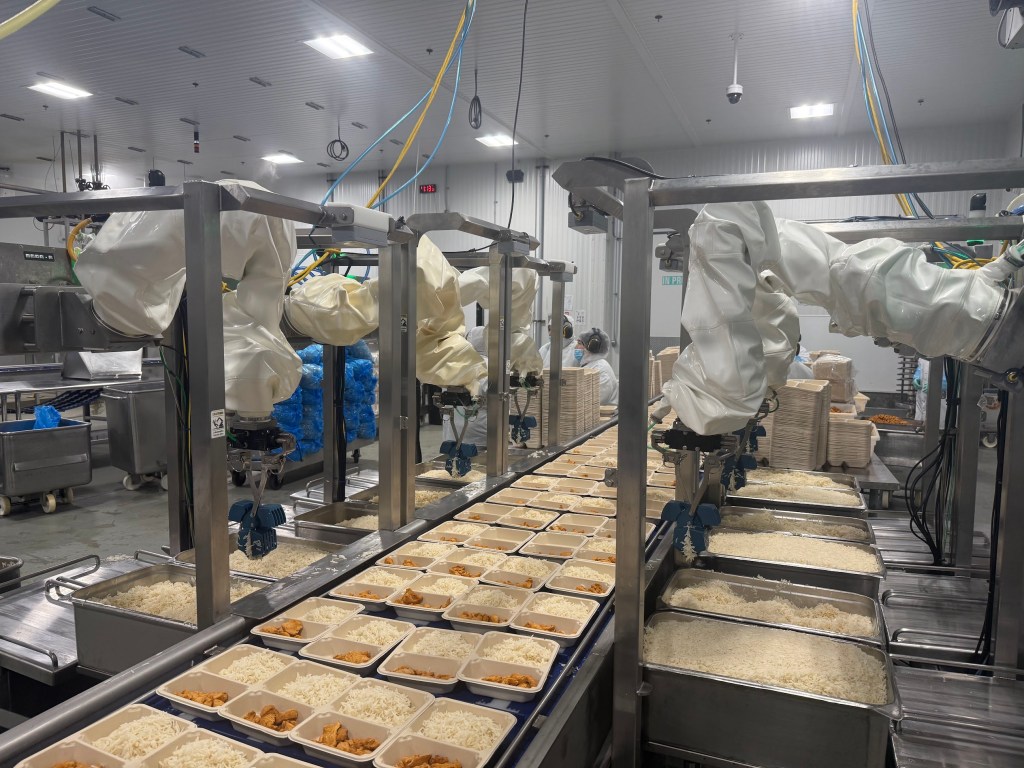
Recognizing the limitations of current technology in the fast-casual sector, Bhageria made a bold decision to pivot the company’s focus. Chef Robotics shifted its attention to high-mix manufacturing within the food industry. This segment involves producing a wide variety of meals in large quantities, such as those prepared for airlines, hospitals, and frozen food markets. In these settings, assembly lines are staffed by workers who repetitively add specific ingredients to meal trays—a process ripe for automation.
By concentrating on automating these repetitive tasks, Chef Robotics was able to deploy its technology more effectively. The robots were programmed to handle specific ingredients, allowing the company to gather valuable real-world data. This data collection was instrumental in refining their AI models, enhancing the robots’ ability to manage a broader range of food items over time.
Achieving Milestones and Expansion Plans
This strategic shift has yielded impressive results. As of April 2026, Chef Robotics announced that its robots have been responsible for over 100 million servings. In this context, a serving is defined as a portion of food deposited into a meal tray by the robot. This milestone underscores the company’s significant impact on large-scale food production.
Building on this success, Chef Robotics is now setting its sights on expanding into smaller kitchens. Interestingly, this includes partnerships with major airline catering companies, indicating the versatility and scalability of their technology. Additionally, the company plans to venture into ghost kitchens—facilities that prepare meals exclusively for delivery services like DoorDash. Future ambitions also encompass collaborations with fast-casual restaurants, stadiums, and correctional facilities.
Leveraging Data for Continuous Improvement
A cornerstone of Chef Robotics’ strategy is the continuous improvement of its AI models. The data amassed from the 100 million servings is being utilized to enhance the robots’ food handling and packaging capabilities. The inherent variability of food items—ranging from size and shape to texture—poses significant challenges for automation. By feeding real-world data into their AI systems, Chef Robotics aims to refine their technology, enabling robots to handle a diverse array of food products with increased precision and efficiency.
Navigating the Competitive Landscape
The journey of Chef Robotics offers valuable insights into the broader field of food automation. The industry has witnessed numerous startups falter due to technological limitations, market misalignments, or operational challenges. For instance, Chowbotics’ acquisition and subsequent shutdown by DoorDash highlight the volatility of the sector. Similarly, Zume’s ambitious attempt to disrupt pizza delivery ended in collapse, underscoring the difficulties inherent in automating food preparation and delivery.
In contrast, Chef Robotics’ success can be attributed to its adaptability and strategic decision-making. By recognizing the limitations of existing technology and pivoting towards a more feasible application, the company has carved out a sustainable niche. This approach not only addresses immediate market needs but also positions Chef Robotics to capitalize on future advancements in AI and robotics.
The Road Ahead
Looking forward, Chef Robotics is poised to play a pivotal role in the evolution of food automation. The company’s focus on high-mix manufacturing has demonstrated the viability of robotics in large-scale food production. As their AI models continue to improve, the potential applications of their technology are vast.
However, challenges remain. The food industry is inherently complex, with diverse products and stringent safety standards. Ensuring that robots can handle a wide range of food items without compromising quality or safety is paramount. Additionally, as Chef Robotics expands into new markets, it will need to navigate varying regulatory environments and consumer expectations.
Nonetheless, the company’s journey from a struggling startup to an industry leader serves as a testament to the power of strategic pivots and technological innovation. By focusing on achievable goals and continuously refining their technology, Chef Robotics has not only survived but thrived in a challenging industry landscape.