Inertia Enterprises Partners with LLNL to Commercialize Laser-Based Fusion Energy
In a significant stride toward sustainable energy, Inertia Enterprises has announced a collaboration with the Lawrence Livermore National Laboratory (LLNL) to commercialize laser-based fusion technology. This partnership encompasses three agreements aimed at transforming the experimental fusion reactor developed at LLNL into a viable commercial power source.
Inertia Enterprises: A Rising Star in Fusion Energy
Founded by Jeff Lawson, co-founder and CEO of Twilio, Inertia Enterprises has rapidly emerged as a formidable player in the fusion energy sector. In February 2026, the company secured a substantial $450 million in Series A funding, led by Bessemer Venture Partners and Alphabet’s GV. This financial backing positions Inertia among the most well-capitalized startups in the industry, providing a solid foundation for its ambitious projects.
The National Ignition Facility’s Breakthrough
The National Ignition Facility (NIF) at LLNL has achieved a landmark in fusion research by demonstrating that controlled fusion reactions can produce more energy than required to initiate them. This milestone, known as scientific breakeven, was reached after 25 years of dedicated research and development. The NIF’s success serves as a pivotal proof-of-concept for the feasibility of fusion energy as a sustainable power source.
Inertial Confinement Fusion: The Path Forward
Inertia Enterprises and LLNL are focusing on inertial confinement fusion, a method that compresses a fuel pellet using external forces to achieve fusion conditions. This approach contrasts with magnetic confinement fusion, which relies on powerful magnetic fields to contain plasma until fusion occurs.
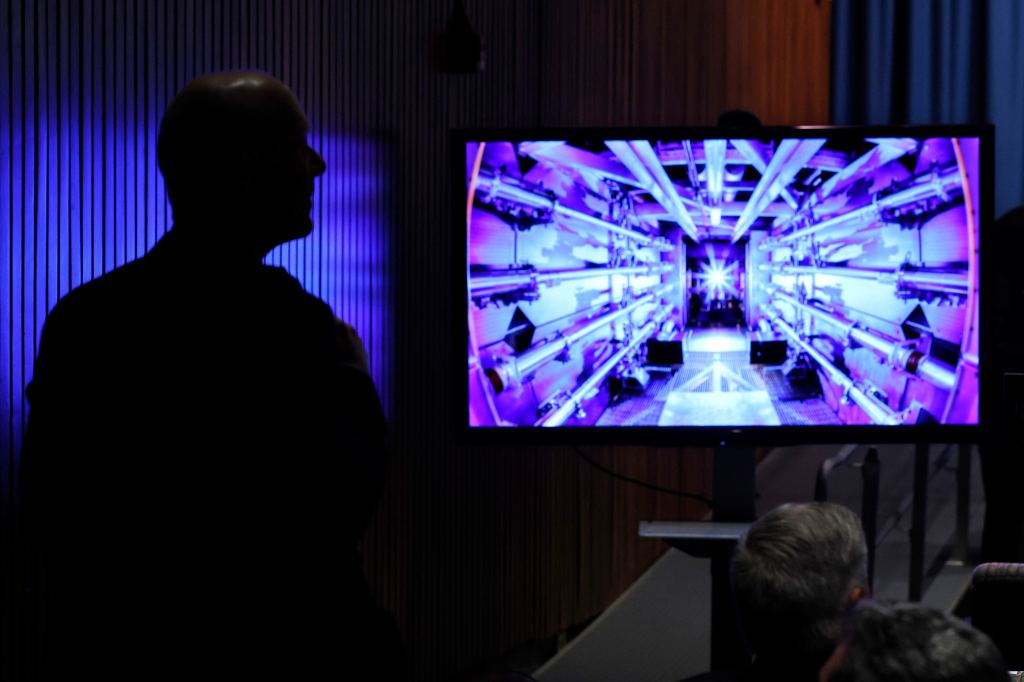
At the NIF, the process involves directing 192 laser beams into a vacuum chamber, converging on a small gold cylinder known as a hohlraum. Inside this hohlraum is a diamond-coated fuel pellet. When the lasers strike the hohlraum, it vaporizes, emitting X-rays that compress the fuel pellet. The diamond coating transforms into plasma, further compressing the deuterium-tritium fuel within. For this technology to be practical for power generation, these reactions must occur multiple times per second, a challenge that Inertia and LLNL are striving to overcome.
Historical Context and Technological Advancements
The concept of laser-driven fusion reactors dates back to the 1960s, initially proposed as a safer method for researching thermonuclear weapons. Scientists also recognized its potential for power generation. Construction of the NIF began in 1997, culminating in the recent achievement of scientific breakeven. This progress underscores the potential of fusion energy to provide a virtually limitless and clean power source.
Several startups, including Inertia, Xcimer, Focused Energy, and First Light, are working to scale this concept into commercial power plants. A key focus is on developing advanced lasers that are more efficient than the NIF’s older technology. By reducing the energy required to initiate each fusion reaction, these innovations aim to make fusion power plants commercially viable.
Strategic Agreements and Future Prospects
The collaboration between Inertia Enterprises and LLNL includes two strategic partnership projects and a cooperative research and development agreement. These initiatives aim to develop advanced lasers and improve fuel targets to enhance performance and manufacturability. Additionally, Inertia is licensing nearly 200 patents from LLNL, providing a robust intellectual property foundation for its endeavors.
Annie Kritcher, co-founder and chief scientist of Inertia, played a pivotal role in designing the successful experiment at NIF that achieved scientific breakeven. The 2022 CHIPS and Science Act facilitated her transition to founding Inertia while retaining her position at LLNL, fostering a seamless collaboration between the startup and the national laboratory.
The Road Ahead
The partnership between Inertia Enterprises and LLNL represents a significant step toward making fusion energy a practical and sustainable power source. By leveraging advanced laser technology and innovative approaches to inertial confinement fusion, this collaboration aims to overcome the challenges that have historically hindered the commercialization of fusion energy.
As the world seeks cleaner and more sustainable energy solutions, the success of Inertia and LLNL’s efforts could herald a new era in power generation. The potential to provide abundant, emission-free energy aligns with global goals to combat climate change and reduce reliance on fossil fuels.
Conclusion
Inertia Enterprises’ collaboration with the Lawrence Livermore National Laboratory marks a pivotal moment in the pursuit of fusion energy commercialization. By building on the groundbreaking work of the NIF and focusing on technological advancements, this partnership holds the promise of transforming one of the world’s most elaborate science experiments into a viable and sustainable energy source for the future.