Amazon CEO Andy Jassy Challenges Tech Giants in Annual Shareholder Letter
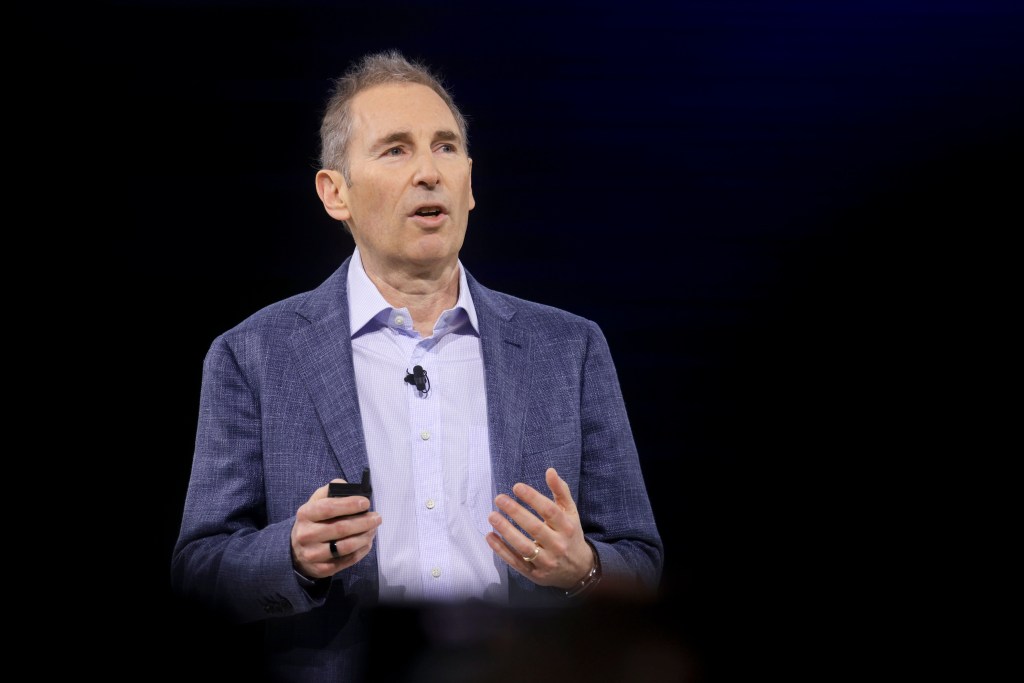
In his latest annual letter to shareholders, Amazon CEO Andy Jassy delivers a strategic overview of the company’s initiatives, highlighting significant advancements in proprietary technologies and outlining ambitious plans for future growth. The letter subtly critiques industry competitors while emphasizing Amazon’s commitment to innovation and customer-centric solutions.
Advancements in AI and Custom Chip Development
Jassy underscores Amazon’s substantial progress in artificial intelligence (AI) and custom chip manufacturing. He acknowledges the company’s ongoing partnership with NVIDIA, noting that Amazon will continue to support NVIDIA’s chips within its cloud services. However, he points out a pivotal shift in the AI landscape, stating, Virtually all AI thus far has been done on NVIDIA chips, but a new shift has started. This shift refers to the increasing demand for Amazon’s in-house Trainium AI chips, designed to offer superior price-performance ratios for AWS customers.
The demand for Trainium chips has been remarkable. Jassy reveals that the capacity for the latest iteration, Trainium3, is nearly sold out, and even Trainium4, which is still 18 months from release, has almost reached full capacity. This surge in demand has propelled Amazon’s chip business to a $20 billion annual revenue run rate. Jassy speculates that if Amazon were to sell these chips externally, the revenue could potentially reach $50 billion annually. While NVIDIA reported $215.9 billion in revenue last year, Amazon’s rapid advancements position Trainium as a formidable competitor in the AI chip market.
Expansion of Graviton CPUs and Competition with Intel
The letter also highlights the success of Amazon’s Graviton CPUs, which challenge Intel’s x86 architecture. Jassy notes that 98% of the top 1,000 EC2 customers now utilize Graviton processors, indicating widespread adoption among major enterprises. He shares that two companies have expressed interest in purchasing all of Amazon’s Graviton instance capacity for 2026. However, Amazon declined these requests to accommodate the needs of other customers, illustrating the high demand and strategic importance of Graviton CPUs in Amazon’s cloud infrastructure.
Launch of Amazon Leo and Competition with Starlink
Jassy introduces Amazon Leo, the company’s forthcoming satellite internet service set to launch in mid-2026. Designed to compete directly with SpaceX’s Starlink, Amazon Leo has already secured contracts with major organizations, including Delta Airlines, AT&T, Vodafone, Australia’s National Broadband Network, and NASA. This initiative reflects Amazon’s commitment to expanding its services into new markets and providing global internet connectivity.
Potential Entry into the Robotics Market
The letter hints at Amazon’s potential entry into the robotics market. With over one million warehouse robots in operation, Amazon possesses a wealth of data and experience in robotics. Jassy suggests that this expertise could be leveraged to develop robotics solutions for industrial applications and consumer products. While specific plans remain undisclosed, this move could signify Amazon’s ambition to diversify its product offerings and enter the competitive robotics industry.
Justification of Capital Expenditures and Future Investments
Jassy addresses Amazon’s significant capital expenditures, particularly the planned $200 billion investment in 2026, primarily allocated to expanding AWS data centers. He emphasizes that these investments are not made on a whim but are driven by substantial customer demand and strategic growth objectives. Jassy cites a deal with OpenAI, which includes a commitment to spend $100 billion on AWS services, as evidence of the anticipated return on these investments. He acknowledges skepticism regarding OpenAI’s ability to fulfill this commitment but assures shareholders that several other customer agreements are either completed or in progress, supporting the expansion of AWS capacity.
Conclusion
In his annual letter, Andy Jassy presents a comprehensive overview of Amazon’s strategic initiatives, highlighting advancements in AI, custom chip development, satellite internet services, and potential ventures into robotics. By subtly challenging industry competitors and emphasizing Amazon’s commitment to innovation and customer satisfaction, Jassy aims to reassure shareholders of the company’s direction and the rationale behind its substantial investments. As Amazon continues to diversify and expand its services, these initiatives position the company to remain a dominant force in the technology sector.