Overcast’s Innovative Mac Mini Cluster Revolutionizes Podcast Transcription
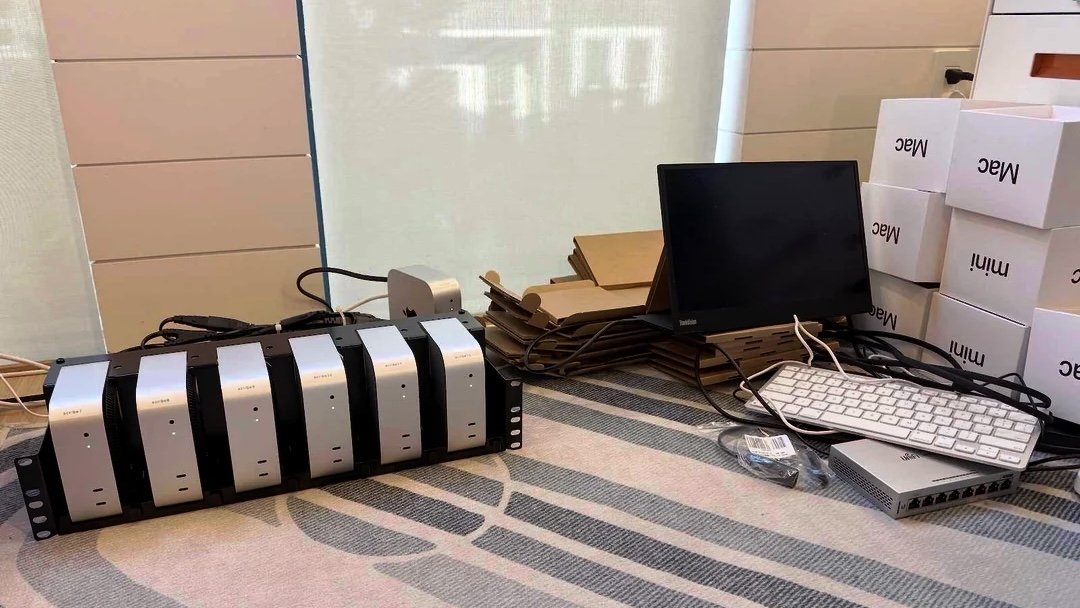
In a bold move to enhance podcast transcription efficiency, Overcast’s developer, Marco Arment, has implemented a substantial shift from traditional cloud-based AI services to a robust, locally-operated system. This transformation is powered by a cluster of 48 Mac minis, each equipped with Apple Silicon, marking a significant departure from conventional methods.
The decision to transition to local hardware was driven by the escalating costs and inherent limitations associated with cloud AI services. Arment’s innovative system, which became operational in March, coincided with the launch of Overcast’s new transcript feature. This feature enables the app to generate podcast transcripts on a large scale using Apple’s advanced speech recognition models. Unlike previous methods that relied on listeners’ devices for processing, the new approach centralizes the workload on the Mac mini backend, ensuring a more streamlined and efficient process.
Arment highlighted the financial implications of cloud-based solutions, noting that such services could have incurred daily costs amounting to thousands of dollars for Overcast. In contrast, the Mac mini cluster offers a predictable monthly expense following the initial setup investment. This strategic shift not only mitigates financial unpredictability but also enhances the app’s operational efficiency.
While cloud AI services offer convenience, they often come with significant costs, especially for tasks like podcast transcription, which require continuous processing due to the regular release of new episodes and the expansion of back catalogs. By opting for local processing, Arment effectively addresses these challenges, leveraging Apple’s speech models that perform optimally on Apple Silicon. Distributing tasks across multiple machines further enhances processing speed and efficiency.
The Mac mini cluster functions as a custom compute cluster rather than a typical app backend. Each Mac mini processes audio at speeds much faster than real-time, significantly reducing the time required for transcription. This approach eliminates the need to link each transcript to costly cloud AI API calls, offering a more cost-effective and efficient solution.
Apple Silicon’s Role in Server Operations
Traditionally, Mac minis were not designed for data center operations. However, the advent of Apple Silicon has transformed their capabilities, making them suitable for such roles. The strong performance per watt, unified memory architecture, and efficient local model execution of Apple Silicon make Mac minis well-suited for inference workloads like speech recognition.
Arment’s implementation demonstrates how consumer-grade Macs can handle sustained backend tasks when the workload is predictable. While Apple promotes on-device AI as a feature for privacy and responsiveness, Overcast’s application of the same technology for backend processing showcases its versatility.
Podcast distribution presents unique challenges that generic AI services may not effectively address. For instance, dynamic ad insertion results in different listeners receiving slightly varied audio, complicating transcript alignment and reuse. Arment tackled this issue by implementing audio fingerprinting and de-duplication techniques. Overcast generates a single transcript and maps it across multiple episode versions, reducing redundant processing while maintaining consistency.
Overcast’s approach signifies a major shift in AI application. Apple Silicon’s performance now supports sustained AI workloads outside traditional cloud environments, particularly for inference tasks with consistent demand. This challenges the notion that scalable AI requires hyperscale infrastructure, demonstrating that affordable machines can provide predictable costs and substantial performance for practical use cases.
Apple continues to position its chips as the foundation for on-device intelligence. Overcast’s implementation illustrates how the same hardware can support independent backend systems, reducing reliance on cloud providers and offering a more efficient and cost-effective solution for podcast transcription.