NASA Astronauts Capture Stunning Earth Views with iPhone 17 Pro Max During Artemis II Mission
In a remarkable fusion of cutting-edge technology and human exploration, NASA has unveiled a series of breathtaking photographs taken by astronauts aboard the Artemis II mission using the iPhone 17 Pro Max. These images, captured on April 2, 2026, offer a unique perspective of Earth from the vantage point of space, highlighting the synergy between advanced consumer technology and space exploration.
A New Era of Space Photography
The Artemis II mission marks NASA’s first crewed journey to the Moon since the Apollo era, with the crew aboard the Orion spacecraft. Traditionally, space missions have relied on specialized equipment for documentation. However, in February 2026, NASA announced that the iPhone 17 Pro Max had been fully qualified for extended use in orbit. This certification led to each of the four crew members being equipped with the device for personal photography and videography.
Capturing Earth’s Majesty
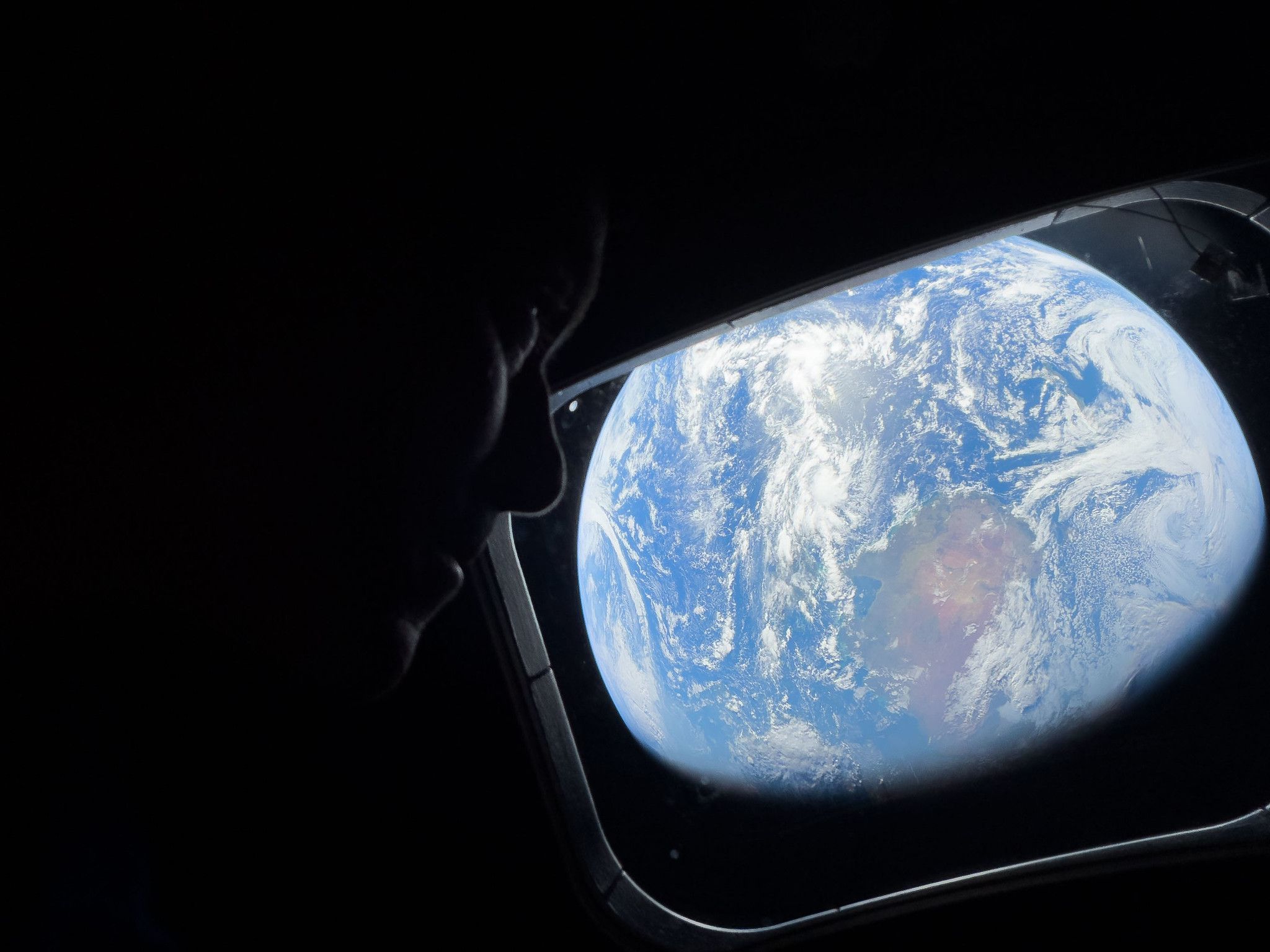
Among the released photographs, two stand out for their intimate portrayal of the astronauts’ experience. One image features Commander Reid Wiseman gazing back at Earth through the Orion spacecraft’s main cabin window, while another captures Mission Specialist Christina Koch in a similar contemplative moment. These photos were taken using the iPhone 17 Pro Max’s front camera, emphasizing the device’s capability to deliver high-quality images even in the challenging environment of space.
Technical Excellence in Challenging Conditions
The decision to incorporate the iPhone 17 Pro Max into the mission underscores the device’s advanced camera system and its resilience in the harsh conditions of space. The iPhone 17 Pro Max boasts a 48-megapixel main camera, enhanced low-light performance, and computational photography features that enable stunning image quality. Its durability and reliability were critical factors in NASA’s decision to integrate it into the mission’s toolkit.
Complementing Traditional Equipment
While the iPhone 17 Pro Max provided astronauts with a convenient tool for capturing personal moments, the mission also utilized professional-grade cameras for scientific documentation. Equipment such as the Nikon D5, Nikon Z 9, and GoPro HERO4 Black were employed to capture various aspects of the mission, ensuring a comprehensive visual record.
A Milestone in Human Spaceflight
Artemis II represents a significant milestone in human space exploration. As the crew approaches the far side of the Moon, they are set to break the record for the farthest distance traveled from Earth by humans. Although the Orion spacecraft is not designed for lunar landing, this mission lays the groundwork for future endeavors that aim to establish a sustainable human presence on the Moon and beyond.
Implications for Future Missions
The successful use of consumer technology like the iPhone 17 Pro Max in space missions opens new possibilities for astronaut engagement and public outreach. By capturing and sharing personal experiences through familiar devices, astronauts can provide the public with a more relatable and immersive view of space exploration. This approach not only enhances public interest but also demonstrates the versatility and robustness of modern consumer electronics.
Conclusion
The integration of the iPhone 17 Pro Max into the Artemis II mission exemplifies the convergence of consumer technology and space exploration. The stunning images captured by the astronauts offer a fresh perspective on our planet and highlight the potential for everyday devices to contribute meaningfully to scientific endeavors. As NASA continues to push the boundaries of human exploration, the collaboration between space agencies and technology companies is likely to yield even more remarkable achievements in the future.