Apple’s Forgotten Co-Founder Claims He Still Owns 10% of the Company
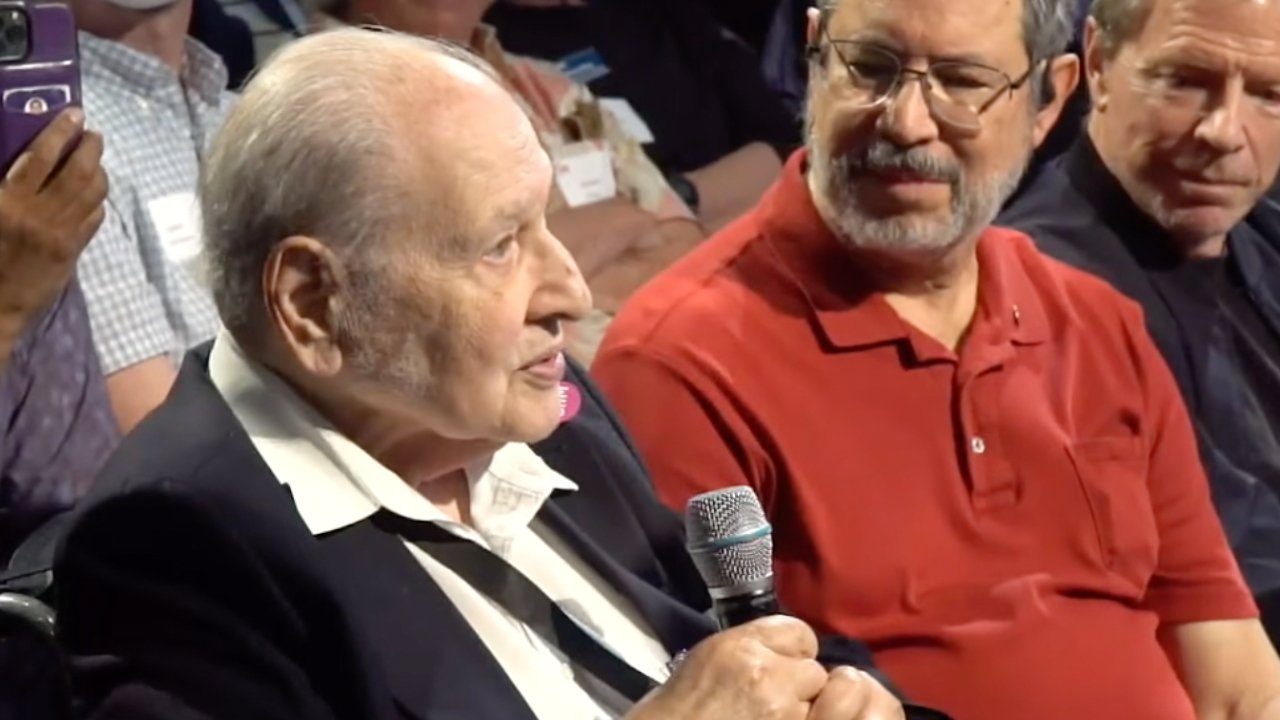
In a surprising revelation during Apple’s 50th-anniversary celebration at the Computer History Museum, Ronald Wayne, one of the original co-founders, asserted that he never officially sold his 10% stake in the company. This statement challenges the long-held belief that Wayne relinquished his shares for a mere $800 shortly after the company’s inception.
The Genesis of Apple and Wayne’s Role
On April 1, 1976, Steve Jobs, Steve Wozniak, and Ronald Wayne established Apple Computer Company. While Jobs and Wozniak each held 45% of the company, Wayne was granted a 10% stake. His primary role was to provide administrative oversight and mediate between the two younger co-founders. Wayne’s contributions included drafting the original partnership agreement and designing Apple’s first logo.
Wayne’s Departure and the $800 Check
Merely 12 days after Apple’s formation, Wayne decided to exit the company. He cited concerns over potential financial liabilities and the direction of the business. Traditionally, it has been reported that Wayne sold his 10% stake back to Jobs and Wozniak for $800. However, Wayne now contends that this narrative is inaccurate.
According to Wayne, approximately two months after his departure, he received an unsolicited check for $800 from Steve Jobs. The check arrived without any accompanying letter or explanation. Wayne recalls, I got an envelope in the mail from Jobs, containing no letter, no note, no explanation, nothing, just a check for $800. He initially perceived this as a token of appreciation or a tip, rather than a formal transaction for his shares.
The Formal Buyout by Mike Markkula
The plot thickens with the involvement of Mike Markkula, an early investor who played a pivotal role in Apple’s transformation into a corporation. When Apple was incorporated, Markkula sought to ensure that all original partnership claims were settled. Wayne states that Markkula provided him with an additional sum to officially buy out his stake in the original partnership. This move was likely a precautionary measure to prevent any future legal disputes over ownership.
Wayne’s Perspective on His Stake
Despite these transactions, Wayne maintains that he never formally sold his 10% stake in Apple. He emphasizes that the $800 check from Jobs was unsolicited and lacked any contractual agreement. Furthermore, the buyout by Markkula was, in his view, a legal formality rather than a sale of his shares. Wayne’s assertion raises questions about the exact nature of these early agreements and the clarity of ownership transfers during Apple’s formative days.
Implications of Wayne’s Claim
If Wayne’s claim holds, it would imply that he still retains a 10% stake in Apple, a company now valued at over $4 trillion. This stake would be worth approximately $400 billion today. However, the lack of formal documentation and the passage of time make this claim complex. Legal experts suggest that without concrete evidence, Wayne’s assertion may not hold in a court of law.
Reflections on Missed Opportunities
Over the years, Wayne has expressed mixed feelings about his decision to leave Apple. In previous interviews, he has stated that he made the best decision based on the information available at the time. He was concerned about the financial risks and potential liabilities associated with the nascent company. While he acknowledges the immense value his stake would have today, Wayne has often remarked that he does not regret his decision, emphasizing the importance of peace of mind over potential wealth.
Wayne’s Life Post-Apple
After leaving Apple, Wayne pursued various ventures, including a stint in the gaming industry and running a stamp shop. He has lived a relatively modest life compared to his former partners. In recent years, Wayne has been involved in projects related to computer architecture and has collaborated with individuals like Charles Stigger on new technological innovations.
The Broader Context
Wayne’s revelation comes at a time when Apple’s history is being revisited and celebrated. The company’s journey from a garage startup to a global tech giant is a testament to innovation, risk-taking, and vision. Wayne’s story serves as a reminder of the uncertainties inherent in startups and the unpredictable nature of business success.
Conclusion
Ronald Wayne’s claim that he still owns 10% of Apple adds a new layer to the company’s storied history. While the veracity of this claim remains uncertain, it underscores the complexities of early business agreements and the lasting impact of decisions made in a company’s infancy. As Apple continues to shape the technological landscape, the stories of its founders, including Wayne, offer valuable insights into the challenges and triumphs of entrepreneurship.