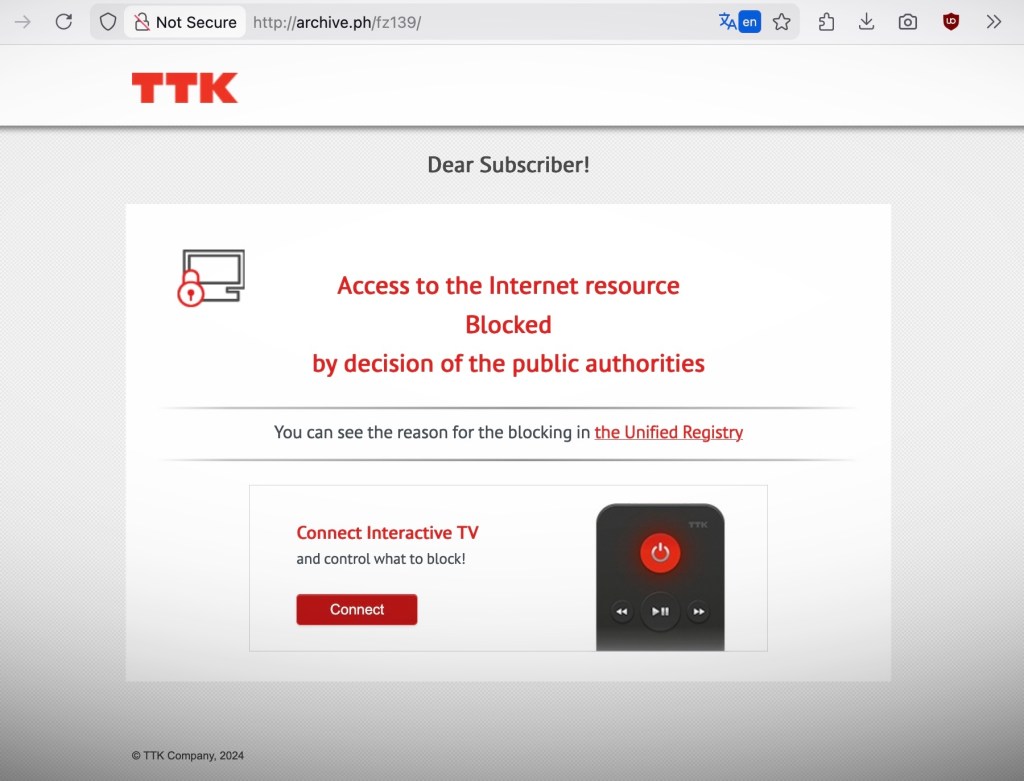
Russian Authorities Block Archive.today Amidst Censorship Concerns
In a recent move that underscores the escalating internet censorship in Russia, authorities have blocked access to Archive.today, a widely-used web archiving service. This action, executed by Roskomnadzor, the Russian federal agency responsible for monitoring and controlling mass media, has raised significant concerns about the state of digital freedom in the country.
Understanding Archive.today
Archive.today, also known by its alternative domains such as archive.is and archive.ph, serves as a digital repository that captures and preserves web pages. Its primary function is to provide users with access to content that may be altered, removed, or placed behind paywalls over time. By archiving web pages, it ensures that information remains accessible, even if the original source becomes unavailable.
The Blockade: Details and Implications
As of March 23, 2026, users attempting to access Archive.today from within Russia encountered error messages indicating that the site had been blocked by governmental decree. The specific message displayed read: Access to the Internet resource Blocked by decision of the public authorities, attributing the action to Roskomnadzor. While the agency’s official listing confirmed the restriction, it did not provide a detailed rationale for the decision.
This blockade is not an isolated incident but part of a broader pattern of internet censorship in Russia. Over the past few years, the Russian government has intensified its efforts to control online content, often citing national security and public order as justifications. However, critics argue that such measures are primarily aimed at suppressing dissent and controlling the flow of information.
Historical Context: A Pattern of Censorship
The blocking of Archive.today is reminiscent of previous actions taken by Russian authorities against digital platforms that facilitate unrestricted access to information. For instance, in March 2019, Russia blocked ProtonMail, an encrypted email service, after anonymous bomb threats were sent via the platform. Similarly, in January 2023, the encrypted email provider Skiff faced a blockade, further highlighting the government’s stance against services that prioritize user privacy and unfiltered information access.
These actions reflect a consistent approach by the Russian government to limit tools and platforms that enable users to bypass state-controlled narratives. By targeting services that offer encrypted communications or unrestricted content access, the authorities aim to tighten their grip on the digital landscape.
The Role of Roskomnadzor
Roskomnadzor has been at the forefront of implementing Russia’s internet censorship policies. Established to oversee and regulate mass media, the agency has expanded its reach to include the internet, enforcing laws that mandate data localization, content removal, and, as seen in the case of Archive.today, outright blocking of websites.
The agency’s actions are often justified under the pretext of protecting national security, preventing the spread of extremist content, or safeguarding public morals. However, the lack of transparency and the broad scope of these measures have led to accusations of overreach and suppression of free speech.
Global Reactions and Implications
The international community has expressed concern over Russia’s increasing internet censorship. Organizations advocating for digital rights view these actions as part of a broader trend towards authoritarian control over information. The blocking of Archive.today, in particular, has drawn attention due to the site’s role in preserving digital history and ensuring access to information that might otherwise be lost or censored.
For Russian citizens, the blockade represents a significant limitation on their ability to access diverse sources of information. In an era where digital content is a primary source of news and knowledge, such restrictions can have profound implications on public discourse and the free exchange of ideas.
The Future of Digital Freedom in Russia
The blocking of Archive.today raises critical questions about the future of digital freedom in Russia. As the government continues to implement measures that restrict access to information, the space for free expression and open discourse narrows. This trend not only affects individual users but also has broader implications for civil society, journalism, and the global perception of Russia’s commitment to human rights.
In response to these challenges, digital rights activists and organizations are exploring ways to circumvent censorship, such as promoting the use of virtual private networks (VPNs) and other anonymizing tools. However, the effectiveness of these measures is continually tested by the government’s evolving strategies to control the digital sphere.
Conclusion
The Russian authorities’ decision to block Archive.today is a stark reminder of the ongoing battle between state control and digital freedom. As governments worldwide grapple with the complexities of the internet, the balance between security and liberty remains a contentious issue. For Russia, the path it chooses will not only shape its domestic digital landscape but also influence its standing in the global community.