Pasqal’s $2 Billion SPAC Merger: A Quantum Leap with French Roots
In a significant move within the quantum computing sector, French startup Pasqal has announced plans to go public through a merger with Bleichroeder Acquisition Corp II, a special purpose acquisition company (SPAC). This strategic decision, accompanied by a separate $200 million private funding round, values Pasqal at a pre-money valuation of $2 billion. The merger is set to position Pasqal on the Nasdaq stock exchange, marking a pivotal moment for the company and the European quantum computing landscape.
Pasqal’s Quantum Computing Endeavors
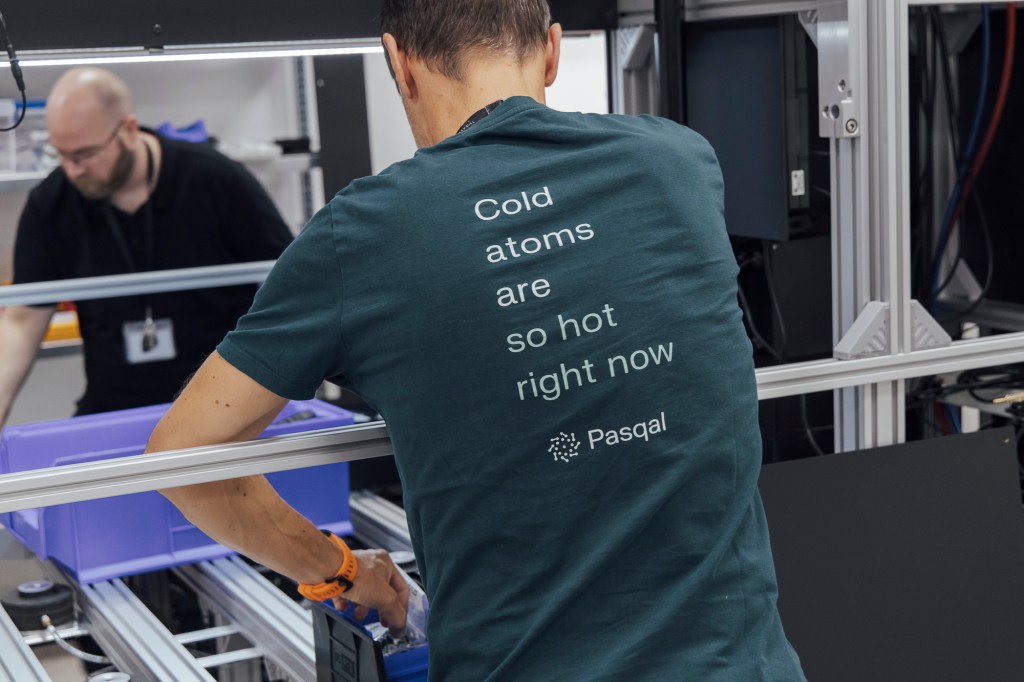
Founded in 2019, Pasqal has rapidly emerged as a formidable player in the quantum computing arena. The company specializes in full-stack quantum solutions, offering hardware, software, and cloud services to laboratories and industrial partners. With annual revenues reaching into the tens of millions, Pasqal’s innovative approach leverages neutral atom technology—a method that utilizes lasers to manipulate atoms, potentially offering scalability and efficiency advantages over traditional quantum systems.
Strategic Leadership and SPAC Partnership
The SPAC merger is backed by notable figures, including Michel Combes, a veteran in the telecommunications industry with leadership stints at Vodafone and Alcatel-Lucent, and investment advisor Andrew Gundlach. Their involvement underscores the confidence in Pasqal’s technological vision and market potential.
Navigating the Public Markets
Pasqal’s decision to enter the public markets via a SPAC merger aligns with a broader trend among quantum computing firms seeking substantial capital to fuel research and development. This approach provides Pasqal with access to the expansive U.S. financial markets, offering the scale and revenue multiples that are often challenging to achieve solely within Europe. The influx of capital is crucial for advancing quantum technologies, which require significant investment to transition from theoretical models to practical applications.
Commitment to French Heritage
Despite its international ambitions, Pasqal remains deeply committed to its French origins. The company has emphasized its intention to maintain its legal headquarters in Palaiseau, a suburb of Paris renowned for its concentration of academic institutions and industrial research centers. This location fosters collaboration with prominent clients such as energy giant EDF and defense company Thales. Additionally, Pasqal plans to appoint a new non-executive chair of French nationality to its board, reinforcing its dedication to French leadership and governance.
Dual-Listing Strategy
To balance its global aspirations with national commitments, Pasqal is pursuing a dual-listing strategy. While the initial public offering on Nasdaq is slated for this year, the company also plans to list on Euronext in late 2026 or early 2027. This approach aims to reassure French stakeholders, including Bpifrance—France’s public investment bank and a key shareholder—that Pasqal’s growth will continue to benefit the French economy and technological ecosystem.
Executive Leadership and Governance
Pasqal has experienced notable shifts in its executive leadership. Wasiq Bokhari, previously the executive chairman, has assumed the role of CEO. Concurrently, Loïc Henriet, who has held positions as CTO and co-CEO, has returned to his role as CTO. These changes reflect the company’s adaptive strategy in navigating the complex and rapidly evolving quantum computing industry.
Investment and Future Prospects
The $200 million private funding round attracted investments from entities such as Parkway, Quanta Computer, LG Electronics, and CMA CGM. Existing backers include the European Innovation Council Fund, Temasek, Saudi Aramco Entrepreneurship Ventures, and ISAI. This diverse investor base highlights the broad interest and confidence in Pasqal’s technology and business model.
Looking ahead, Pasqal is committed to developing a fault-tolerant quantum computer by the end of the decade. Achieving this milestone is essential for unlocking transformative applications in fields like drug discovery, healthcare, and cybersecurity. The anticipated capital from the SPAC merger will support Pasqal’s goal of doubling its production capacity within the next 24 months, positioning the company to meet the growing demand for quantum solutions.
Conclusion
Pasqal’s strategic move to go public through a $2 billion SPAC merger represents a significant advancement in the quantum computing sector. By balancing its global growth ambitions with a steadfast commitment to its French heritage, Pasqal exemplifies how innovative companies can navigate the complexities of international markets while contributing to their national economies. As the quantum computing race intensifies, Pasqal’s developments will be closely watched by industry stakeholders and investors alike.