Apple’s MacBook Neo: Benchmark Insights and Market Impact
Apple’s latest innovation, the MacBook Neo, has recently undergone benchmark testing, revealing performance metrics that position it as a formidable contender in the entry-level laptop market. Equipped with the A18 Pro chip, initially introduced in the iPhone 16 Pro, the MacBook Neo demonstrates impressive capabilities for its price point.
Benchmark Performance
The MacBook Neo achieved a single-core score of 3,461 and a multi-core score of 8,668 in recent Geekbench tests. Additionally, it recorded a Metal score of 31,286, reflecting its graphics processing prowess. These figures are closely aligned with the iPhone 16 Pro, which boasts a single-core score of 3,445, a multi-core score of 8,624, and a Metal score of 32,575. The slight variance in Metal scores can be attributed to the MacBook Neo’s configuration, featuring one fewer GPU core than its smartphone counterpart.
Comparative Analysis
When juxtaposed with other Apple devices, the MacBook Neo’s performance is noteworthy:
– M1 MacBook Air: Single-core score of 2,346, multi-core score of 8,342, and a Metal score of 33,148.
– M4 MacBook Air: Single-core score of 3,696, multi-core score of 14,730, and a Metal score of 54,630.
– M3 iPad Air: Single-core score of 3,048, multi-core score of 11,678, and a Metal score of 44,395.
– iPad 11: Single-core score of 2,587, multi-core score of 6,036, and a Metal score of 19,395.
These comparisons highlight the MacBook Neo’s superior single-core performance relative to the M1 MacBook Air, positioning it closer to the M3 and M4 chips in this aspect. This enhancement is particularly beneficial for tasks such as web browsing, document editing, and media streaming, which rely heavily on single-core efficiency.
Design and Features
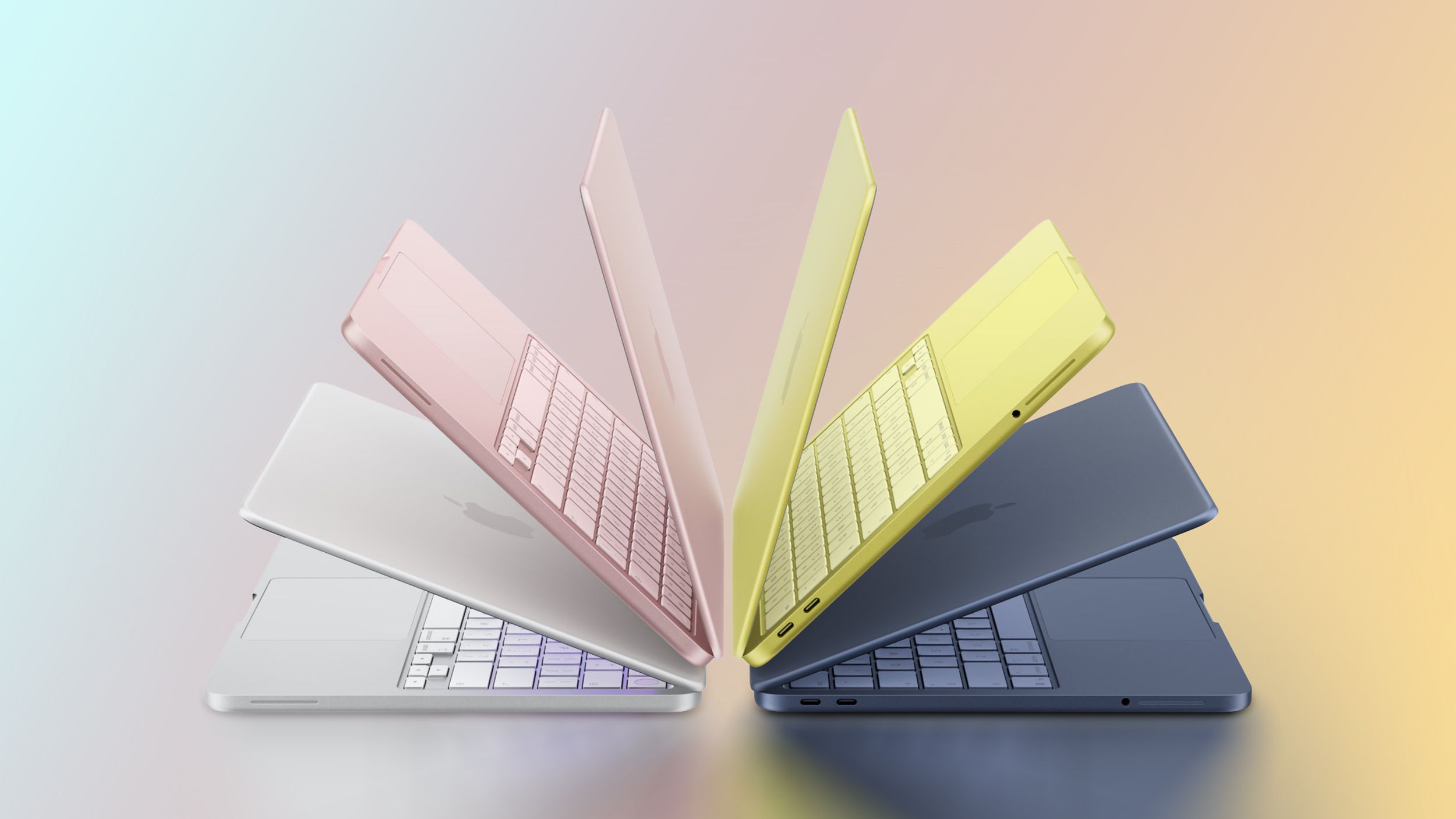
The MacBook Neo is designed with a 13-inch Liquid Retina display, offering a resolution of 2,408 by 1,506 pixels and 500 nits of brightness. Its uniform bezels provide a sleek appearance without the inclusion of a notch. Weighing 2.7 pounds, the laptop is available in four color options: Silver, Indigo, Blush, and Citrus.
Connectivity options include two USB-C ports—one supporting USB 3 with speeds up to 10 Gb/s and another supporting USB 2 with speeds up to 480 Mb/s—as well as a headphone jack. The device offers up to 16 hours of battery life, 8GB of unified memory, Wi-Fi 6E, Bluetooth 6, a 1080p front-facing camera, dual microphones with directional beamforming, and dual side-firing speakers with Spatial Audio support.
Market Positioning
Priced at $599, the MacBook Neo is Apple’s most affordable laptop to date, with educational discounts bringing the price down to $499 for students and educators. This strategic pricing aims to compete directly with similarly priced Windows PCs and Chromebooks, targeting budget-conscious consumers and the education sector.
Apple emphasizes that the A18 Pro chip delivers up to 50% faster performance for everyday tasks compared to the bestselling PC equipped with the latest Intel Core Ultra 5 processor. It also claims up to three times faster performance for on-device AI workloads and up to twice the speed for photo editing tasks.
Environmental Considerations
In line with Apple’s commitment to sustainability, the MacBook Neo incorporates 60% recycled materials, including 90% recycled aluminum and 100% recycled cobalt in the battery. This makes it Apple’s lowest-carbon Mac to date, reflecting the company’s ongoing efforts to reduce its environmental footprint.
Conclusion
The MacBook Neo’s benchmark results and feature set underscore its potential to reshape the entry-level laptop market. By offering robust performance, a sleek design, and a competitive price point, Apple aims to attract a broader audience, including students and budget-conscious consumers. Pre-orders are currently available, with the official launch scheduled for March 11.