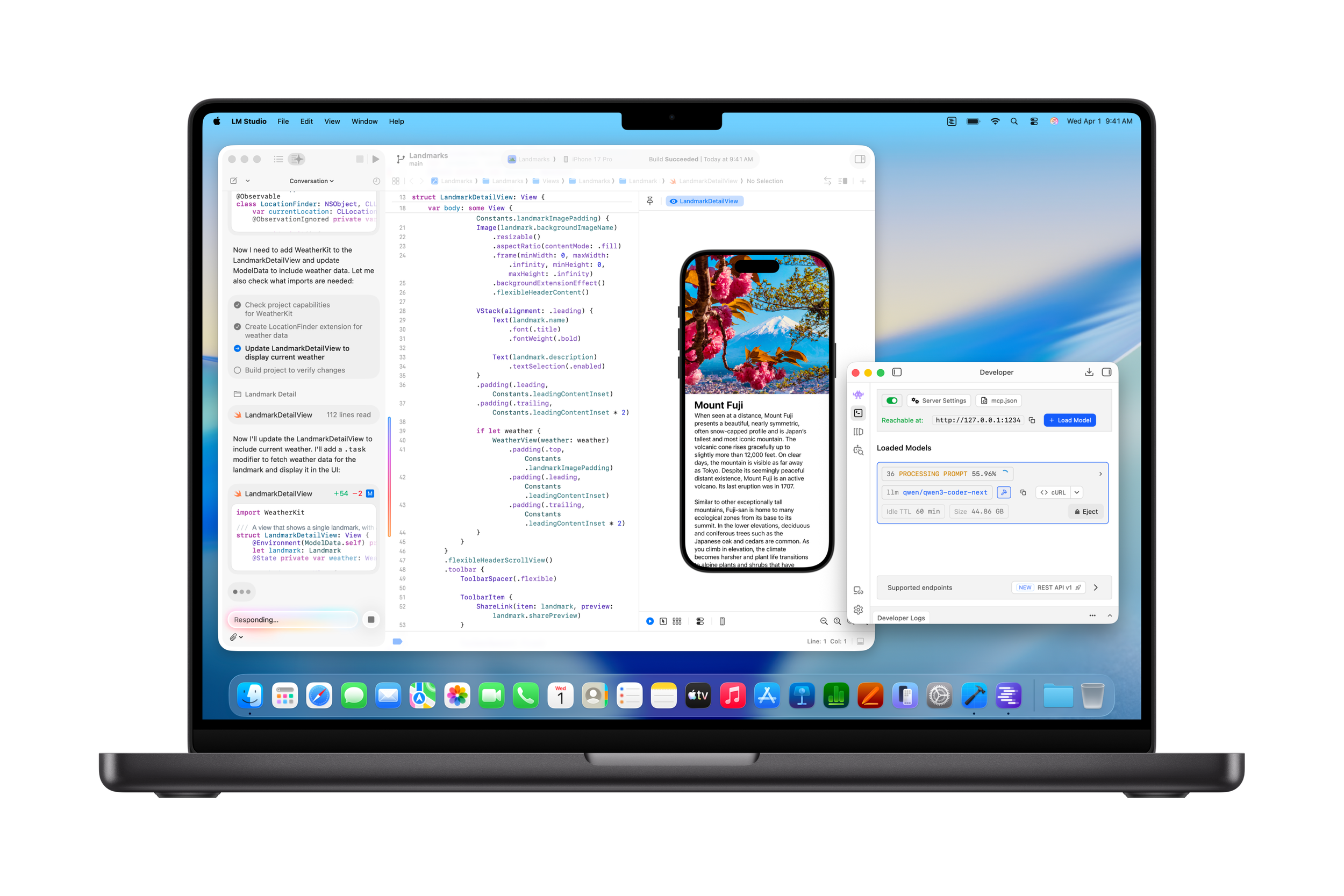
Apple’s MacBook Pro Revolution: Introducing M5 Pro and M5 Max Chips with Fusion Architecture
Apple has unveiled its latest 14-inch and 16-inch MacBook Pro models, now powered by the groundbreaking M5 Pro and M5 Max chips. These chips are built on Apple’s innovative Fusion Architecture, which integrates two third-generation 3nm dies into a single system-on-chip (SoC) through advanced packaging techniques. This marks a significant departure from previous single-die designs, allowing for enhanced performance and efficiency.
Fusion Architecture: A New Era for Apple Silicon
The Fusion Architecture represents a pivotal advancement in Apple’s chip design. By bonding two dies, Apple has effectively combined the CPU, GPU, Media Engine, Neural Engine, unified memory controller, and Thunderbolt 5 capabilities into a cohesive unit. This integration facilitates faster data transfer and processing speeds, setting a new standard for professional laptops.
Enhanced CPU Performance
Both the M5 Pro and M5 Max chips feature an 18-core CPU, an upgrade from the 14-core and 16-core configurations of their M4 predecessors. The CPU architecture includes six super cores, Apple’s term for its highest-performance cores, alongside 12 efficiency-focused performance cores. This configuration delivers up to 30% faster multithreaded performance compared to the M4 generation and is up to 2.5 times faster than the M1 Pro and M1 Max chips.
Advanced GPU Capabilities
The M5 Pro is equipped with up to 20 GPU cores, while the M5 Max boasts up to 40 GPU cores. Each GPU core now includes a Neural Accelerator, significantly enhancing AI computing capabilities. Apple reports that these enhancements result in over four times the peak AI compute performance compared to the M4 Pro and M4 Max. Overall graphics performance has increased by up to 50%, with ray-tracing workloads experiencing up to a 35% improvement over the previous generation.
Memory and Storage Upgrades
Memory capacity and bandwidth have seen substantial improvements. The M5 Pro supports up to 64GB of unified memory, an increase from the 48GB limit of the M4 Pro, with bandwidth reaching 307GB/s. The M5 Max maintains its 128GB maximum memory capacity but increases bandwidth to 614GB/s. Storage performance has also been enhanced, with read/write speeds up to twice as fast as the M4 generation, peaking at 14.5GB/s. Base storage capacities have been increased, with M5 Pro models starting at 1TB and M5 Max models at 2TB.
Connectivity and Additional Features
The new MacBook Pro models are equipped with Apple’s N1 wireless networking chip, introducing support for Wi-Fi 7 and Bluetooth 6. This is an upgrade from the Wi-Fi 6E and Bluetooth 5.3 found in the previous M4 Pro and M4 Max models. Additional features include a 16-core Neural Engine with a faster memory connection, enhancing on-device AI tasks, and an updated Media Engine that adds hardware-accelerated AV1 decode alongside existing H.264, HEVC, and ProRes support. Apple has also introduced Memory Integrity Enforcement, an always-on memory safety feature that the company describes as an industry first.
Thunderbolt 5 and Display Support
Thunderbolt 5 support continues from the M4 generation, but each port now has its own dedicated controller on the chip, allowing all three ports to operate at full bandwidth simultaneously. The M5 Pro supports up to two high-resolution external displays, while the M5 Max supports up to four.
Battery Life and Charging
Apple claims that the new MacBook Pro models offer up to 24 hours of battery life on the 16-inch model. Users can fast-charge to 50% in just 30 minutes using a 96W or higher USB-C adapter.
Pricing and Availability
The 14-inch MacBook Pro with M5 Pro starts at $2,199, while the 16-inch model starts at $2,699. The 14-inch M5 Max model is priced starting at $3,599, and the 16-inch at $3,899. A base 14-inch MacBook Pro with the standard M5 chip is also available, starting at $1,699. All models are offered in space black and silver. Pre-orders begin on March 4, with availability starting on March 11.