Pentagon Labels Anthropic a Supply Chain Risk Amid AI Military Use Dispute
In a significant development, the U.S. Department of Defense has officially designated Anthropic, a prominent artificial intelligence (AI) company, as a supply chain risk. This decision follows protracted negotiations that reached a deadlock over the permissible applications of Anthropic’s AI model, Claude, particularly concerning mass domestic surveillance and the deployment of fully autonomous weapons.
Anthropic has been steadfast in its stance, opposing the use of its AI technology for mass domestic surveillance of American citizens and the development of autonomous weaponry. The company argues that such applications are incompatible with democratic values and pose significant risks to civil liberties. In a recent statement, Anthropic emphasized, No amount of intimidation or punishment from the Department of War will change our position on mass domestic surveillance or fully autonomous weapons.
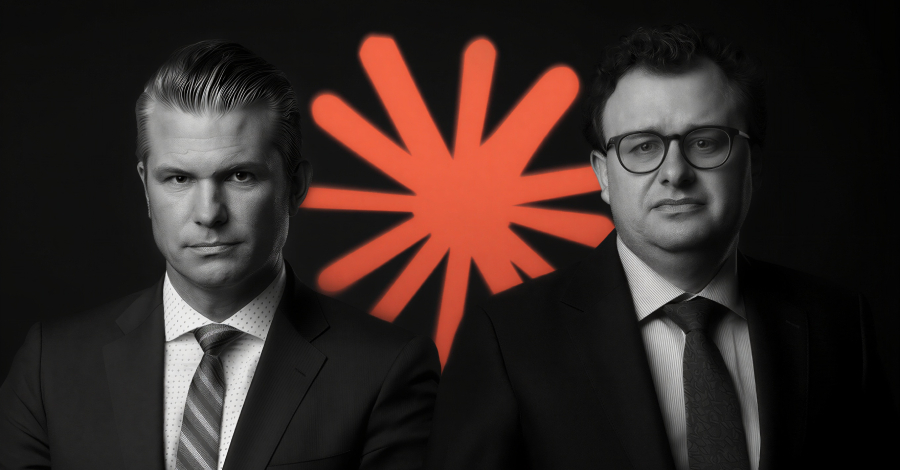
The impasse has led to decisive actions from the highest levels of government. President Donald Trump announced via Truth Social that all federal agencies are to phase out the use of Anthropic’s technology within the next six months. Following this directive, Secretary of Defense Pete Hegseth mandated that all contractors, suppliers, and partners engaged with the U.S. military cease any commercial activity with Anthropic effective immediately. Hegseth stated, In conjunction with the President’s directive for the Federal Government to cease all use of Anthropic’s technology, I am directing the Department of War to designate Anthropic a Supply Chain Risk to National Security.
The crux of the disagreement lies in the Pentagon’s insistence on utilizing AI technologies for all lawful military applications, including those that Anthropic deems ethically and morally questionable. The Department of Defense has expressed a desire to build an AI-first warfighting force, emphasizing the need for AI models free from usage policy constraints that may limit lawful military applications. A memorandum issued by the Pentagon highlighted the necessity to avoid AI models with ideological tuning that could interfere with their ability to provide objectively truthful responses.
Anthropic has challenged the legal basis of the supply chain risk designation, describing it as legally unsound and cautioning that it sets a dangerous precedent for American companies negotiating with the government. The company asserts that under 10 USC 3252, the designation should only affect the use of Claude in Department of War contracts and should not impact its service to other customers.
Pentagon spokesperson Sean Parnell addressed the controversy, stating that the department has no interest in conducting mass domestic surveillance or deploying autonomous weapons without human involvement, labeling such narratives as fake. Parnell emphasized the Pentagon’s request for Anthropic to allow the use of its model for all lawful purposes, arguing that this is a common-sense approach to prevent jeopardizing critical military operations and ensuring the safety of warfighters.
The standoff has also sparked reactions within the tech industry. Employees from companies like Google and OpenAI have signed an open letter urging their organizations to support Anthropic in its dispute with the Pentagon over military applications of AI tools like Claude. Conversely, xAI CEO Elon Musk has sided with the Trump administration, stating, Anthropic hates Western Civilization.
This confrontation underscores the broader ethical and strategic challenges at the intersection of artificial intelligence and national security. As AI technologies become increasingly integral to military operations, the debate over their appropriate use continues to intensify, raising critical questions about the balance between innovation, ethics, and security.