NotebookLM Integrates Gemini 3 and Introduces ‘Data Tables’ Feature
Google’s NotebookLM has recently undergone significant enhancements, notably integrating the advanced Gemini 3 model and introducing a new ‘Data Tables’ feature, aimed at improving user experience and data management capabilities.
On December 19, 2025, Google announced that NotebookLM is now powered by Gemini 3, marking a substantial upgrade in the platform’s reasoning and multimodal understanding. This integration is expected to enhance the platform’s ability to process and interpret diverse data types more effectively. While the specific variant of Gemini 3 employed has not been disclosed, it is anticipated that NotebookLM continues to utilize the Flash variants, consistent with previous updates. Users may not notice immediate visual indicators of this change within the application, but the underlying improvements are designed to provide a more robust and intuitive user experience.
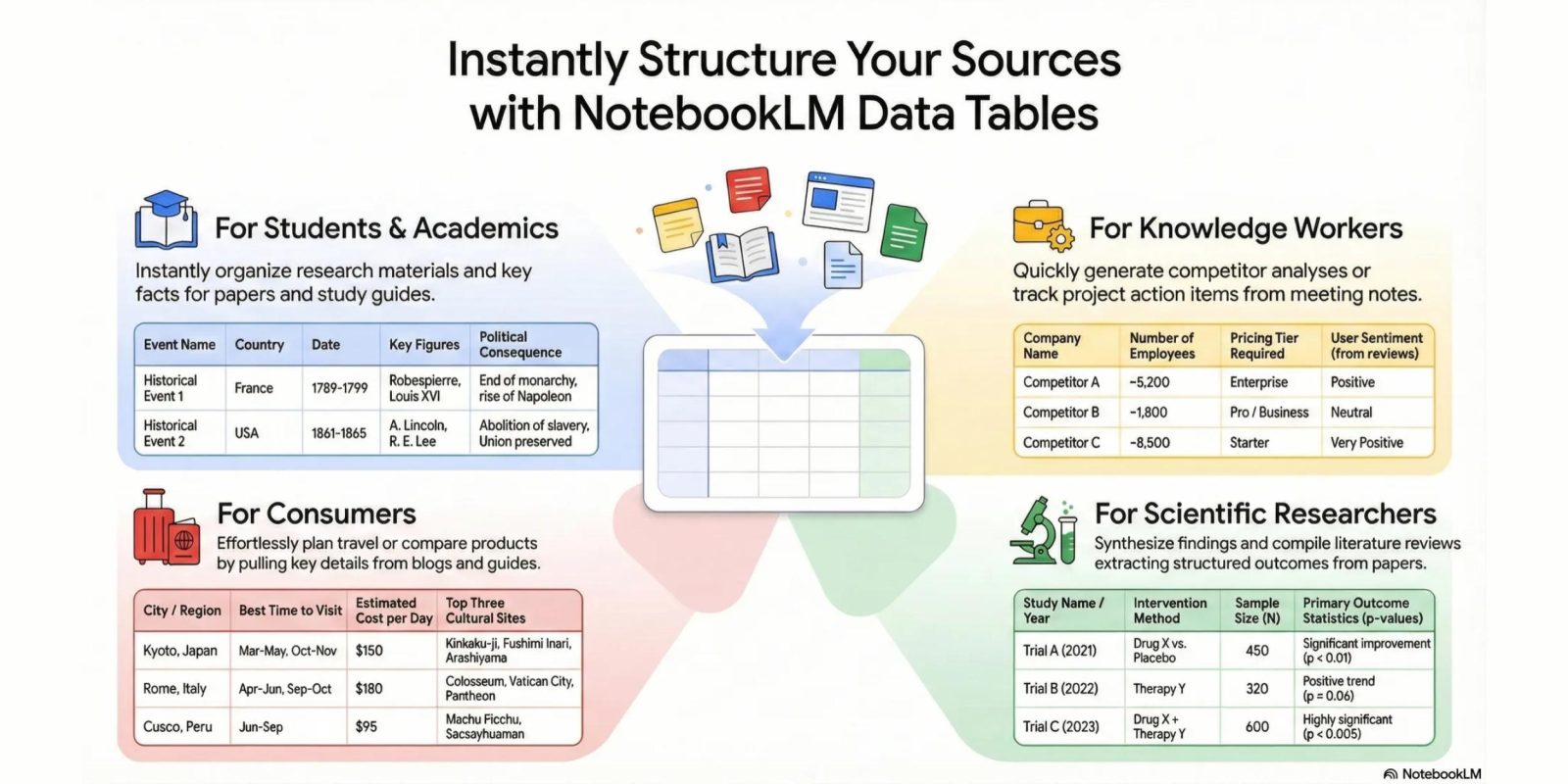
In addition to the integration of Gemini 3, NotebookLM has introduced a new Studio output feature called ‘Data Tables.’ This functionality allows users to synthesize information from their sources into clean, structured tables, which can be exported directly into Google Sheets for further analysis and sharing. The ‘Data Tables’ feature is particularly beneficial for organizing complex data sets and facilitating comparative analyses. For instance, users can transform meeting transcripts into tables of action items categorized by owner and priority, or create competitor comparison tables analyzing pricing and strategies. Other applications include synthesizing clinical trial outcomes across multiple studies, preparing study tables of historical events for exams, and planning vacations by comparing destinations, optimal visit times, and estimated costs.
Currently, the ‘Data Tables’ feature is available to Google AI Pro and Ultra subscribers, with plans to extend access to free users in the coming weeks. This phased rollout ensures that premium users can immediately benefit from the new functionality, while broader access is on the horizon.
Furthermore, NotebookLM has enhanced its integration with the Gemini app. Users can now upload notebooks directly into the Gemini app, facilitating the combination of multiple notebooks, generation of images or applications inspired by notebook content, and the incorporation of online research to build upon existing notebooks. This integration is currently available on the web and is slated to expand to mobile platforms in the upcoming year.
To streamline workflow, NotebookLM has also introduced an export feature. By tapping the three-dot overflow menu next to Study Guides, Briefing Documents, or saved Notes, users can export content directly to Google Docs or Sheets, particularly when tables are present. This functionality simplifies the process of sharing and further editing documents within Google’s ecosystem.
These updates underscore Google’s commitment to enhancing NotebookLM’s capabilities, providing users with more powerful tools for data analysis, organization, and collaboration. The integration of Gemini 3 and the introduction of ‘Data Tables’ represent significant steps forward in making NotebookLM a more versatile and user-friendly platform.