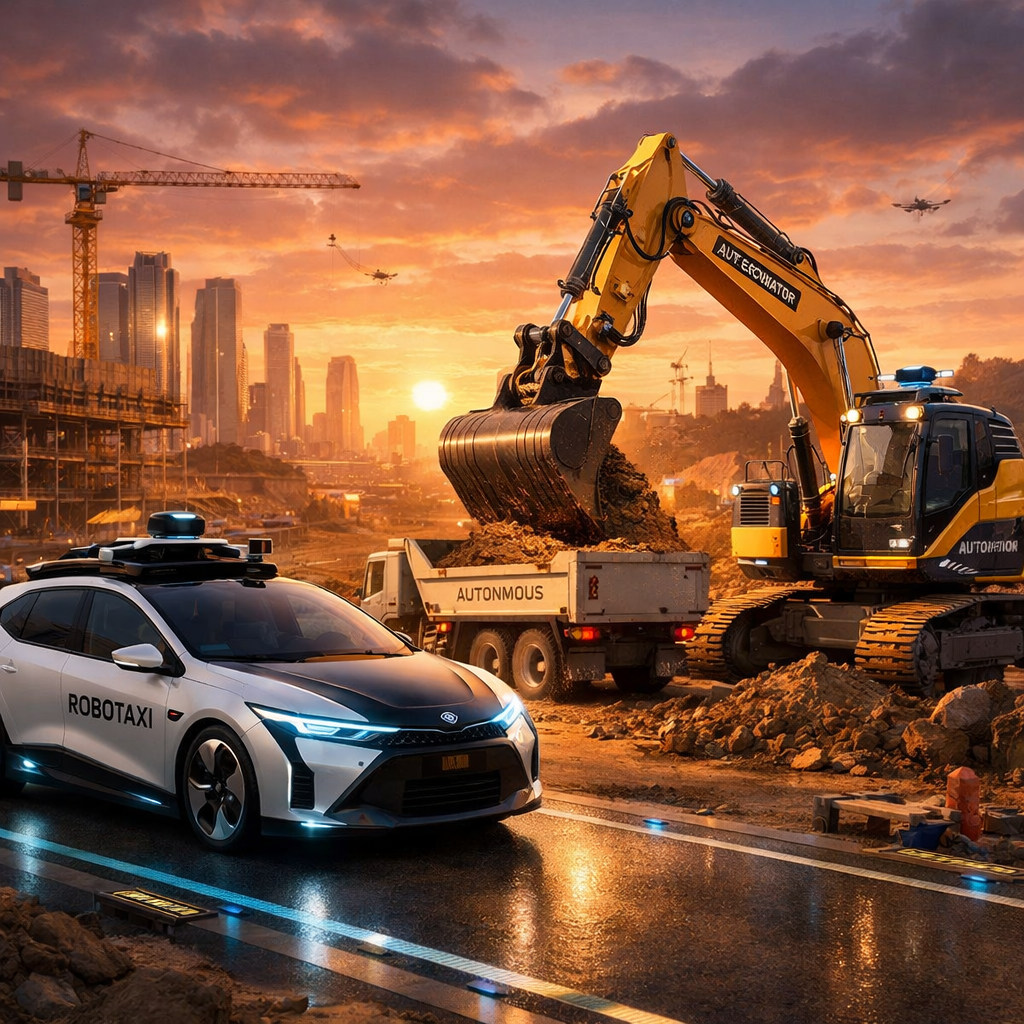
Autonomous vehicles (AVs) are riding a fresh wave of innovation in 2026—one that’s not just reminiscent of the early boom of 2016–17, but appears larger and more technically advanced. Experts point to a growing surge in AV startup activity: Trucks VC has already reviewed pitches from 81 new AV companies this year. That number surpasses full-year totals from previous years and edges past the high-water mark set in the first major AV boom. Foundational models—AI architectures designed to generalize across scenarios—are central to what’s making this possible.
A New Technical Architecture Lifts AV Under the Hood
AV companies have long pursued AV 2.0—systems where AI handles everything end-to-end, from perception to decision-making. Now, advanced open-source models like Nvidia’s Alpamayo and Qwen’s vision-language-action models are enabling exactly that kind of architecture. These models let AVs generalize across environments, reducing the engineering burden.
With the arrival of these foundation models, the barrier to entry has dropped sharply. Dozens of AV startups are launching with less than $1 million in seed funding, some getting off the ground in just months. It’s a sharp departure from the capital-heavy approach of earlier years, when building an AV company often meant hundreds of millions in funding and vast engineering teams.
Parallel Booms: Deals, Robotaxis & Construction Automation
Investments across AVs and robotics are heating up. San Francisco–based Bedrock Robotics raised $600 million in Series C funding, reaching a $4.1 billion valuation. The startup retrofits existing heavy excavators with autonomous tech, and since mid-August had its machines performing paid work on live commercial construction sites.
In parallel, a Massachusetts startup, Re:Build, secured $2.1 billion to expand its industrial manufacturing accelerator platform, in part to support hard-tech AV development. Corporate partnerships are also stepping up: Waymo and Toyota formalized a deal to build robotaxi-ready bZ4X vehicles in Japan, integrating Waymo’s AV tech. Meanwhile, Tesla is leaning on peer-to-peer car services to spur adoption of its Full Self-Driving supervised system.
Even traditional automakers are shifting. GM is embracing hybrid models and recently settled over $220 million with 36 U.S. states over allegations related to selling driver and location data. Rivian, riding success of its R2 model, raised its delivery forecast for 2026, and its joint venture with Volkswagen is growing to include AI assistant features.
Robotaxi ventures are especially numerous among the AV pitch cohort this year. Startups positioning themselves to compete directly with Waymo are increasingly common, even in early-stage funding rounds. Experts believe there’s room for both large global players and smaller niche operators focused on regional or specific route-based services.
The comparison with the AV boom of a decade ago goes beyond scale. The early wave (2016–19) saw many pilots and experimentation but fewer clear paths to commercialization. After what some describe as a lull marked by consolidations—Uber ATG, Zoox, Argo, Cruise—2026 marks not just hype, but tangible deployments and real revenue underpinnings.
Funding and startup formation numbers haven’t yet peaked; Trucks VC forecasts still more AV company pitches in 2027. The trend suggests 2026 will be remembered not as a repeat, but as a higher baseline for where AV technology, business models, and capital converge.
This year’s AV surge is meaningful because it’s undergirded by AI advances, cheaper tooling, and early deployments—no longer theoretical. What to watch: which foundation models dominate (open-source versions or proprietary); how robotaxi players navigate regulation and safety; whether automotive incumbents sustain partnerships or push back; and whether AV tech makes measurable impact in labor—and costs—in sectors like construction and logistics. This second wave could reshape mobility, but the proof will be in the operating miles, not just dollars raised.