Critical Windows Remote Assistance Vulnerability Exposes Systems to Security Feature Bypass
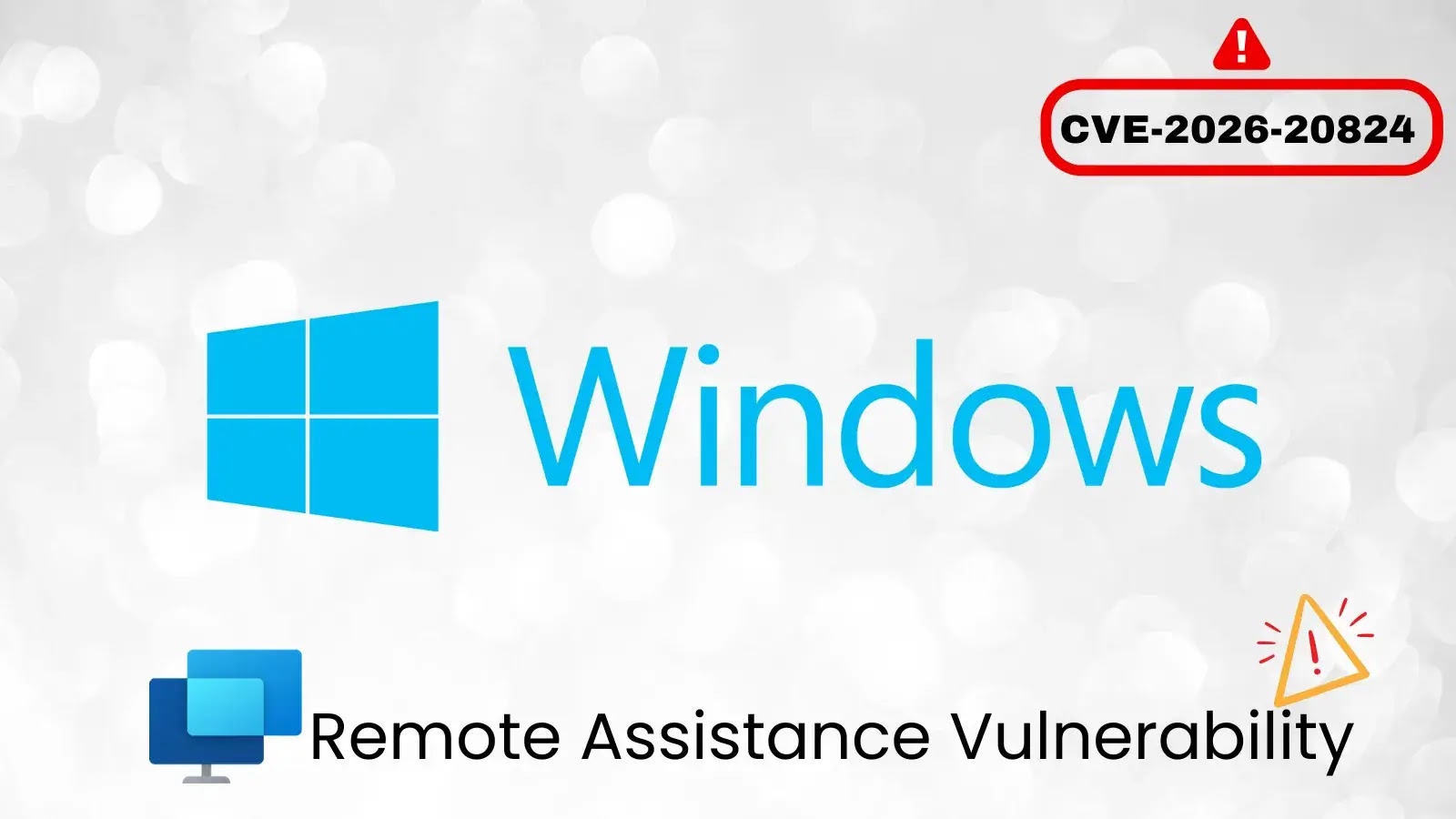
On January 13, 2026, Microsoft disclosed a significant security vulnerability, identified as CVE-2026-20824, affecting Windows Remote Assistance. This flaw allows attackers to circumvent the Mark of the Web (MOTW) defense mechanism, potentially exposing systems to malicious content execution.
Understanding CVE-2026-20824
CVE-2026-20824 is classified as a security feature bypass vulnerability with an Important severity rating. It affects a wide range of Windows platforms, including:
– Windows 10 (versions 1607, 1809, 21H2, 22H2)
– Windows 11 (versions 23H2, 24H2, 25H2)
– Windows Server editions from 2012 through 2025
The vulnerability arises from a failure in Windows Remote Assistance’s mechanism for validating and processing downloaded content. This lapse enables unauthorized local attackers to evade MOTW defenses, which are designed to restrict potentially harmful actions on files from untrusted sources.
Technical Details and Exploitation
With a CVSS v3.1 score of 5.5, the vulnerability requires local access and user interaction to exploit. Attackers cannot directly force exploitation; instead, they must employ social engineering tactics to convince users to open specially crafted files.
Common attack vectors include:
– Email-Based Attacks: Distributing malicious files via email with enticing subject lines to lure users into opening them.
– Web-Based Attacks: Hosting malicious files on compromised or attacker-controlled websites, requiring users to download and open them manually.
Successful exploitation could lead to the execution of malicious code, potentially resulting in data theft, system compromise, or further propagation of malware.
Affected Systems and Patches
Microsoft has released security updates for 29 distinct Windows configurations to address this vulnerability. The affected systems and corresponding updates are as follows:
– Windows 10:
– Version 1607: KB5073722
– Version 1809: KB5073723
– Versions 21H2, 22H2: KB5073724
– Windows 11:
– Versions 23H2, 24H2, 25H2: KB5073455, KB5074109
– Windows Server:
– 2012, 2012 R2: KB5073696, KB5073698
– 2016: KB5073722
– 2019: KB5073723
– 2022: KB5073457, KB5073450
– 2025: KB5073379
Users and administrators are strongly advised to apply these updates promptly to mitigate the risk associated with this vulnerability.
Mitigation and Recommendations
To protect systems from potential exploitation of CVE-2026-20824, consider the following actions:
1. Apply Security Updates: Ensure all affected systems are updated with the latest patches provided by Microsoft.
2. User Education: Educate users about the risks of opening files from untrusted sources and the importance of verifying the authenticity of emails and websites.
3. Enhanced Security Measures: Implement additional security layers, such as endpoint protection solutions, to detect and prevent malicious activities.
4. Monitor System Activity: Regularly monitor system logs and network traffic for signs of suspicious behavior that may indicate exploitation attempts.
Conclusion
While there are currently no reports of CVE-2026-20824 being exploited in the wild, the potential impact of this vulnerability underscores the importance of proactive security measures. By applying the necessary patches and adhering to best practices in cybersecurity, organizations can significantly reduce the risk posed by this and similar vulnerabilities.