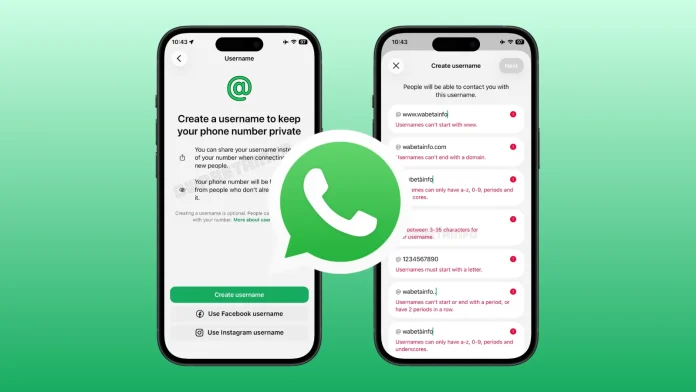
WhatsApp is set to introduce a groundbreaking feature that allows users to connect via usernames, eliminating the need to share personal phone numbers. This development marks a significant advancement in user privacy and security within the messaging platform.
The username feature is currently in beta testing, accessible to a select group of users across Android, iOS, Windows, and Web platforms. As WhatsApp monitors the feature’s stability and performance, a phased rollout is planned over the coming months to ensure a seamless experience for all users.
Setting Up Your WhatsApp Username
Once the feature becomes available, users can create a unique username by navigating to their profile settings. The setup process is straightforward, guiding users through each step to establish their username. This username will then be linked directly to the user’s account, serving as an alternative contact method to the traditional phone number.
Username Requirements and Restrictions
To maintain security and prevent misuse, WhatsApp has implemented specific guidelines for usernames:
– Character Limit: Usernames must be between 3 and 35 characters.
– Allowed Characters: Usernames can include lowercase letters (a–z), numbers (0–9), periods, and underscores.
– Prohibited Formats: Usernames cannot begin with www. or end with domain extensions like .com or .net to prevent impersonation and phishing attempts.
Cross-Platform Username Availability
An important aspect of this feature is its integration across Meta’s ecosystem. A username can only be claimed on WhatsApp if it is also available or verifiably owned by the same user on Instagram and Facebook. This verification is managed through Meta’s Accounts Center, a centralized hub for connected accounts.
Privacy Considerations
While the introduction of usernames enhances privacy by decoupling phone numbers from communication, users should be aware of potential cross-platform implications. Using the same username across Meta platforms could link your WhatsApp identity to your Instagram or Facebook profiles, potentially exposing your presence across multiple services.
Enhanced Security with Username Key
To further protect users from unsolicited contacts, WhatsApp is introducing an optional username key. This 4-digit code acts as a secondary authentication layer. When enabled, anyone attempting to contact a user for the first time must provide both the username and the correct key, effectively limiting communication to trusted individuals and reducing the risk of spam or unwanted outreach.
End-to-End Encryption Maintained
Consistent with WhatsApp’s commitment to user security, all messages exchanged through username-based contacts will remain end-to-end encrypted. This ensures that personal conversations are protected from unauthorized access, maintaining the platform’s high security standards.
Conclusion
The introduction of usernames on WhatsApp represents a significant step forward in user privacy and security. By allowing connections without sharing phone numbers, users gain greater control over their personal information. However, it’s essential to consider the cross-platform implications and utilize features like the username key to maintain optimal privacy and security.