WhatsApp Introduces ‘Strict Account Settings’ to Shield Users from Advanced Cyber Threats
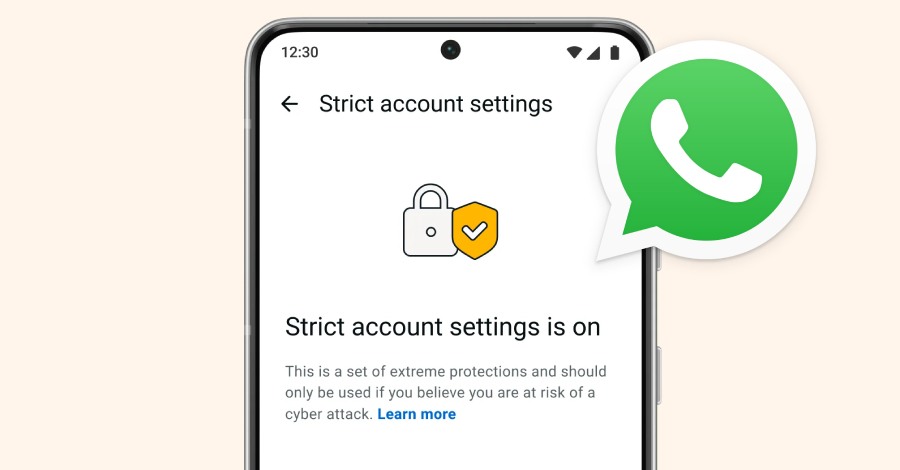
In a significant move to bolster user security, Meta has unveiled a new feature for WhatsApp called ‘Strict Account Settings.’ This initiative is designed to protect individuals who are at heightened risk of cyber attacks, such as journalists and public figures, by implementing more stringent security measures within the app.
The ‘Strict Account Settings’ function mirrors similar security enhancements found in other platforms, like Apple’s Lockdown Mode and Android’s Advanced Protection. Its primary goal is to safeguard users from sophisticated spyware by limiting certain functionalities to enhance overall security.
Upon activation, this feature automatically adjusts several account settings to their most restrictive configurations. Notably, it blocks attachments and media from individuals not listed in the user’s contacts and silences calls from unknown numbers. These measures are intended to minimize potential entry points for malicious actors.
Meta elaborated on the feature’s capabilities, stating, This lockdown-style feature bolsters your security on WhatsApp even further with just a few taps by locking your account to the most restrictive settings like automatically blocking attachments and media from unknown senders, silencing calls from people you don’t know, and restricting other settings that may limit how the app works.
Users can enable ‘Strict Account Settings’ by navigating to Settings > Privacy > Advanced within the WhatsApp application. The rollout of this feature is scheduled to occur gradually over the coming weeks, ensuring a smooth transition for all users.
In addition to this security enhancement, Meta has announced the integration of the Rust programming language into WhatsApp’s media sharing functionality. This strategic move aims to fortify the app against spyware attacks by leveraging Rust’s memory safety features. Meta described this development as the largest rollout globally of any library written in Rust.
The adoption of Rust has facilitated the creation of a secure, high-performance, cross-platform library known as ‘wamedia’ for media sharing across various devices. This initiative is part of Meta’s comprehensive approach to addressing memory safety issues, which includes:
– Designing products to minimize unnecessary attack surface exposure.
– Investing in security assurance for existing C and C++ codebases.
– Prioritizing the use of memory-safe languages for new code development.
Meta emphasized the importance of these measures, stating, WhatsApp has added protections like CFI, hardened memory allocators, safer buffer handling APIs, and more. This is an important step forward in adding additional security behind the scenes for users and part of our ongoing defense-in-depth approach.
These proactive steps underscore Meta’s commitment to enhancing user security and privacy, particularly for those who may be more susceptible to targeted cyber threats.