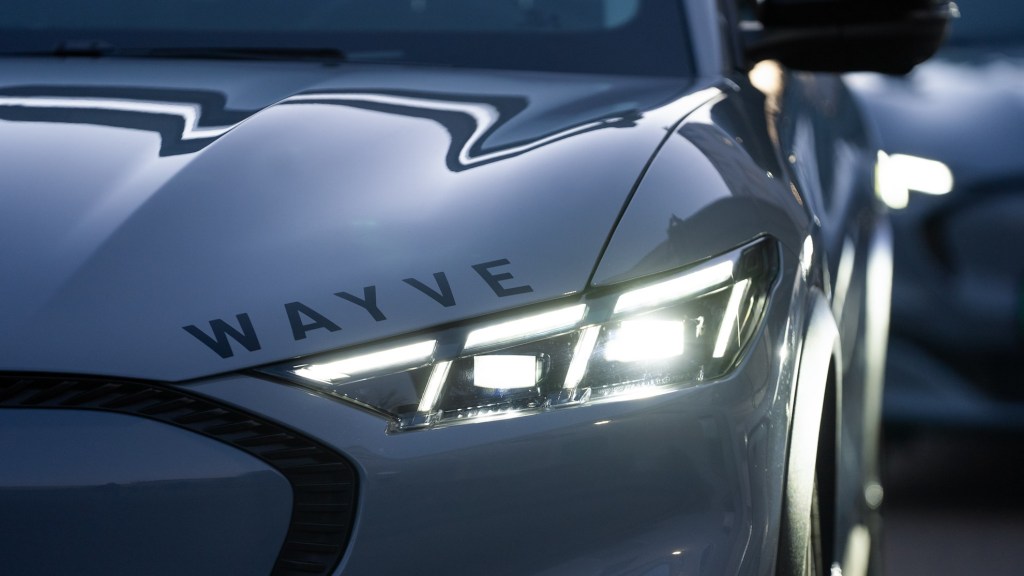
Wayve Secures $1.2 Billion Investment from Nvidia, Uber, and Leading Automakers
In a significant development for the autonomous vehicle industry, UK-based startup Wayve has successfully raised $1.2 billion in its latest funding round. This substantial investment comes from a diverse group of backers, including tech giants Nvidia and Uber, as well as three major automotive manufacturers. The influx of capital elevates Wayve’s valuation to an impressive $8.6 billion, underscoring the growing interest and confidence in the company’s innovative approach to self-driving technology.
A Contrarian Approach to Autonomous Driving
Founded in 2017, Wayve has distinguished itself by adopting a unique, data-driven methodology for developing autonomous driving systems. Unlike traditional models that rely heavily on high-definition maps and predefined rules, Wayve employs an end-to-end deep learning framework. This approach enables vehicles to learn driving behaviors directly from data, allowing them to navigate complex environments without the need for extensive mapping.
CEO Alex Kendall describes this strategy as contrarian, emphasizing that Wayve was among the first to implement such a deep learning model for autonomous driving. This innovative approach has positioned the company as a trailblazer in the industry, offering an alternative to conventional self-driving technologies.
Versatile Product Offerings
Wayve’s technology is designed to be adaptable and hardware-agnostic, meaning it can integrate seamlessly with various sensor configurations and computing platforms. This flexibility is evident in their two primary products:
1. Eyes On Assisted-Driving System: This system provides advanced driver-assistance features, enhancing safety and convenience for drivers while requiring their supervision.
2. Eyes Off Fully Automated-Driving System: Aimed at enabling vehicles to operate autonomously without human intervention, this system is suitable for applications such as robotaxis and consumer vehicles capable of handling all driving tasks in specific environments.
By offering these versatile solutions, Wayve caters to a broad spectrum of needs within the automotive and transportation sectors.
Strategic Partnerships and Investments
The recent funding round saw participation from a mix of new and existing investors. Notably, Nvidia, which has been collaborating with Wayve since 2018, played a significant role. Wayve’s third-generation platform utilizes Nvidia’s Drive AGX Thor, an in-vehicle computing system designed for autonomous vehicle development. This collaboration underscores the synergy between Wayve’s software innovations and Nvidia’s hardware capabilities.
Uber’s involvement is also noteworthy. The ride-hailing giant has not only invested in Wayve but is also planning to deploy vehicles equipped with Wayve’s autonomous driving software in over ten markets worldwide. This partnership signifies a shared vision for the future of urban mobility and the integration of autonomous vehicles into ride-hailing services.
The funding round was led by Eclipse, Balderton, and SoftBank Vision Fund 2. Additional investors include the Ontario Teachers’ Pension Plan, Baillie Gifford, British Business Bank, Icehouse Ventures, and Schroders Capital. Automotive manufacturers Mercedes-Benz, Nissan, and Stellantis also participated, indicating a strong interest from traditional automakers in Wayve’s technology.
Business Model and Market Strategy
Wayve’s business model sets it apart from many competitors in the autonomous vehicle space. Instead of operating its own fleet of autonomous vehicles, Wayve focuses on developing and licensing its embodied AI technology to automotive manufacturers and technology companies like Uber. This approach allows for broader adoption and scalability, as partners can integrate Wayve’s software into their existing vehicle platforms.
CEO Alex Kendall emphasizes that this strategy targets the largest addressable market by providing a flexible and adaptable solution. By not being tied to specific sensors or computing architectures, Wayve’s technology can be more easily adopted across various vehicle models and brands.
Future Prospects and Industry Impact
The substantial investment and strategic partnerships position Wayve to accelerate the commercialization of its autonomous driving technology. With plans to integrate its software into Nissan vehicles starting in 2027 and Uber’s upcoming commercial trials, Wayve is poised to make significant strides in the autonomous vehicle industry.
The company’s innovative approach and flexible business model may serve as a catalyst for broader adoption of autonomous driving technologies, potentially reshaping the future of transportation and mobility.