Varda Space Industries: Pioneering the Future of Space-Based Pharmaceutical Manufacturing
Varda Space Industries, under the leadership of CEO Will Bruey, is at the forefront of transforming space into a viable environment for pharmaceutical manufacturing. Bruey envisions a future where, within a decade, specialized spacecraft will routinely return to Earth, each carrying pharmaceuticals produced in microgravity. He further anticipates that in 15 to 20 years, sending personnel to orbit for extended periods will become more cost-effective than maintaining them on Earth.
Bruey’s confidence stems from his experience as an engineer at SpaceX, where he witnessed ambitious projections materialize. Reflecting on the early days of the Falcon 9 rocket, he recalls initial skepticism about reusable rockets and frequent launches. Today, Falcon 9 has completed nearly 600 successful missions, making such scenarios a reality.
Varda has already demonstrated the feasibility of its concept. In February 2024, after navigating a complex regulatory landscape, the company became the third corporate entity to retrieve materials from orbit, following SpaceX and Boeing. The retrieved payload consisted of ritonavir crystals, an HIV medication, marking a significant milestone in space-based pharmaceutical production.
The company’s manufacturing process involves the W-1 capsule, a compact, conical spacecraft measuring approximately 90 centimeters in diameter and 74 centimeters in height, with a weight under 90 kilograms. This capsule is launched aboard a SpaceX ride-share mission, attached to a spacecraft bus that provides essential services such as power, communications, propulsion, and control during orbit.
Manufacturing pharmaceuticals in microgravity offers distinct advantages. On Earth, gravity and sedimentation can interfere with crystal formation, leading to inconsistencies. In the microgravity environment of space, these forces are negligible, allowing for precise control over crystallization. This results in crystals with uniform sizes and the potential to develop novel polymorphs—different structural arrangements of the same molecule. Such improvements can enhance drug stability, purity, and shelf life.
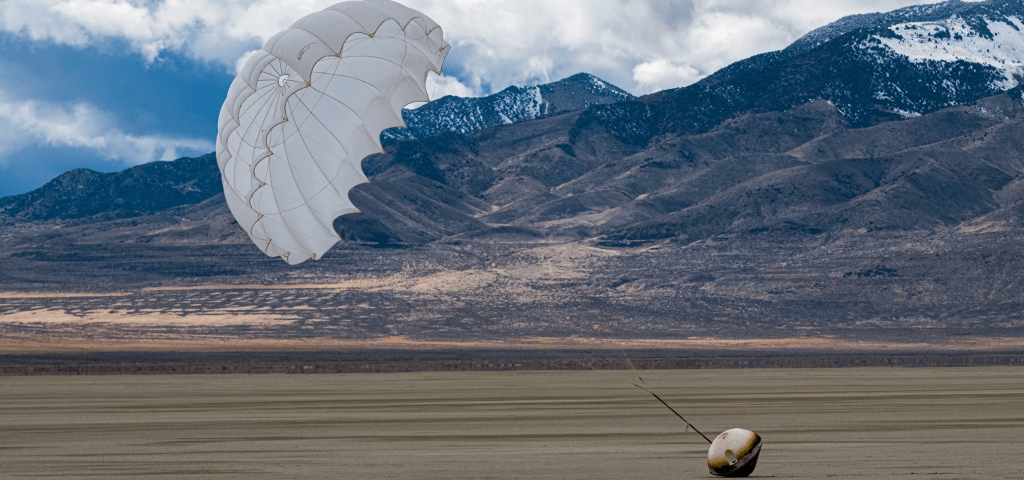
The production process in orbit is time-intensive, often taking weeks or months. Upon completion, the capsule detaches from the spacecraft bus and re-enters Earth’s atmosphere at speeds exceeding 30,000 kilometers per hour, surpassing Mach 25. A heat shield, developed with NASA’s carbon ablator material, protects the cargo during re-entry. A parachute system ensures a controlled descent and soft landing, facilitating the safe retrieval of the manufactured pharmaceuticals.
Varda’s innovative approach signifies a paradigm shift in pharmaceutical manufacturing, leveraging the unique conditions of space to produce superior medical products. As the company continues to refine its processes and expand its operations, the vision of routine space-based manufacturing is becoming increasingly tangible.