Ukrainian Man Sentenced for Facilitating North Korean Infiltration into U.S. Companies
In a significant legal development, a U.S. federal court has sentenced 29-year-old Oleksandr Didenko, a resident of Kyiv, Ukraine, to five years in prison. Didenko was convicted for orchestrating an extensive identity theft operation that enabled North Korean nationals to secure fraudulent employment within numerous U.S. companies. This scheme not only violated international sanctions but also posed substantial security risks to the affected organizations.
The Scheme Unveiled
Didenko operated a website named Upworksell, which served as a marketplace for stolen identities of U.S. citizens. Through this platform, individuals, including North Korean operatives, could purchase or rent these identities to gain employment in American firms. The U.S. Department of Justice reported that Didenko managed over 870 stolen identities, facilitating unauthorized access to sensitive corporate environments.
Financial Implications and National Security Concerns
The earnings obtained by the North Korean workers through these fraudulent employments were systematically funneled back to Pyongyang. These funds contributed to the North Korean regime’s nuclear weapons program, which is under strict international sanctions. This illicit financial flow underscores the broader implications of such cyber-enabled schemes on global security.
Operational Tactics: The Role of ‘Laptop Farms’
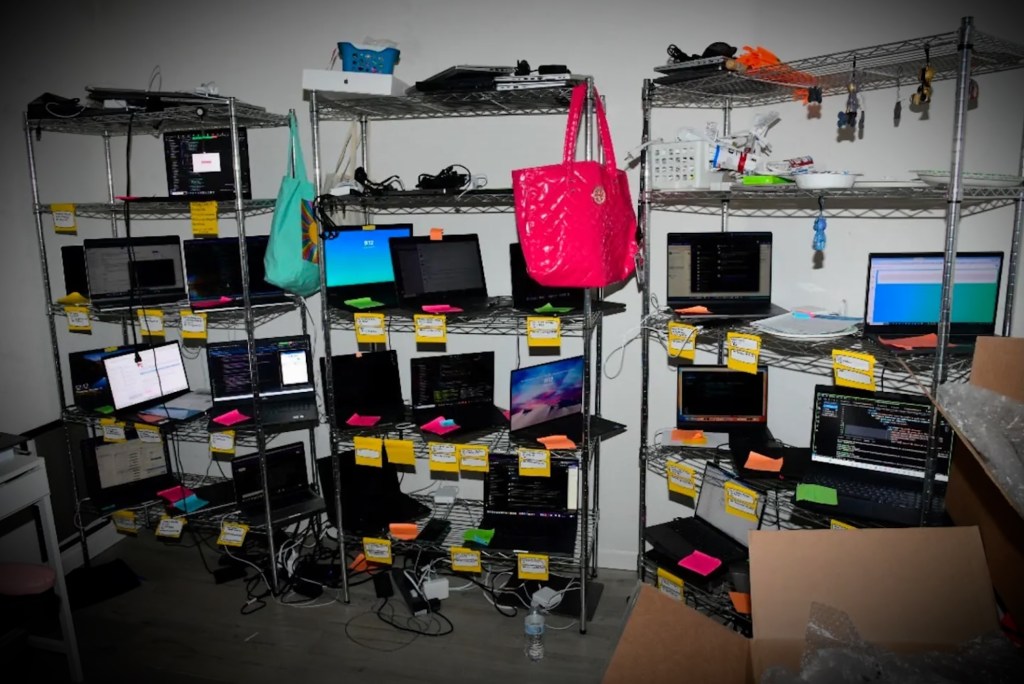
To further conceal the true identities and locations of the North Korean workers, Didenko orchestrated the establishment of laptop farms. He compensated individuals in states like California, Tennessee, and Virginia to host computers in their residences. These setups allowed North Korean operatives to remotely access and perform their job functions, creating the illusion of a domestic U.S. workforce. This tactic not only deceived employers but also circumvented standard security protocols designed to prevent unauthorized remote access.
Legal Proceedings and Conviction
The Federal Bureau of Investigation (FBI) seized the Upworksell website in 2024, redirecting its traffic to their servers to dismantle the operation. Didenko was apprehended by Polish authorities and subsequently extradited to the United States, where he pleaded guilty to the charges. His conviction marks a critical step in addressing the complex challenges posed by cyber-enabled identity theft and international sanctions violations.
Broader Context: North Korean Cyber Operations
This case is part of a series of recent convictions targeting individuals who facilitate North Korean IT worker schemes. Security experts have identified these workers as a triple threat to Western businesses. They not only violate U.S. sanctions but also have the potential to steal sensitive company data and engage in extortion by threatening to release corporate secrets. The infiltration of North Korean operatives into U.S. companies represents a multifaceted risk, combining economic espionage with direct financial support for a sanctioned regime.
Industry Response and Ongoing Threats
Leading cybersecurity firm CrowdStrike has observed a significant increase in North Korean workers infiltrating companies, often securing positions as remote developers or technical software engineers. This trend highlights the evolving tactics employed by the North Korean regime to circumvent international sanctions and generate revenue. Additionally, North Korean operatives have been known to impersonate recruiters and venture capitalists to deceive high-profile individuals and gain unauthorized access to sensitive information, including cryptocurrency assets.
Conclusion
The sentencing of Oleksandr Didenko underscores the intricate and evolving nature of cyber-enabled identity theft and its implications for national security. It serves as a stark reminder of the importance of robust cybersecurity measures and vigilant monitoring to prevent unauthorized access and protect sensitive information. As cyber threats continue to evolve, collaboration between international law enforcement agencies and the private sector remains crucial in mitigating these risks and safeguarding global security interests.