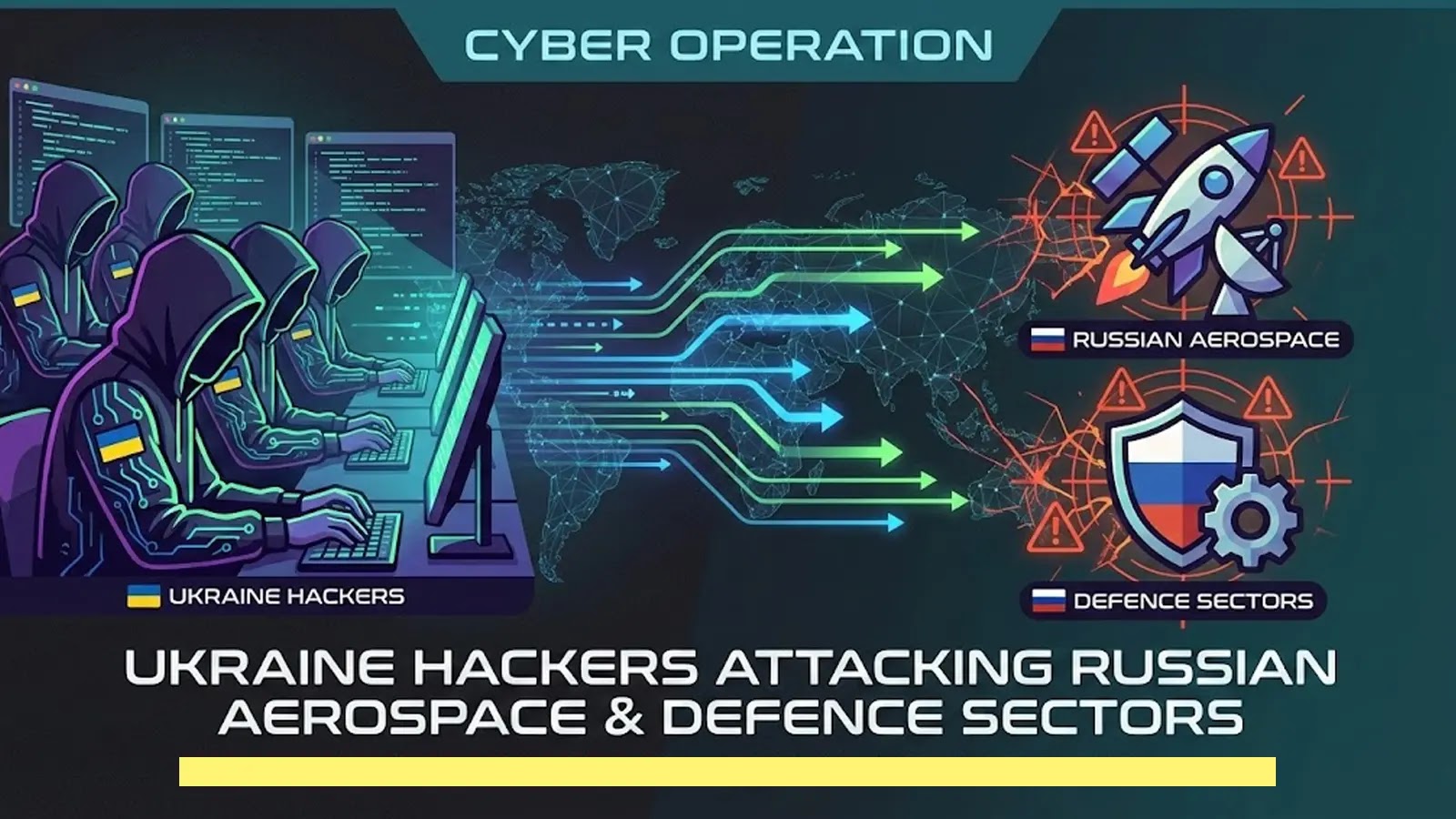
Ukrainian Cyber Offensive Targets Russian Aerospace and Defense Sectors
In a significant escalation of cyber warfare, Ukrainian-affiliated hackers have intensified their attacks on Russian aerospace and defense industries. These operations employ sophisticated malware designed to exfiltrate sensitive information, including design schematics, production schedules, and internal communications. The primary objective is to map Russia’s defense production networks and identify vulnerabilities within its military-industrial complex.
Targeted Entities and Attack Vectors
The cyber campaign is not limited to major defense contractors but extends to smaller suppliers and research facilities integral to Russia’s defense infrastructure. By compromising these entities, attackers aim to disrupt the supply chain and gain insights into the operational readiness of Russian military assets.
The initial phase of the attack involves spear-phishing emails meticulously crafted to deceive recipients. These emails are directed at engineers, project managers, and other key personnel involved in avionics, guidance systems, and satellite communications. The phishing lures often take the form of counterfeit job offers, invitations to industry conferences, or updates on contractual agreements. Attached documents exploit vulnerabilities in outdated office software on Windows systems, serving as the entry point for the malware.
Malware Deployment and Functionality
Once the malicious attachment is opened, a multi-stage infection process is initiated:
1. Initial Loader Execution: A small, memory-resident DLL is executed, which then retrieves a secondary script from a predetermined URL.
2. Payload Injection: The secondary script injects the main payload into a trusted system process, such as `explorer.exe`, allowing the malware to operate discreetly and evade detection.
The malware is engineered with a compact command loop, enabling it to perform various functions based on commands received from its operators. This design allows for both automated data exfiltration and interactive control by the attackers. Notably, the malware avoids traditional persistence mechanisms that might trigger security alerts. Instead, it utilizes scheduled tasks and hijacked update processes to maintain access across system reboots.
Strategic Implications
The data harvested through these cyber intrusions provides Ukrainian intelligence with critical insights into Russia’s defense capabilities. By analyzing stolen documents and communications, Ukrainian planners can identify potential weaknesses in Russian military operations, such as supply chain bottlenecks, production delays, and software vulnerabilities. This intelligence is invaluable for strategic planning and could inform both defensive and offensive military actions.
Broader Context of Cyber Operations
This campaign is part of a broader pattern of cyber engagements between Ukraine and Russia. For instance, in April 2024, a Ukrainian hacking group known as BlackJack infiltrated and disabled approximately 87,000 industrial sensors across Russia, leading to significant disruptions in utilities, including sewage systems. The attackers deployed a malware named ‘Fuxnet,’ designed to cause physical damage to sensory equipment by exhausting memory resources and corrupting firmware. This operation demonstrated the potential for cyberattacks to inflict tangible harm on critical infrastructure.
Conversely, Russian-aligned threat actors have also intensified their cyber activities. The Sandworm group, for example, has deployed data wiper malware targeting Ukrainian organizations, aiming to cripple critical infrastructure and economic operations. These attacks underscore the escalating cyber conflict between the two nations, with both sides leveraging digital means to achieve strategic objectives.
Conclusion
The ongoing cyber operations targeting Russian aerospace and defense sectors highlight the evolving nature of modern warfare, where cyber capabilities play a pivotal role alongside traditional military assets. As both Ukraine and Russia continue to develop and deploy sophisticated cyber tools, the digital battlefield is set to remain a critical front in their ongoing conflict.