Toyota Integrates Agility Robotics’ Humanoid Robots into Canadian Manufacturing Operations
In a significant advancement for industrial automation, Toyota Motor Manufacturing Canada (TMMC) has entered into a robots-as-a-service agreement to deploy seven humanoid robots from Agility Robotics in its RAV4 SUV production facility. This decision follows a comprehensive year-long pilot program aimed at evaluating the robots’ effectiveness in enhancing manufacturing processes.
Tim Hollander, President of TMMC, expressed enthusiasm about the integration, stating, After evaluating a number of robots, we are excited to deploy Digit to improve the team member experience and further increase operational efficiency in our manufacturing facilities.
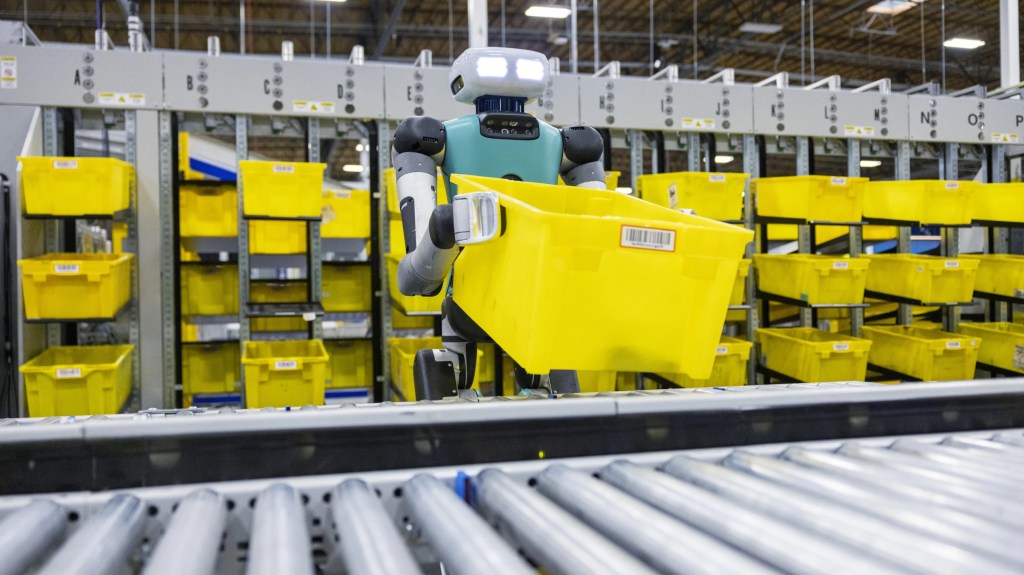
The robots, known as Digit, are engineered by Agility Robotics, a company that originated from Oregon State University in 2015. Digit is specifically designed to operate in industrial settings, often serving as a bridge between automated production lines. In this particular deployment, the robots will be responsible for unloading totes filled with auto parts from an automated warehouse tugger, thereby streamlining the material handling process.
While the deployment of seven robots may seem modest compared to more dramatic demonstrations of robotic capabilities, the actual implementation of humanoid robots in real-world industrial environments presents unique challenges. Integrating such robots into existing workflows, ensuring proper maintenance, and managing charging requirements are complex tasks that extend beyond laboratory demonstrations.
Ram Devarajulu, Vice President at Cambridge Consultants, highlighted the importance of practical field experience, stating, When the tech companies spend real time in the field understanding the task that needs to be operated, the real workflows that happens…that’s when we will see a huge uptick in adoption.
Agility Robotics has been at the forefront of transitioning robots from research labs to operational environments. Their Digit robots have been deployed in similar roles for logistics providers such as GXO, Schaeffler, and Amazon. To facilitate the management of these robotic fleets, Agility offers a proprietary cloud-based software package called Arc. The company emphasizes the critical role of artificial intelligence in reducing deployment costs and enhancing operational efficiency.
Pras Velagapudi, Chief Technology Officer of Agility Robotics, underscored this point in a previous interview, stating, Cost of deployment…can be more than the price of the robot by a lot. AI tools let us decrease that cost of deployment, decrease the amount of time getting the robot configured and getting it operating at a level of performance that they want.
The collaboration between TMMC and Agility Robotics is not limited to the current deployment. Both organizations view this partnership as an opportunity to explore additional applications that can alleviate human workers from repetitive physical tasks, allowing them to focus on more complex and valuable aspects of the manufacturing process.
This initiative aligns with Toyota’s broader strategy of integrating advanced robotics into its operations to enhance efficiency and worker satisfaction. The company has a history of exploring robotic solutions, including the development of the T-HR3 humanoid robot, which was designed for remote operation and assistance in various environments. In 2018, Toyota collaborated with Japanese telecom giant Docomo to utilize 5G technology for remotely controlling the T-HR3, demonstrating the potential for high-speed, low-latency communication in robotic applications.
The deployment of Agility Robotics’ humanoid robots represents a significant step forward in the practical application of robotics within the automotive manufacturing industry. By automating tasks that are physically demanding and repetitive, Toyota aims to create a more efficient production environment while also improving the overall work experience for its employees.
As the manufacturing sector continues to evolve, the integration of humanoid robots like Digit may become increasingly common. These robots offer the flexibility to perform a variety of tasks, adapt to different environments, and work alongside human counterparts, thereby redefining traditional manufacturing processes.
The success of this deployment could serve as a model for other manufacturers considering the adoption of humanoid robots. It highlights the importance of thorough pilot programs, collaboration between technology providers and end-users, and the strategic use of artificial intelligence to optimize deployment and operation.
In conclusion, Toyota’s integration of Agility Robotics’ humanoid robots into its Canadian manufacturing operations marks a pivotal moment in the intersection of robotics and industrial manufacturing. This collaboration not only showcases the potential of humanoid robots to enhance operational efficiency but also sets the stage for future innovations in the field.