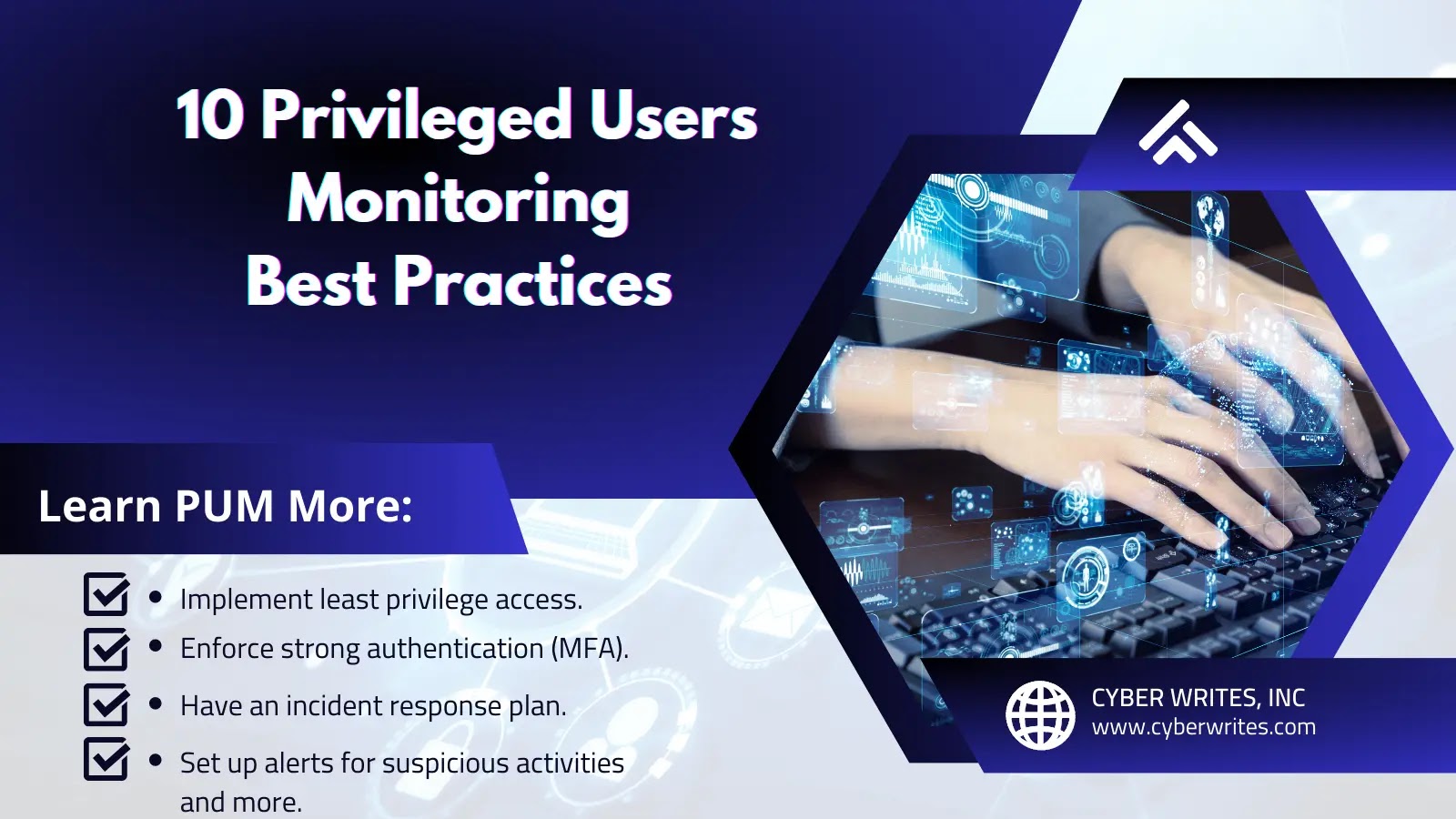
Top 10 Best Practices for Monitoring Privileged Users in 2023
Privileged users hold elevated access rights within an organization’s IT infrastructure, encompassing systems, networks, applications, and sensitive data. While their roles are essential for operational efficiency, they also present significant cybersecurity risks if their activities are not adequately monitored. Implementing robust Privileged User Monitoring (PUM) practices is crucial to safeguard critical assets and ensure compliance with regulations such as GDPR, HIPAA, and NIST 800-53.
Understanding the Importance of PUM
Employees can be categorized based on their access rights:
– Regular Users: Monitored to assess performance, enhance productivity, protect sensitive data, mitigate threats, and ensure compliance.
– Privileged Users: Monitored to oversee the handling of sensitive data, track system modifications, verify authorized access, protect critical systems, mitigate insider and outsider threats, and ensure compliance.
The primary focus of monitoring privileged users is to prevent the misuse of their elevated access rights, which could lead to data breaches or system compromises.
Top 10 Best Practices for Privileged User Monitoring
1. Comprehensive Monitoring of Privileged User Activities
It’s imperative to monitor all actions performed by privileged users, not just those involving specific data types. Utilize user activity monitoring solutions that capture every action through screenshots or video recordings, providing a detailed audit trail for incident investigations.
2. Implement the Principle of Least Privilege
Grant elevated access rights only to employees who require them for specific tasks and for a limited duration. This approach minimizes the number of privileged users and reduces potential security risks.
3. Maintain an Inventory of All Administrative Accounts
Regularly audit and document all administrative accounts, including those with elevated permissions outside standard admin groups. Identifying and monitoring these shadow admins is essential to prevent unauthorized access.
4. Monitor the Use of USB Devices
USB devices can be vectors for data exfiltration or malware introduction. Implement policies to monitor and control the use of USB devices within the network, ensuring that only authorized devices are permitted.
5. Enforce Secondary Authentication for Shared Accounts
Shared accounts pose a challenge for accountability. Implement secondary authentication measures, such as multi-factor authentication (MFA), to verify the identity of users accessing shared accounts.
6. Supervise Remote Access
With the rise of remote work, monitoring remote connections is vital. Ensure that remote access is secured through VPNs, and monitor for unusual access patterns that could indicate unauthorized access.
7. Protect Log Integrity
Logs are critical for forensic investigations. Implement measures to prevent logs from being modified or deleted by unauthorized users, ensuring their integrity and availability.
8. Detect Anomalous Behavior
Utilize behavioral analytics to identify deviations from normal user behavior. Unusual activities, such as accessing systems at odd hours or transferring large amounts of data, should trigger alerts for further investigation.
9. Continuous Monitoring and Real-Time Alerts
Implement continuous monitoring systems that provide real-time alerts for suspicious activities. This proactive approach enables swift responses to potential security incidents.
10. Conduct Regular Cybersecurity Training
Educate employees on cybersecurity best practices, emphasizing the importance of safeguarding sensitive information and recognizing potential threats. Regular training fosters a security-conscious culture within the organization.
Conclusion
Monitoring privileged users is a critical component of an organization’s cybersecurity strategy. By implementing these best practices, organizations can mitigate risks associated with elevated access rights, protect sensitive data, and ensure compliance with regulatory requirements.

