Tesla’s Energy Storage Division Surges Amidst Declining EV Sales
In 2025, Tesla’s energy storage sector emerged as a beacon of growth, counterbalancing the company’s overall profit decline of 45% compared to 2024. This downturn was largely attributed to a significant drop in electric vehicle (EV) sales. However, the robust performance of Tesla’s energy storage division enabled the company to surpass Wall Street’s earnings and revenue expectations.
The year saw Tesla deploying an unprecedented 46.7 gigawatt-hours (GWh) of energy storage products, marking a 48% increase from the previous year. This substantial growth underscores the escalating demand for large-scale energy storage solutions, such as Tesla’s Megapack and Powerwall systems. These products, along with solar installations, now contribute to nearly 25% of Tesla’s gross profit. Notably, in the last quarter alone, the Megapack accounted for $1.1 billion of the storage business’s $3.8 billion gross profit for the entire year. Overall, revenues from storage and energy generation rose by 26.5%, reaching $12.8 billion.
The profitability of Tesla’s energy storage products is particularly striking. With a gross margin of 29.8%, these products are nearly twice as profitable as the company’s automotive offerings. This financial performance highlights the strategic importance of the energy storage division within Tesla’s broader business model.
Looking ahead, Tesla anticipates an even more significant role for its energy storage business. Large-scale projects, such as those implemented for utilities and data centers, often follow milestone-based revenue recognition. In its 10-K filing with the Securities and Exchange Commission (SEC), Tesla projected recognizing $4.96 billion in deferred revenue from ongoing projects in the upcoming year. This figure is more than double the deferred revenue recognized from storage projects in 2025, indicating a strong pipeline and sustained demand.
Despite these promising developments, Tesla faces several challenges in the energy storage market. The enactment of the One Big Beautiful Bill Act (OBBBA) has phased out tax credits for residential energy storage systems like the Powerwall. However, commercial tax credits for products such as the Megapack and the newly introduced Megablock will remain available through the mid-2030s. Additionally, tariffs and provisions within the OBBBA pose potential increases in battery cell prices, which could impact cost structures. Furthermore, while sales volumes have risen, the average selling price of a Megapack has declined, suggesting heightened competition in the energy storage sector.
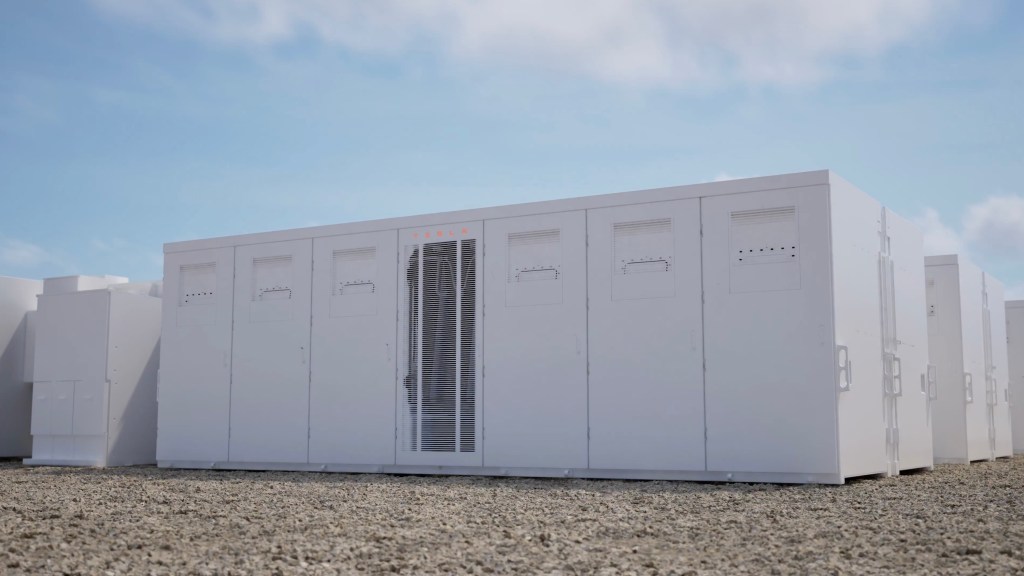
In response to these challenges, Tesla has been proactive in enhancing its product offerings. In September 2025, the company unveiled the Megapack 3, an upgraded utility-scale battery designed to attract utilities and data center developers seeking reliable power solutions. The Megapack 3 boasts approximately 1 megawatt-hour more storage capacity than its predecessor and promises an extended lifespan. Alongside this, Tesla introduced the Megablock—a configuration of four Megapack 3 units capable of storing 20 megawatt-hours. This setup can power around 4,000 homes for four hours, a typical duration for such battery applications. The Megablock is designed to reduce installation times by 23% and construction times by up to 40%, enhancing operational efficiency.
Tesla’s commitment to expanding its energy storage capabilities is further evidenced by its investment in manufacturing infrastructure. In January 2023, the company announced a $3.6 billion investment to expand its existing gigafactory in Nevada. This expansion includes the construction of a 100-gigawatt-hour battery cell factory and Tesla’s first high-volume Semi truck factory. These facilities are expected to bolster Tesla’s production capacity and support the growing demand for energy storage solutions.
Moreover, Tesla’s strategic initiatives extend to raw material processing. In May 2023, the company broke ground on a lithium refinery in Texas, positioning itself as the only U.S. automaker to refine its own lithium. This facility is projected to produce enough battery-grade lithium for one million electric vehicles by 2025, making Tesla the largest processor of lithium in North America. This move aims to secure a stable supply of a critical component in battery production, reducing reliance on external suppliers and mitigating potential supply chain disruptions.
Despite the hurdles posed by regulatory changes and market competition, Tesla remains optimistic about the future of its energy storage business. The rapid growth of artificial intelligence (AI) infrastructure is driving increased energy demand, presenting opportunities for Tesla’s energy storage products to stabilize the grid, shift energy to peak demand periods, and provide additional power capacity. As the global energy landscape continues to evolve, Tesla’s strategic focus on energy storage positions the company to play a pivotal role in the transition to sustainable energy solutions.