State-Sponsored Cyberattack Compromises Notepad++ Update Mechanism
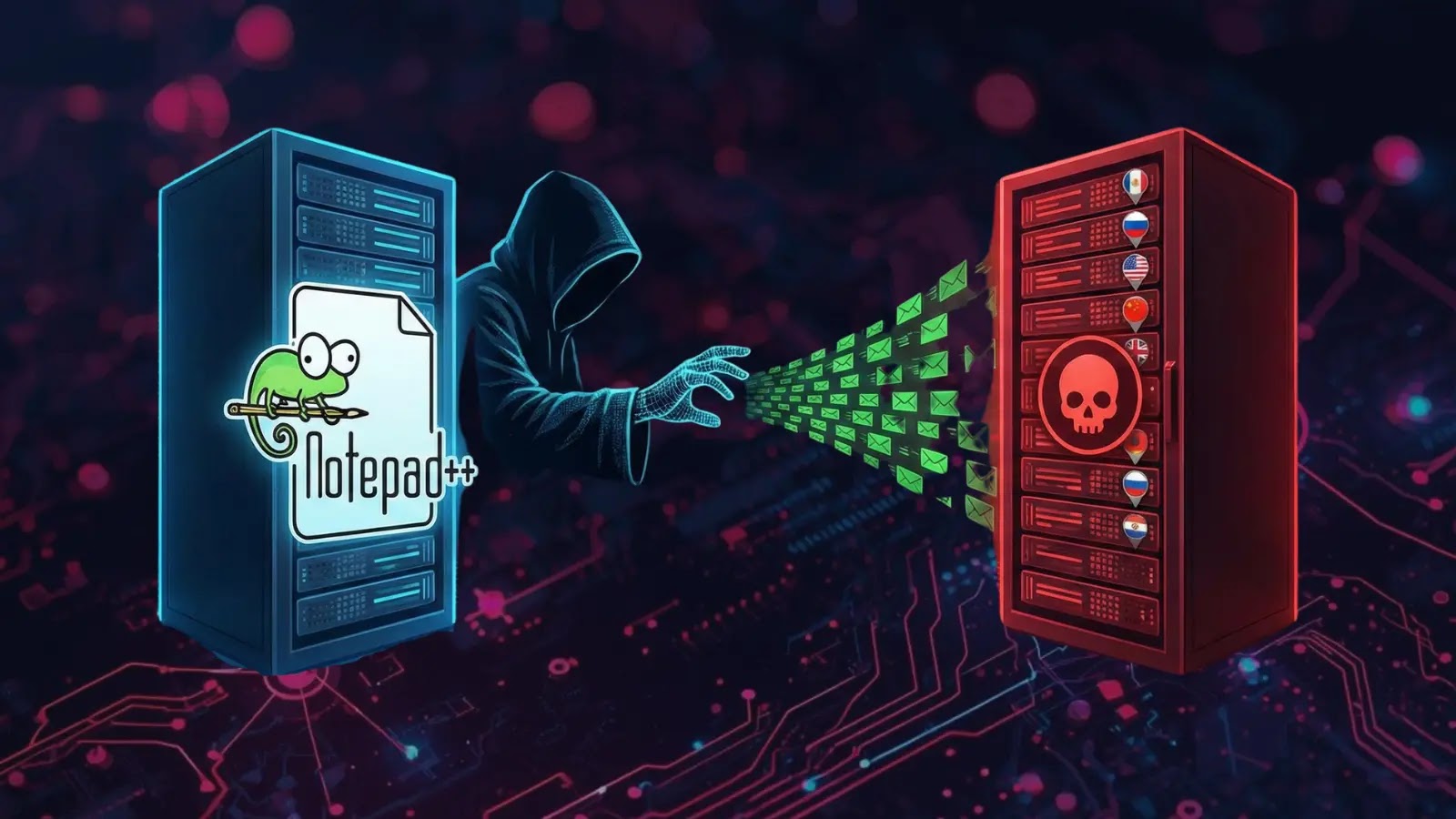
In a recent disclosure, the developer of Notepad++ confirmed that between June and December 2025, a sophisticated cyberattack compromised the software’s former shared hosting infrastructure. This breach, attributed to a likely Chinese state-sponsored threat actor, enabled the interception and redirection of update traffic to malicious servers. The attackers exploited vulnerabilities in the software’s update validation process, particularly affecting versions prior to 8.8.9.
Infrastructure-Level Compromise
Forensic analyses by independent security experts and the previous hosting provider revealed that the intrusion occurred at the infrastructure level, not within the Notepad++ codebase. The adversaries gained access to the shared hosting server, allowing them to manipulate requests directed to `notepad-plus-plus.org`.
The primary target was the `getDownloadUrl.php` script utilized by the application’s updater. By controlling this endpoint, the attackers could selectively redirect certain users to servers under their control, which hosted malicious binaries. This tactic exploited the fact that older versions of the updater (WinGUp) did not rigorously enforce certificate and signature validation for downloaded installers.
Security researchers have assessed that this campaign was likely orchestrated by a Chinese state-sponsored group. The operation was described as highly selective, focusing on specific users rather than executing a broad supply-chain attack.
Timeline of the Attack
The compromise unfolded over approximately six months, with the hosting provider identifying two distinct phases of unauthorized access:
– June 2025: Initial Compromise – Attackers gained access to the shared hosting server.
– September 2, 2025: Server Access Lost – A scheduled maintenance update (kernel/firmware) by the provider severed the attackers’ direct server access.
– September 2 – December 2, 2025: Credential Persistence – Despite losing direct server control, attackers maintained access via stolen internal service credentials, allowing continued traffic redirection.
– November 10, 2025: Estimated Cessation of Attack – Security experts noted that the active attack campaign appeared to halt around this date.
– December 2, 2025: Access Terminated – The hosting provider rotated all credentials and completed security hardening measures, effectively blocking the attackers.
– December 9, 2025: Mitigation Released – Notepad++ version 8.8.9 was released, incorporating enhanced update verification mechanisms.
The hosting provider confirmed that no other clients on the shared server were targeted; the attackers specifically focused on the Notepad++ domain. In response to the incident, the Notepad++ website has been migrated to a new provider with enhanced security protocols.
Enhanced Security Measures
To prevent similar hijacking attempts, Notepad++ version 8.8.9 introduced strict validation within WinGUp, requiring both a valid digital signature and a matching certificate for any downloaded installer. If these verifications fail, the update process is automatically aborted.
Looking ahead, the project is implementing the XMLDSig (XML Digital Signature) standard for update manifests. This reinforcement will ensure that the XML data returned by the update server is cryptographically signed, preventing tampering with the download URLs. This feature is scheduled for enforcement in version 8.9.2, expected to be released within the next month.
Implications and Recommendations
This incident underscores the critical importance of robust security measures in software update mechanisms. Users are strongly advised to:
– Update Promptly: Ensure that Notepad++ is updated to version 8.8.9 or later to benefit from the enhanced security features.
– Verify Sources: Always download software and updates from official and trusted sources to minimize the risk of tampered files.
– Stay Informed: Regularly monitor official communications from software developers regarding security updates and patches.
By adhering to these practices, users can significantly reduce the risk of falling victim to similar cyberattacks in the future.