Starcloud’s $170 Million Series A Propels Space-Based Data Centers into Reality
In a groundbreaking move that underscores the burgeoning interest in extraterrestrial data solutions, Starcloud has successfully secured $170 million in a Series A funding round, catapulting its valuation to an impressive $1.1 billion. This rapid ascent to unicorn status, achieved just 17 months post its Y Combinator debut, highlights the company’s pivotal role in the evolving landscape of space-based data centers.
Pioneering the Orbital Data Frontier
The Series A funding, spearheaded by Benchmark and EQT Ventures, reflects a growing consensus among investors about the viability and necessity of off-world data processing. As terrestrial data centers grapple with escalating resource demands and geopolitical complexities, the allure of space-based alternatives becomes increasingly compelling. However, this ambitious endeavor hinges on the successful deployment of nascent technologies and substantial capital investments.
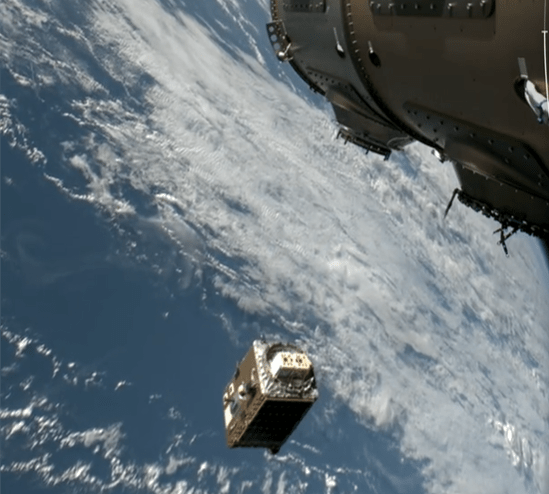
To date, Starcloud has amassed a total of $200 million in funding. The company’s inaugural satellite, equipped with an Nvidia H100 GPU, was launched in November 2025, marking a significant milestone in space computing. Building on this success, Starcloud plans to deploy a more advanced satellite, Starcloud 2, later this year. This iteration will feature multiple GPUs, including Nvidia’s cutting-edge Blackwell chip, an AWS server blade, and even a bitcoin mining computer, showcasing the versatility and expansive potential of orbital data centers.
Strategic Collaborations and Technological Milestones
Starcloud’s trajectory is emblematic of a broader industry trend towards space-based data solutions. Notably, Blue Origin, founded by Jeff Bezos, has unveiled Project Sunrise, aiming to launch a constellation of over 50,000 satellites to function as orbital data centers. This initiative seeks to alleviate the environmental and resource strains associated with terrestrial data centers by transitioning energy-intensive computations to space. However, the project’s success is contingent upon the development of advanced satellite technologies and the establishment of cost-effective launch mechanisms.
Similarly, Lonestar and Phison have embarked on a collaborative venture to establish lunar data centers. Their recent deployment of data storage infrastructure aboard a SpaceX Falcon 9 rocket signifies the initial steps towards creating a lunar-based data repository. This endeavor aims to provide a resilient and secure data storage solution, leveraging the moon’s unique environment to safeguard critical information.
Navigating the Challenges Ahead
Despite the promising advancements, the path to operational space-based data centers is fraught with challenges. A significant hurdle is the reliance on next-generation launch vehicles, such as SpaceX’s Starship, which are still under development. Starcloud’s CEO and founder, Philip Johnston, acknowledges this dependency, stating that achieving cost-competitive energy solutions in orbit is contingent upon the frequent operational deployment of Starship. Until such capabilities are realized, the company plans to continue utilizing existing launch platforms like the Falcon 9 for deploying smaller-scale satellites.
Johnston elaborates on the dual business models Starcloud is exploring:
1. On-Orbit Processing Services: Providing computational power to other spacecraft, exemplified by the company’s first satellite, which processes data for Capella Space’s radar satellites.
2. Distributed Data Centers: Envisioning a future where reduced launch costs enable the establishment of powerful, distributed data centers in orbit, potentially offloading workloads from terrestrial counterparts.
The Road Ahead
As Starcloud and its contemporaries navigate the complexities of space-based data center development, the industry stands at the precipice of a transformative era. The successful realization of these projects could redefine data processing and storage paradigms, offering scalable, secure, and environmentally sustainable solutions beyond Earth’s confines.
However, the journey is contingent upon technological breakthroughs, regulatory approvals, and the maturation of space launch infrastructures. The coming years will be pivotal in determining whether the vision of orbital data centers transitions from ambitious concept to operational reality.