Unveiling the Backbone of Industrial-Scale Pig Butchering Scams: Service Providers’ Role
Cybersecurity experts have recently exposed the critical role of certain service providers in facilitating large-scale pig butchering scams, a form of online fraud that combines elements of romance scams and investment schemes. These providers supply the necessary tools and infrastructure, enabling cybercriminal networks to operate efficiently and evade law enforcement.
The Rise of Industrial-Scale Scam Operations
Since at least 2016, Chinese-speaking criminal organizations have established extensive scam centers across Southeast Asia. These operations are often situated in special economic zones dedicated to fraudulent activities, including investment scams and impersonation schemes. Thousands of individuals are lured with promises of lucrative employment, only to have their passports confiscated and be coerced into conducting scams under threats of violence. INTERPOL has described these networks as human trafficking-fueled fraud on an industrial scale.
Service Providers: The Enablers of Fraud
A significant factor in the proliferation of pig butchering scams is the emergence of service providers that offer comprehensive packages to criminal networks. These providers supply everything from stolen identities and front companies to turnkey scam platforms and mobile applications, significantly lowering the barrier to entry for conducting large-scale fraud.
One notable example is the Penguin Account Store, also known as Heavenly Alliance and Overseas Alliance. Operating under a crimeware-as-a-service (CaaS) model, Penguin offers fraud kits, scam templates, and datasets containing stolen personal information of Chinese citizens. Their offerings include account data from popular platforms such as Twitter, Tinder, YouTube, Snapchat, Facebook, Instagram, Apple Music, OpenAI ChatGPT, Spotify, and Netflix.
These credentials are likely sourced from information-stealing logs sold on the dark web. However, it remains unclear whether Penguin operates the stealers themselves or acts as a broker for other threat actors. Prices for pre-registered social media accounts start as low as $0.10, increasing based on registration date and authenticity.
In addition to account data, Penguin provides bulk pre-registered SIM cards, stolen social media accounts, 4G or 5G routers, IMSI catchers, and packages of stolen images (referred to as character sets) used to deceive victims. They have also developed a Social Customer Relationship Management (SCRM) platform named SCRM AI, enabling scam operators to automate victim engagement on social media.
Furthermore, Penguin advertises BCD Pay, a payment processing platform linked to Bochuang Guarantee (博创担保自). BCD Pay is an anonymous peer-to-peer (P2P) solution with deep roots in the illegal online gambling sector.
CRM Platforms: Centralized Control for Scammers
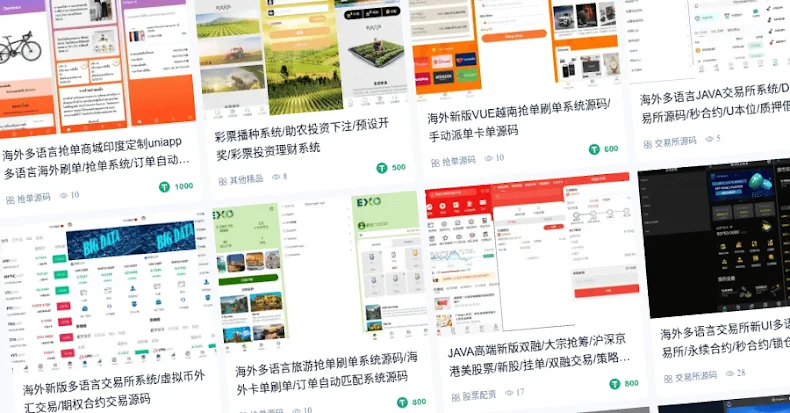
Another critical component in the pig butchering-as-a-service (PBaaS) economy is the use of customer relationship management (CRM) platforms. These platforms provide centralized control over numerous individual agents, streamlining the management of large-scale scam operations.
UWORK, a seller of content and agent management tools, offers pre-made templates for creating investment scam websites. Many of these scam offerings claim to have integration with various financial platforms, adding a veneer of legitimacy to their fraudulent activities.
The Mechanism of Pig Butchering Scams
Pig butchering scams, also known as romance baiting, involve building trust with victims over time before convincing them to invest in fraudulent schemes. The term pig butchering refers to the process of fattening up the victim (the pig) before slaughtering them, metaphorically speaking.
These scams typically follow a structured approach:
1. Initial Contact: Scammers initiate contact through social media platforms, dating apps, or messaging services, often using stolen or fabricated identities.
2. Building Trust: Over weeks or months, scammers engage in regular communication, sharing personal stories and creating a sense of intimacy and trust.
3. Investment Pitch: Once trust is established, the scammer introduces the idea of investing in a lucrative opportunity, often related to cryptocurrency or foreign exchange markets.
4. Fake Platforms: Victims are directed to professional-looking but fraudulent investment platforms, where initial investments may show significant returns to encourage further deposits.
5. Extraction: As victims invest more substantial amounts, scammers eventually cut off communication, and the fraudulent platforms disappear, leaving victims with significant financial losses.
The Role of Technology in Facilitating Scams
The availability of sophisticated tools and platforms has made it easier for scammers to execute pig butchering schemes on a large scale. Service providers like Penguin Account Store and UWORK offer a range of products and services that enable scammers to:
– Automate Victim Engagement: Tools like SCRM AI allow scammers to manage and automate interactions with multiple victims simultaneously, increasing efficiency and reach.
– Create Convincing Fake Identities: Access to stolen personal information and character sets enables scammers to craft believable personas, enhancing their ability to deceive victims.
– Develop Professional-Looking Platforms: Pre-made templates and website-building tools allow scammers to create investment platforms that appear legitimate, reducing suspicion among potential victims.
– Evade Detection: The use of bulk pre-registered SIM cards, stolen social media accounts, and anonymous payment processing platforms helps scammers maintain anonymity and evade law enforcement.
The Human Cost of Pig Butchering Scams
Beyond the financial losses suffered by victims, pig butchering scams have a significant human cost. Many of the individuals operating these scams are victims themselves, having been trafficked and forced into fraudulent activities under threat of violence. The exploitation of vulnerable individuals to perpetrate these scams adds a layer of complexity to the issue, highlighting the need for comprehensive solutions that address both the perpetrators and the underlying human rights abuses.
Combating the PBaaS Economy
Addressing the pig butchering-as-a-service economy requires a multi-faceted approach:
– International Cooperation: Law enforcement agencies must collaborate across borders to dismantle the infrastructure supporting these scams and hold service providers accountable.
– Regulation of Service Providers: Implementing stricter regulations and oversight of service providers that offer tools and platforms used in scams can help reduce their availability to criminal networks.
– Public Awareness Campaigns: Educating the public about the tactics used in pig butchering scams can help individuals recognize and avoid falling victim to these schemes.
– Support for Victims: Providing resources and support for both the financial victims of these scams and the individuals coerced into operating them is essential for addressing the broader impact of the PBaaS economy.
Conclusion
The exposure of service providers’ involvement in facilitating industrial-scale pig butchering scams sheds light on the complex infrastructure behind these fraudulent operations. By understanding the mechanisms and enablers of these scams, stakeholders can develop more effective strategies to combat them, protect potential victims, and address the human rights abuses associated with their operation.