Landmark Victory: Saudi Satirist Awarded £3 Million in Spyware Case
In a groundbreaking decision, the London High Court has awarded over £3 million ($4.1 million USD) in damages to Ghanem Al-Masarir, a Saudi satirist and human rights activist. The court found compelling evidence that his mobile phone was infiltrated using Pegasus, a sophisticated spyware developed by the Israeli firm NSO Group and sold exclusively to government entities.
Background on Ghanem Al-Masarir
Ghanem Al-Masarir, based in London, gained prominence through his YouTube channel, where he humorously critiqued the Saudi government. His content attracted millions of viewers, positioning him as a significant voice in advocating for human rights and freedom of expression concerning Saudi Arabia.
The Pegasus Spyware Incident
In 2018, Al-Masarir’s mobile device was allegedly targeted with Pegasus spyware. This advanced surveillance tool is known for its ability to covertly access and extract data from smartphones, including messages, emails, and calls. The infiltration of his device raised serious concerns about digital privacy and the lengths to which governments might go to monitor dissidents.
Physical Assault in London
Coinciding with the digital intrusion, Al-Masarir was physically assaulted in London in 2018. He accused agents associated with Saudi Crown Prince Mohammed bin Salman of orchestrating the attack. This incident underscores the potential for coordinated physical and digital threats against activists and critics of authoritative regimes.
Legal Proceedings and Saudi Arabia’s Response
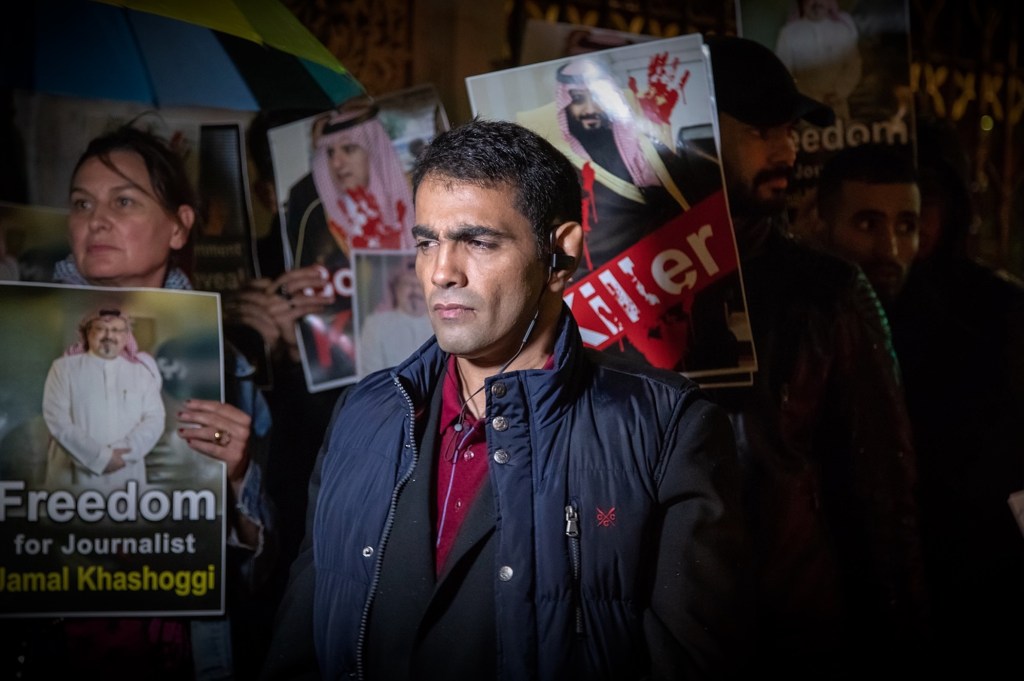
In 2019, Al-Masarir initiated legal action against the Saudi government, alleging their involvement in both the spyware attack and the physical assault. Saudi Arabia contested the lawsuit, claiming state immunity from prosecution—a defense they had previously employed successfully in cases like the alleged orchestration of journalist Jamal Khashoggi’s murder in 2018.
However, the High Court dismissed Saudi Arabia’s immunity claim in Al-Masarir’s case, leading the Kingdom to abstain from further participation in the litigation.
Court’s Findings and Judgment
Justice Pushpinder Saini, presiding over the case, stated, There is a compelling basis for concluding that [Al-Masarir’s] iPhones were hacked by Pegasus spyware which resulted in the exfiltration of data from those mobile phones. He further determined that the hacking was directed or authorised by the Saudi government or its agents and found the government likely responsible for the physical assault on Al-Masarir.
Implications for Digital Privacy and Human Rights
This ruling is significant in the ongoing discourse on digital privacy, surveillance, and human rights. It highlights the potential misuse of advanced surveillance technologies like Pegasus by state actors to suppress dissent and monitor critics. The case also emphasizes the challenges individuals face when seeking justice against powerful governments accused of human rights violations.
NSO Group’s Role and Previous Controversies
NSO Group, the creator of Pegasus spyware, has faced multiple allegations regarding the misuse of its technology. In 2019, WhatsApp filed a lawsuit against NSO Group, accusing it of exploiting a vulnerability in the messaging app to target over 1,400 users, including journalists and human rights activists. In May 2025, a jury ruled that NSO Group must pay more than $167 million in damages to WhatsApp for this hacking campaign.
Conclusion
The High Court’s decision to award damages to Ghanem Al-Masarir sets a precedent for holding governments accountable for cyber surveillance and physical attacks on dissidents. It underscores the importance of safeguarding digital privacy and upholding human rights in an era where technology can be weaponized against individuals.