Samsung’s Innovative Approach to Eliminating Foldable Screen Creases
Samsung has long been at the forefront of foldable smartphone technology, consistently pushing the boundaries of design and functionality. One persistent challenge in this domain has been the visible crease that appears on the screen where the device folds. Recent developments suggest that Samsung may have devised a groundbreaking solution to this issue, potentially revolutionizing the user experience of foldable devices.
The Crease Conundrum
Since the inception of foldable smartphones, the crease along the fold line has been a notable concern for both users and manufacturers. This crease results from the stress exerted on the flexible display during repeated folding and unfolding. While it doesn’t typically affect the device’s functionality, it can detract from the aesthetic appeal and perceived quality of the screen.
Samsung’s Innovative Solution
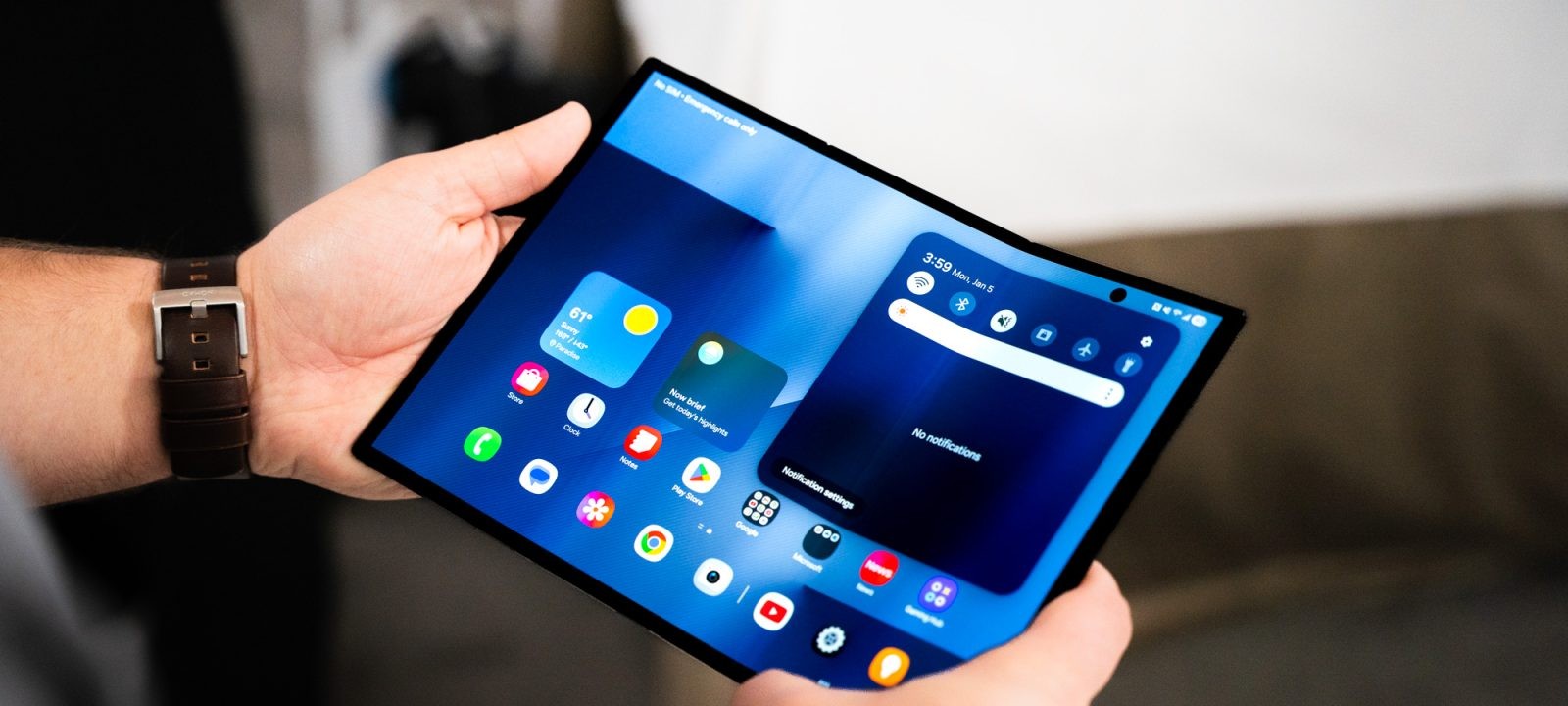
At the Consumer Electronics Show (CES) 2026, Samsung showcased a foldable device with a nearly imperceptible crease, marking a significant advancement in foldable display technology. According to reports from reputable sources, including leaker @universeice, Samsung’s new design incorporates perforated panels beneath the OLED flexible glass display. This innovative approach aims to distribute the mechanical stress more evenly across the display, thereby minimizing the formation of a visible crease.
Understanding the Perforated Panel Design
Traditional foldable displays utilize rigid support panels that can concentrate stress along the fold line, leading to the formation of a crease. Samsung’s new design introduces perforations in these support panels, allowing for a more flexible response to the mechanical stress of folding. This design enables the material to flex more naturally, reducing the pressure at the center of the display where the crease typically forms. By redistributing the stress throughout the display and into the device’s chassis, Samsung aims to achieve a smoother, more seamless fold.
Implications for Future Devices
While Samsung has not officially confirmed the implementation of this design in upcoming devices, the demonstration at CES 2026 suggests a strong possibility of its adoption in future models, such as the anticipated Galaxy Z Fold 8. If successfully integrated, this technology could set a new standard for foldable smartphones, addressing one of the most significant drawbacks of current designs.
User Experiences and Feedback
User feedback has been instrumental in driving these innovations. Previous models, like the Galaxy Z Fold 6, received mixed reviews regarding the visibility of the crease. Some users reported that the crease became more noticeable over time, affecting their overall satisfaction with the device. Samsung’s proactive approach to addressing these concerns demonstrates a commitment to enhancing user experience and maintaining a competitive edge in the foldable smartphone market.
Conclusion
Samsung’s exploration of perforated support panels represents a significant leap forward in foldable smartphone technology. By potentially eliminating the visible crease, Samsung not only enhances the aesthetic appeal of its devices but also reinforces its position as a leader in innovation. As the industry continues to evolve, such advancements are crucial in meeting consumer expectations and driving the adoption of foldable devices.