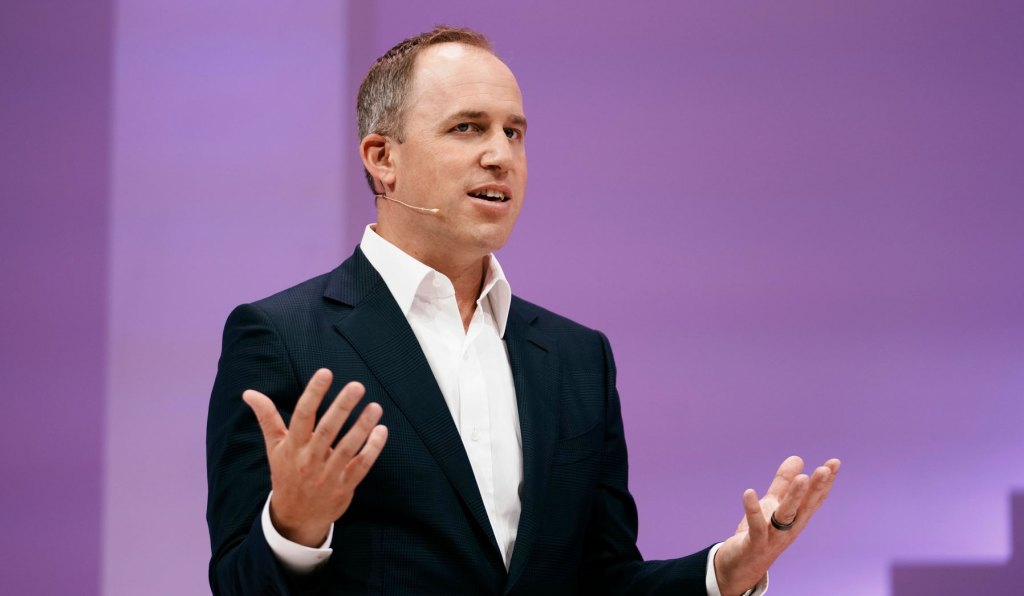
After an illustrious 30-year tenure, Robert Playter has announced his resignation as CEO of Boston Dynamics, a pioneering force in the robotics industry. This significant leadership transition marks the end of an era for the Massachusetts-based company renowned for its innovative robotic creations.
Playter’s journey with Boston Dynamics began in 1994, shortly after the company’s inception as a spin-off from the Massachusetts Institute of Technology (MIT). Under the guidance of founder Marc Raibert, Playter contributed significantly to the development of groundbreaking robotic technologies. His roles evolved over the years, encompassing positions such as Vice President of Engineering and Chief Operating Officer, before he ascended to the role of CEO in 2020.
During his tenure as CEO, Playter steered Boston Dynamics through a transformative period, transitioning the company from a research-focused entity to a commercially viable enterprise. One of the most notable achievements under his leadership was the commercialization of Spot, the company’s quadruped robot, in 2020. Spot’s versatility and adaptability have made it a valuable asset in various industries, including construction, oil and gas, and public safety.
In addition to Spot, Playter oversaw the development and introduction of Atlas, a humanoid robot designed to perform a range of dynamic tasks. Atlas has been instrumental in showcasing the potential of humanoid robots in real-world applications, pushing the boundaries of what robots can achieve.
Boston Dynamics’ ownership has changed hands multiple times during Playter’s tenure. Initially acquired by Google’s parent company, Alphabet, in 2013, the company was sold to Japanese conglomerate SoftBank in 2017. In 2021, Hyundai Motor Group became the majority owner, a move that aligned with the automotive giant’s vision of advancing robotics and mobility solutions.
The company’s statement on Playter’s departure reflects deep appreciation for his contributions:
Robert Playter is an icon of the global robotics industry, and the entire Boston Dynamics team wishes to express our sincere appreciation and gratitude for his leadership. From the earliest days of hopping robots to the world’s first quadrupeds, to spearheading the entire humanoid industry, Playter made his mark as a pioneer of innovation. He transformed Boston Dynamics from a small research and development lab into a successful business that now proudly calls itself the global leader in mobile robotics. He will be sorely missed, but we hope he enjoys some well-deserved time off. Thanks, Rob.
In the interim, Chief Financial Officer Amanda McMaster will assume the role of acting CEO while the company conducts a search for a permanent successor. McMaster’s extensive experience in financial management and strategic planning positions her well to guide Boston Dynamics through this transitional phase.
Playter’s departure comes at a time when the robotics industry is experiencing rapid growth and increased adoption across various sectors. His leadership has been instrumental in positioning Boston Dynamics at the forefront of this evolution. In a recent panel discussion at CES 2026, Playter highlighted the industry’s shift from niche applications to scalable solutions:
You know, I think for the 30 years I’ve been doing robotics, it’s been a niche, and it’s been dominated by YouTube videos and prototypes. And I think the interesting evolution that is happening now is scale. Adoption is actually starting to happen, right?
Under Playter’s guidance, Boston Dynamics has not only developed cutting-edge robots but also focused on their practical applications. The company’s commitment to innovation is evident in its collaborations and partnerships aimed at enhancing robotic capabilities. For instance, in February 2025, Boston Dynamics partnered with the Robotics & AI Institute (RAI Institute) to advance reinforcement learning for its Atlas humanoid robot. This collaboration aimed to improve the robot’s ability to perform complex tasks through trial-and-error learning, mirroring human and animal learning processes.
The company’s dedication to ethical considerations in robotics has also been noteworthy. In January 2025, Boston Dynamics settled a patent dispute with military robotics firm Ghost Robotics. The resolution emphasized a mutual commitment to advancing robotics technology responsibly and collaboratively.
As Boston Dynamics embarks on this new chapter, the industry watches with anticipation to see how the company will continue to innovate and lead in the field of robotics. Playter’s legacy of pushing the boundaries of what robots can achieve will undoubtedly influence the company’s future endeavors.
In conclusion, Robert Playter’s resignation marks the end of a significant era for Boston Dynamics. His three-decade-long journey with the company has been characterized by groundbreaking innovations, strategic leadership, and a commitment to advancing the field of robotics. As the company transitions to new leadership, it stands poised to build upon the strong foundation laid by Playter, continuing to shape the future of robotics and automation.