Rivian’s Strategic Moves Pave the Way for a Promising 2026
Rivian, the electric vehicle (EV) manufacturer, has recently unveiled its fourth-quarter and full-year earnings for 2025, shedding light on the company’s strategic direction and financial health. A standout revelation from the report is the pivotal role of Rivian’s technology joint venture with Volkswagen Group, which has been instrumental in stabilizing the company’s financial position. This partnership is projected to infuse an additional $2 billion into Rivian’s coffers in 2026, providing a substantial boost as the company gears up for the launch of its highly anticipated R2 SUV.
The R2 SUV represents a significant milestone for Rivian, marking its foray into a more affordable segment of the EV market. Production is slated to commence in the first half of 2026, with June being a potential start date. The company has set an ambitious delivery target of between 62,000 and 67,000 vehicles for the year, which, if achieved, would signify a remarkable 59% increase from the 42,247 vehicles delivered in 2025. This optimistic outlook has resonated positively with investors, as evidenced by a 27% surge in Rivian’s stock following the earnings announcement.
A critical aspect of Rivian’s strategy involves reducing the cost of goods sold (COGS) per unit. The company reported a decrease in automotive COGS per unit delivered, from $110,400 in 2024 to $100,900 in 2025. This downward trend indicates progress in enhancing production efficiency and cost management. The forthcoming R2 SUV is expected to further this trend, being both more cost-effective to produce and more affordable for consumers.
In addition to its partnership with Volkswagen, Rivian has been actively expanding its market presence. In April 2025, the company secured HelloFresh as its first major non-Amazon commercial van customer, adding 70 all-electric vans to HelloFresh’s fleet. This move not only diversifies Rivian’s customer base but also underscores the growing demand for sustainable delivery solutions.
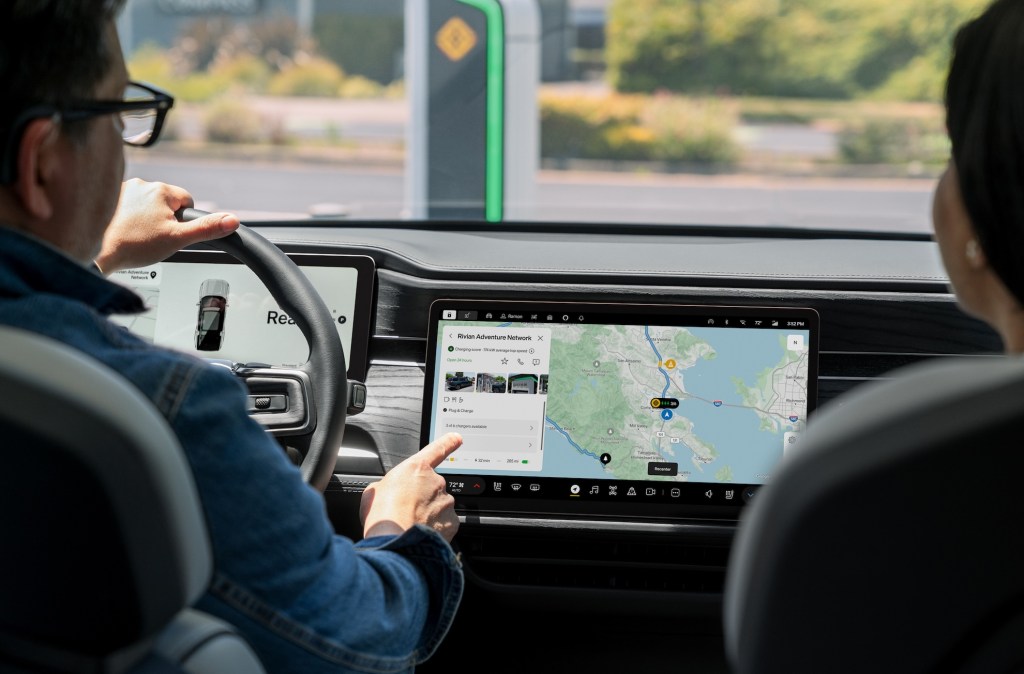
On the technological front, Rivian has been making significant strides. The company acquired Iternio, the developer behind the popular EV route-planning app A Better Routeplanner, in June 2023. This acquisition aims to enhance Rivian’s in-vehicle navigation capabilities, offering drivers optimized routes based on real-time data. Furthermore, Rivian’s Chief Software Officer, Wassym Bensaid, has expressed enthusiasm for integrating third-party applications into the company’s vehicles, signaling a move towards a more open and versatile software ecosystem.
Rivian’s commitment to innovation extends to its vehicle design philosophy. Bensaid has described physical in-car buttons as an anomaly, advocating for a shift towards voice-controlled interfaces. This perspective aligns with the company’s broader vision of creating a seamless and intuitive user experience.
The company’s strategic decisions, including the postponement of a new factory in Georgia in favor of enhancing its existing Illinois facility, reflect a focused approach to resource allocation. By consolidating operations, Rivian aims to streamline production processes and reduce overhead costs.
As Rivian navigates the competitive EV landscape, its multifaceted strategy encompassing financial partnerships, technological innovation, and operational efficiency positions the company for a promising trajectory in 2026 and beyond.