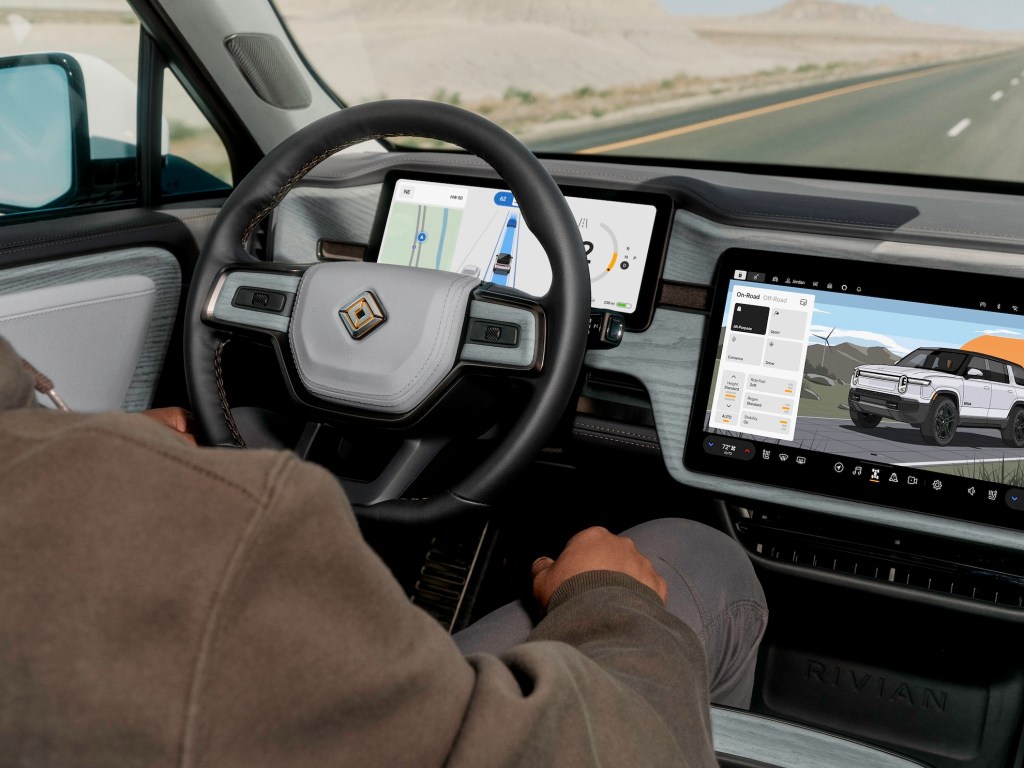
Rivian’s Bold Leap into Autonomous Driving: Custom Silicon, Lidar Integration, and Future Robotaxi Ventures
Rivian, the innovative electric vehicle (EV) manufacturer, has unveiled an ambitious roadmap to enhance the autonomous capabilities of its vehicles. During its inaugural Autonomy & AI Day in Palo Alto, California, CEO RJ Scaringe detailed plans that encompass the development of custom silicon chips, integration of lidar technology, and a potential foray into the self-driving ride-hailing market.
Expanding Hands-Free Driving Capabilities
Rivian is set to broaden its hands-free driver-assistance system, known as Universal Hands-Free, to cover over 3.5 million miles of roads across the United States and Canada. This expansion will extend beyond highways to include surface streets with clearly marked lanes. The enhanced system will debut in early 2026 on the company’s second-generation R1 trucks and SUVs. Customers can access this feature through a one-time payment of $2,500 or a monthly subscription of $49.99.
Scaringe elaborated on the system’s functionality, stating, You can get into the vehicle at your house, plug in the address to where you’re going, and the vehicle will completely drive you there. This point-to-point navigation aims to provide a seamless and autonomous driving experience.
Introducing Personal L4 Autonomy
Building upon the Universal Hands-Free system, Rivian plans to introduce Personal L4 autonomy. This advancement aligns with Level 4 autonomy as defined by the Society of Automotive Engineers, where a vehicle can operate without human intervention in specific conditions. Scaringe highlighted the benefits, noting, This gives you your time back. You can be on your phone, or reading a book, no longer needing to be actively involved in the operation of the vehicle.
Custom Silicon and Lidar Integration
To support these advanced autonomous features, Rivian is developing a custom 5nm processor in collaboration with Arm and TSMC. This processor will power Rivian’s third-generation autonomy computer (ACM3), capable of processing 5 billion pixels per second. The ACM3 will debut in Rivian’s upcoming mass-market R2 SUV in late 2026.
In addition to custom silicon, Rivian will incorporate a lidar sensor positioned at the top of the windshield. This sensor will provide three-dimensional spatial data and redundant sensing, enhancing real-time detection capabilities. James Philbin, Vice President of Autonomy and AI, emphasized, Adding lidar creates the ultimate sensing combination. It gives the most comprehensive 3D model of the space the vehicle is traveling through.
Potential Entry into the Ride-Hailing Market
While Rivian’s initial focus remains on personally owned vehicles, the company is exploring opportunities in the ride-hailing sector. Scaringe hinted at this strategic direction, stating, This also enables us to pursue opportunities in the ride-share space. This move positions Rivian to compete with established players like Waymo, which has been expanding its robotaxi services across various cities.
Conclusion
Rivian’s comprehensive approach to autonomous driving, encompassing hardware innovations and potential market expansion, underscores its commitment to leading the EV industry. By integrating custom silicon, lidar technology, and exploring ride-hailing services, Rivian is poised to redefine the future of autonomous transportation.