Cybersecurity Weekly Roundup: Record DDoS Attack, Chrome Vulnerabilities, and Cloudflare Outage
In the past week, the cybersecurity landscape has been marked by significant events, including an unprecedented Distributed Denial-of-Service (DDoS) attack, critical vulnerabilities in Google Chrome, and a major outage at Cloudflare. These incidents underscore the evolving nature of cyber threats and the necessity for robust security measures.
Unprecedented 29.7 Tbps DDoS Attack Targets Financial Institution
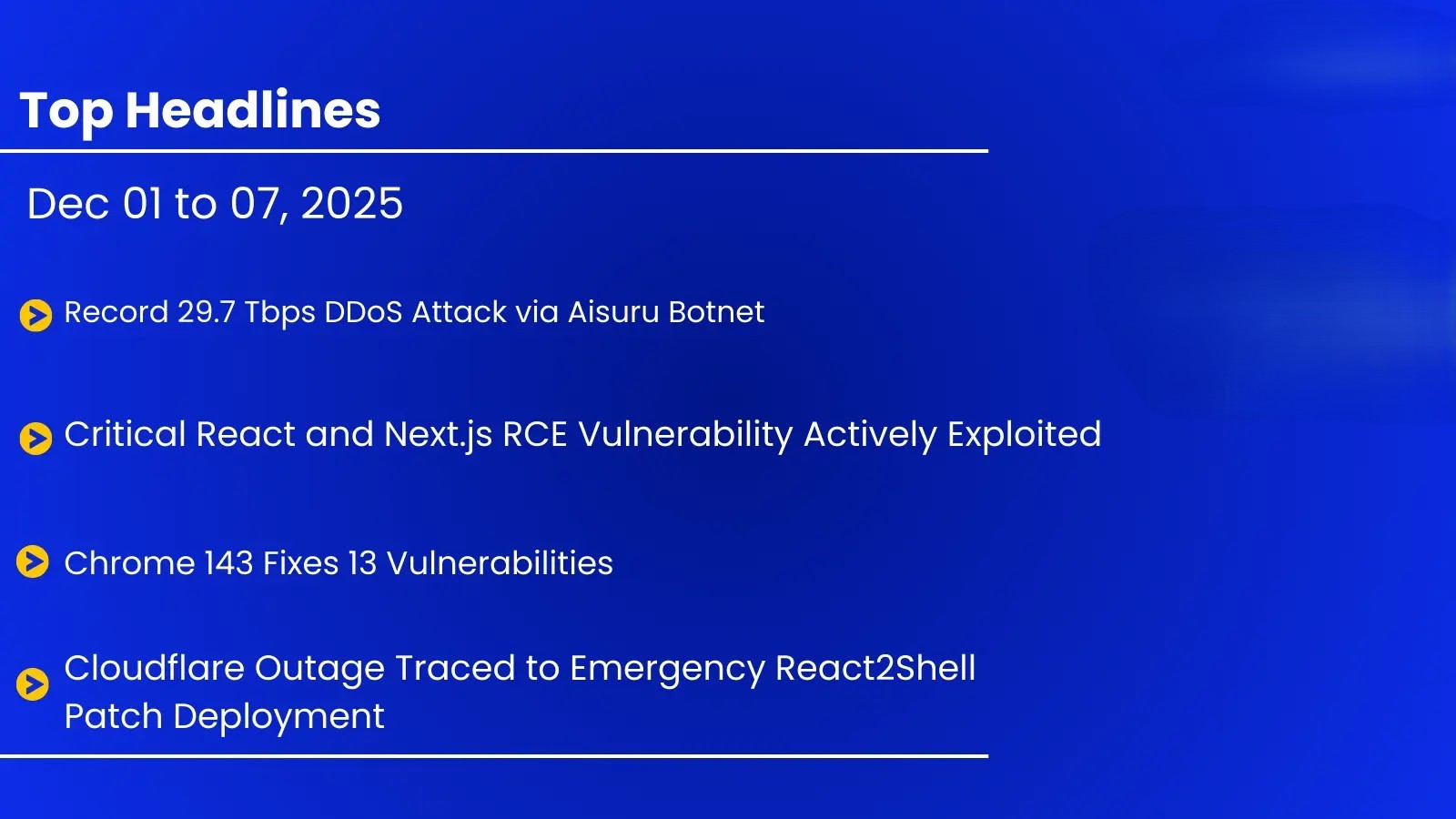
A financial institution recently faced a massive DDoS attack peaking at 29.7 terabits per second, setting a new record in cyber assaults. The attack utilized a botnet of compromised Internet of Things (IoT) devices, launching User Datagram Protocol (UDP) floods that overwhelmed European networks. Mitigation efforts by Cloudflare and Akamai involved Border Gateway Protocol (BGP) blackholing to reroute malicious traffic. This incident highlights the critical need for enhanced security protocols in IoT devices and the importance of network segmentation to prevent such large-scale attacks.
Google Chrome 143 Addresses Multiple High-Severity Vulnerabilities
Google has released Chrome version 143, addressing 12 high-severity vulnerabilities, including three zero-day exploits actively used in the wild. These vulnerabilities (CVE-2025-1234, CVE-2025-5678, CVE-2025-9012) reside in the V8 JavaScript engine and could allow remote code execution through malicious downloads initiated via phishing attacks. Users are urged to update their browsers promptly to mitigate potential risks. Enabling automatic updates and utilizing site isolation features can further enhance browser security.
React2Shell npm Package Exposes Supply Chain Vulnerability
The React2Shell npm package has been found to contain a critical vulnerability (CVE-2025-3456) with a CVSS score of 9.8, stemming from unsanitized shell injection. This flaw exposes over 50,000 projects to potential Continuous Integration/Continuous Deployment (CI/CD) pipeline hijacking through malicious forks. Developers are advised to conduct thorough dependency audits using tools like Snyk and to implement strict code review processes to prevent such supply chain attacks.
Cloudflare Outage Disrupts Major Online Services
A four-hour outage at Cloudflare disrupted millions of services, including popular platforms like Discord and Shopify. The incident was caused by a faulty WARP update that led to Anycast routing loops, resulting in widespread service interruptions. This event underscores the importance of Content Delivery Network (CDN) diversification and the need for comprehensive testing protocols to prevent similar outages in the future.
Emerging Cyberattack Trends
Living Off the Land Attacks Evade Endpoint Detection
Cyber attackers are increasingly leveraging legitimate Windows utilities such as PowerShell, Windows Management Instrumentation (WMI), and Certutil to evade endpoint detection and response (EDR) systems. This living off the land strategy allows attackers to execute malicious activities without deploying traditional malware, making detection more challenging. Organizations are encouraged to implement behavioral analysis, enable PowerShell script block logging, and monitor unusual process behaviors to detect and mitigate such attacks.
ShadyPanda Campaign Compromises Millions via Malicious Browser Extensions
The ShadyPanda threat actor has conducted a seven-year operation compromising over 4.3 million Chrome and Edge users through malicious browser extensions. Initially appearing legitimate, these extensions were later updated to deploy remote code execution backdoors, exfiltrating sensitive user data. Users are advised to regularly review and audit installed browser extensions, remove any that are unnecessary or unfamiliar, and stay vigilant against extensions requesting excessive permissions.
Trojanized Applications Deploy ValleyRat Malware
The Silver Fox Advanced Persistent Threat (APT) group has been distributing trojanized installers for popular applications like Telegram, WinSCP, Google Chrome, and Microsoft Teams to deploy the ValleyRat remote access trojan. Once executed, the malware establishes persistence, disables security measures, and exfiltrates sensitive information. Users should download software only from official sources, verify digital signatures, and employ endpoint protection solutions to detect and prevent such threats.
Hardware Implants Transform Charging Cables into Attack Tools
The Evil Crow Cable Wind disguises a hacking implant within standard USB charging cables, featuring an ESP32-S3 chip that enables remote control via Wi-Fi. This device can execute automated keystroke attacks, posing significant risks to users. To mitigate such threats, individuals should use charging cables from trusted sources, avoid using public charging stations, and inspect cables for any signs of tampering.
Conclusion
The recent surge in sophisticated cyberattacks highlights the critical need for organizations and individuals to adopt comprehensive cybersecurity measures. Staying informed about emerging threats, promptly applying security updates, and implementing robust security protocols are essential steps in safeguarding against the evolving cyber threat landscape.