Rec Room’s Closure: A $3.5 Billion Social Gaming Giant Bows Out
In a surprising turn of events, Rec Room, the renowned social gaming platform once valued at $3.5 billion, has announced its impending shutdown. The platform, which has been a cornerstone in the virtual reality (VR) and social gaming communities, will cease operations on June 1, 2026.
A Decade of Virtual Innovation
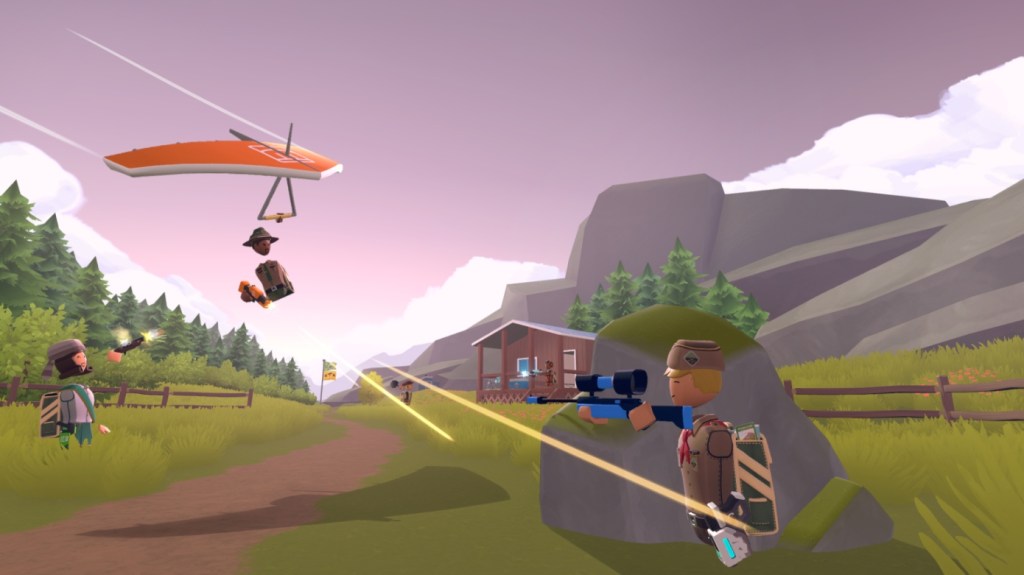
Established in 2016 by Nick Fajt and Cameron Brown, Rec Room quickly rose to prominence as a versatile virtual space where users could create, share, and engage in user-generated content. Its cross-platform compatibility allowed players on VR headsets, consoles, PCs, and mobile devices to interact seamlessly. Over the years, the platform attracted over 150 million users, who collectively spent approximately 68,000 years within its virtual environments. This impressive engagement underscored Rec Room’s significant impact on the social gaming landscape.
Financial Hurdles and Market Shifts
Despite its vast user base and high engagement levels, Rec Room faced persistent financial challenges. The company struggled to develop a sustainable monetization strategy, with operational costs consistently surpassing revenue. Even with the introduction of innovative features like Maker AI, designed to simplify game creation, the platform couldn’t achieve profitability. In a candid statement, the company acknowledged, We spent a long time trying to find a way to make the numbers work. But with the recent shift in the VR market, along with broader headwinds in gaming, the path to profitability has gotten tough enough that we’ve made the difficult decision to shut things down.
The broader VR and gaming markets have experienced significant shifts in recent years. The initial surge in VR adoption has plateaued, and the gaming industry has faced various challenges, including increased competition and changing consumer preferences. These factors have made it increasingly difficult for platforms like Rec Room to maintain financial viability.
Impact on the Community and Creators
The announcement of Rec Room’s closure has sent ripples through its dedicated community. For many, the platform was more than just a game; it was a space for creativity, social interaction, and personal expression. Users built friendships, honed their creative skills, and found a sense of belonging within Rec Room’s virtual walls.
Content creators, who played a pivotal role in the platform’s ecosystem, are particularly affected. The shutdown means the loss of a significant outlet for their work and a community that supported their creative endeavors. While Rec Room has provided tools for creators to download their room data, allowing for potential reconstruction on other platforms like Unity, the transition is not without its challenges. The unique environment and community that Rec Room fostered cannot be easily replicated elsewhere.
Timeline and Next Steps
As the shutdown date approaches, Rec Room has implemented several measures to wind down operations responsibly:
– Account Management: Effective immediately, the creation of new accounts and friend requests has been disabled.
– Monetization: Creators can no longer share monetized content. Token purchases will end on May 1, and room rewards will cease after April. Creators have until May 18 to collect any previously earned tokens.
– Data Preservation: Users are encouraged to download personal content, such as in-game photos and account data, before the platform goes offline.
The official shutdown is scheduled for June 1, 2026, at 12 p.m. Pacific Time. After this point, all servers will be taken offline, and access to the platform will be terminated.
Reflections on the Metaverse and Social Gaming
Rec Room’s closure serves as a poignant reminder of the volatile nature of the tech and gaming industries. The platform’s rise and fall highlight the challenges inherent in monetizing user-generated content and sustaining virtual communities. Despite its substantial user base and cultural impact, Rec Room’s inability to achieve financial sustainability underscores the complexities of operating in the rapidly evolving digital landscape.
As the gaming community bids farewell to Rec Room, its legacy as a pioneer in social VR and user-generated content will undoubtedly influence future platforms. The lessons learned from its journey will inform the development of new virtual spaces, emphasizing the importance of balancing innovation with viable business models.